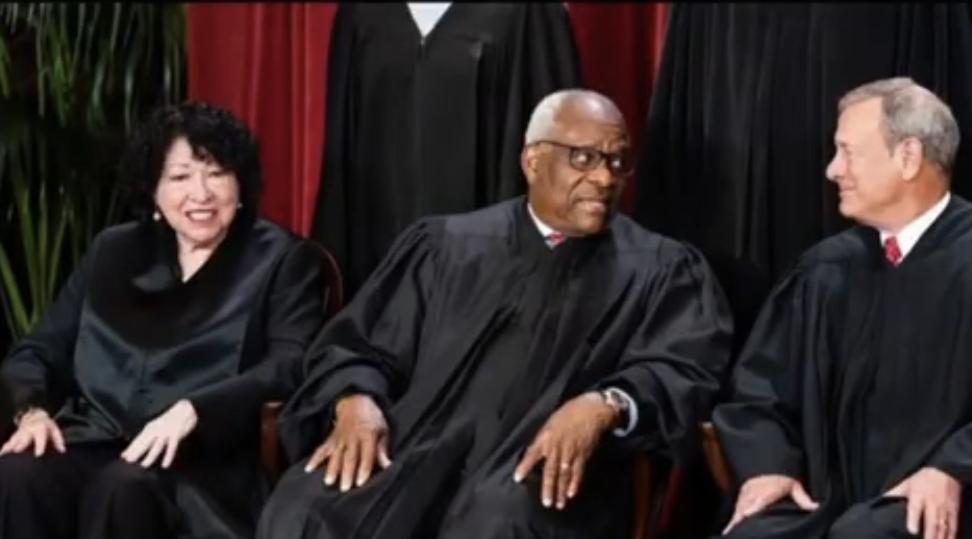
Supreme Court Allows Trump to End Humanitarian Parole for 500,000 Migrants
The U.S. Supreme Court has handed the Trump administration a major immigration policy victory, allowing it to terminate a humanitarian parole program that granted temporary legal status to more than half a million migrants from Venezuela, Cuba, Haiti, and Nicaragua.
In a brief, unsigned order issued without a written explanation, the Court lifted a lower court’s injunction that had blocked the program’s cancellation. That injunction, issued by U.S. District Judge Indira Talwani, had held that such large-scale terminations could not be done in one sweeping action and instead required the federal government to review each case individually. The justices’ ruling means the administration can immediately begin dismantling the program while the broader legal battle continues — a move that could leave thousands facing rapid deportation.
Humanitarian parole permits certain migrants to live and work in the United States for a limited time when there are urgent humanitarian or public benefit reasons. President Biden expanded the initiative in an effort to reduce illegal border crossings, offering two-year paroles to eligible migrants who had secured American sponsors. According to administration officials, the program helped ease pressure on the southern border and offered a structured, legal alternative to unauthorized entry.
President Trump, however, made eliminating parole programs a cornerstone of his second-term immigration agenda. On his first day back in office, he signed an executive order directing the Department of Homeland Security to shut down Biden’s expansion and phase out existing paroles. In March, DHS formally moved to shorten the length of current paroles and halt new approvals altogether.
The administration’s actions quickly drew legal challenges from migrants and their U.S. sponsors, who argued that the abrupt termination violated federal immigration law and due process protections. Judge Talwani agreed, blocking the policy and citing the need for individualized assessments. The 1st U.S. Circuit Court of Appeals upheld her decision earlier this year, keeping the program in place — until this week’s Supreme Court intervention.
The high court’s order is part of a broader series of emergency appeals the Trump administration has brought before the justices in its push to rapidly implement sweeping policy changes. In recent weeks, the Court has also permitted the withdrawal of Temporary Protected Status for Venezuelans and issued a separate ruling easing environmental review requirements for major infrastructure projects. Together, the decisions mark a significant shift away from long-standing humanitarian and regulatory safeguards that had survived multiple administrations.
For the hundreds of thousands of migrants now caught in legal limbo, the Supreme Court’s action means that the clock on their legal status is already running out. Immigration advocates warn that many could be forced to return to unstable or dangerous conditions, while the administration insists the rollback is essential to enforcing immigration law and deterring unlawful entry.