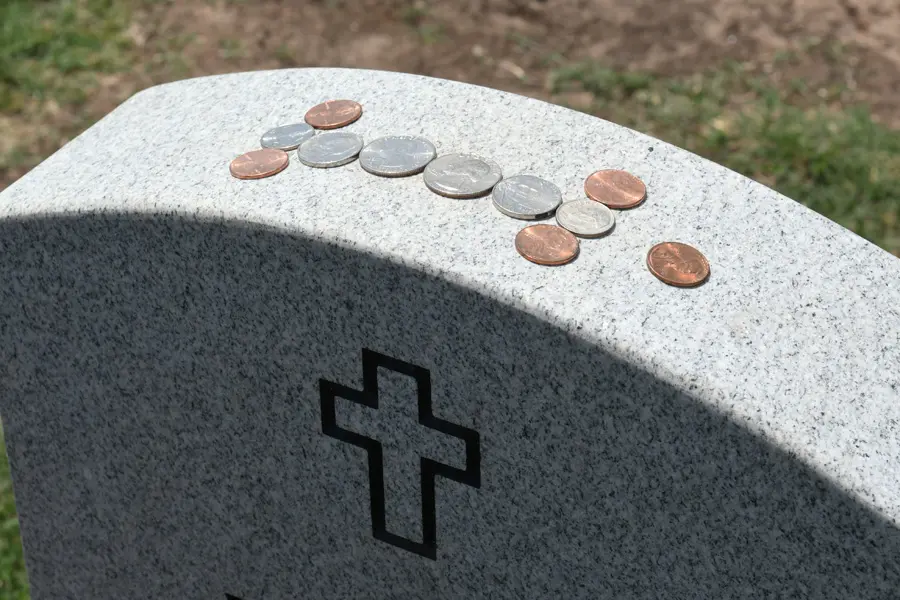
If you’ve ever passed a gravestone—especially in a military cemetery—and noticed a coin placed gently on its surface, you may have paused in wonder. It’s not spare change. It wasn’t dropped by mistake. That single coin carries a message—profound, silent, and powerful. A tradition so deeply rooted in remembrance and respect that it has crossed generations without the need for words.
More Than a Gesture — A Living Tradition
What might appear as a small act is, in truth, a longstanding ritual woven into the fabric of military honor in America. From Arlington National Cemetery to modest burial grounds across the country, these coins speak where voices remain still. They are symbols of presence, of memory, and of a bond that does not end with death.
A Silent Language of Respect
To an outsider, a penny or a nickel may seem trivial. But when left on the headstone of a fallen soldier, that coin becomes sacred. It’s a message left not only for the one buried beneath, but for the families who visit, and for anyone who still holds reverence for sacrifice.
These coins are particularly common in national cemeteries, where rows of white stones mark the final homes of those who served. Each coin left behind says something simple yet eternal: You are not forgotten. But where did this tradition begin—and what do the different coins actually mean?
Ancient Origins, Modern Meaning
The practice of leaving coins with the dead traces back to ancient Greece and Rome. There, loved ones placed coins with the deceased to pay Charon, the mythical ferryman of souls, for safe passage into the afterlife.
In the U.S., this tradition was reimagined by military communities. It rose to prominence after the Vietnam War—a conflict where many returning soldiers felt isolated and unwelcome. For them, leaving a coin on a friend’s grave became a private, non-political way to say, “I remember.” It was a quiet act of loyalty in a world that didn’t always understand.
The Meaning Behind Each Coin
One of the most powerful aspects of this tradition is that every coin left behind carries specific meaning based on its denomination:
A Penny
The most common coin left. It simply says, “I visited.” Even if the visitor never knew the deceased, it’s a sign of respect—of pausing to honor someone’s service.
A Nickel
A nickel means the visitor trained with the fallen soldier, likely during boot camp. It signifies a shared beginning—a connection forged in discipline and hardship.
A Dime
A dime shows the person served alongside the deceased in active duty. They may have shared meals, missions, or danger. This coin reflects comradeship in the thick of service.
A Quarter
The rarest coin and the most personal. A quarter means, “I was there when it happened.” The person who left it witnessed the death or was present at that final moment. It carries a solemn weight—honoring not just a life, but the burden of memory.
Continue reading