For decades, a silent, corrosive rot has been eating away at the foundation of the American veteran community. We’ve all seen the statistics, but stats are cold comfort when you’re staring at the hollowed-out eyes of a man who survived Fallujah only to lose his soul in a suburban living room. PTSD, treatment-resistant depression, and the rising tide of suicide are no longer just “abstract issues” relegated to policy white papers. They are a national emergency, a structural failure of our healthcare system that has left our bravest citizens stranded in a psychological no-man’s-land.
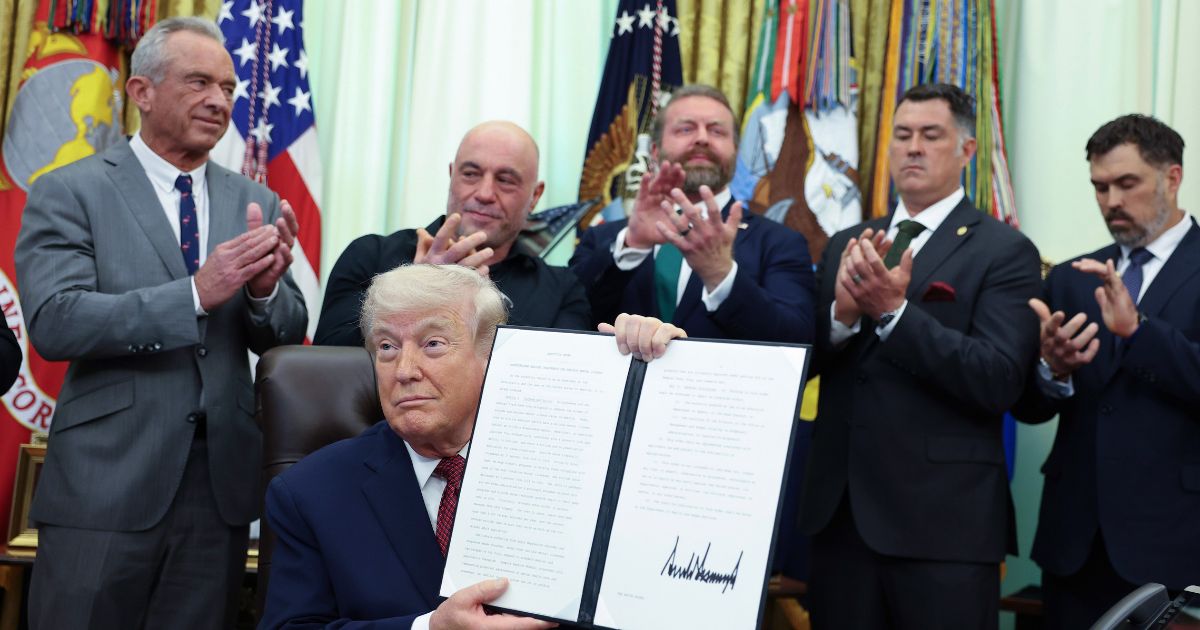
Into this breach, the current administration has stepped with a boldness that caught even the most seasoned Hill veterans off guard. When Donald Trump put pen to paper on a recent executive order, he wasn’t just signing a piece of paper; he was detonating a decades-old stigma. By directing federal agencies to accelerate the review and development of psychedelic-assisted therapies and green-lighting a surge in state-level research funding, the administration signaled a desperate, pragmatic realization: the old playbook is broken, and we need solutions—radical ones—immediately.
The mandate is clear. Federal agencies are now on the clock to fast-track the pipeline for psychedelic therapies, specifically targeting those for whom traditional SSRIs and talk therapy have been nothing more than a band-aid on a bullet wound. The early clinical data is, quite frankly, staggering. Proponents argue that for veterans trapped in the amber of their own trauma, these substances offer not just a reprieve, but a reset.
If the current momentum holds, we are witnessing the birth of a new medical paradigm. We are moving beyond the theoretical and into the clinical; soon, we will be moving into the mainstream. We are hurtling toward a future where a doctor’s prescription pad could include substances derived from the same botanical lineage as ayahuasca—a prospect that would have been unthinkable in a conservative boardroom ten years ago.
Yet, as the machinery of Washington begins to churn with the promise of “breakthrough treatments” and “optimized chemical delivery,” a chilling silence remains regarding the nature of the door we are kicking down.
What, exactly, are we inviting in?
The clinical narrative is tidy. It speaks of serotonin receptors, neural plasticity, and the “unlearning” of fear responses. We are being told this is purely a matter of medicine—a triumph of modern chemistry over ancient trauma. But this clinical veneer ignores a reality that has existed for millennia. Long before these compounds were synthesized in sterile labs, they were the centerpieces of profound spiritual rituals. These ceremonies didn’t just treat “symptoms”; they acknowledged a direct bridge to the supernatural. And yet, we are now expected to believe that by putting it in a pill and labeling it “biochemical,” we have stripped it of its soul.
I’ve seen the front lines of this movement, and they don’t look like a VA hospital. I’ve traveled into the heart of the Peruvian jungle, the global epicenter of ayahuasca. This isn’t a “trip” in the recreational sense; it’s a grueling, often terrifying descent. People flock there from every corner of the globe, not for a high, but for a spiritual reckoning. They are searching for a truth that secular Western medicine has failed to provide.
In these guided rituals, led by shamans who navigate a world of shadows and light, participants don’t report “altered perceptions” as if they were looking through a kaleidoscope. They report encounters. They describe visceral interactions with voices, visions, and a palpable sense of an external, sentient intelligence. They don’t return from the jungle talking about “neural pathways”; they come back saying they met “God,” or something so powerful and divine that language fails to contain it.
As we race to institutionalize these substances, we are treating them as just another tool in the medical chest. But the people who have actually walked that path tell a different story. They don’t say, “I saw colors.” They say, “I met something.” And if our government is about to hand that key to millions of Americans, we had better start asking what happens when that something decides to walk through the door.