
A veteran family law attorney whose brand is built on “protecting men” and whose rhetoric has frequently targeted her own gender has been handed a gavel in the federal immigration system, sparking a firestorm of scrutiny over her fitness for the bench.
Melissa Isaak, the Alabama-based founder of a firm that “fights exclusively for the rights of men,” was sworn in on April 8 as a temporary immigration judge by the Justice Department’s Executive Office for Immigration Review (EOIR). While her new role in Atlanta places her at the heart of the nation’s complex asylum and deportation system, her professional history—and a series of disparaging comments about women—is drawing renewed national attention.

A Resume of Red Flags?
According to her official biography and the brazen mission statement of her website, ProtectingMen.com, Isaak arrives at the bench with no prior experience in the labyrinthine world of immigration law. Instead, her resume is a collection of high-profile, politically charged battlegrounds.
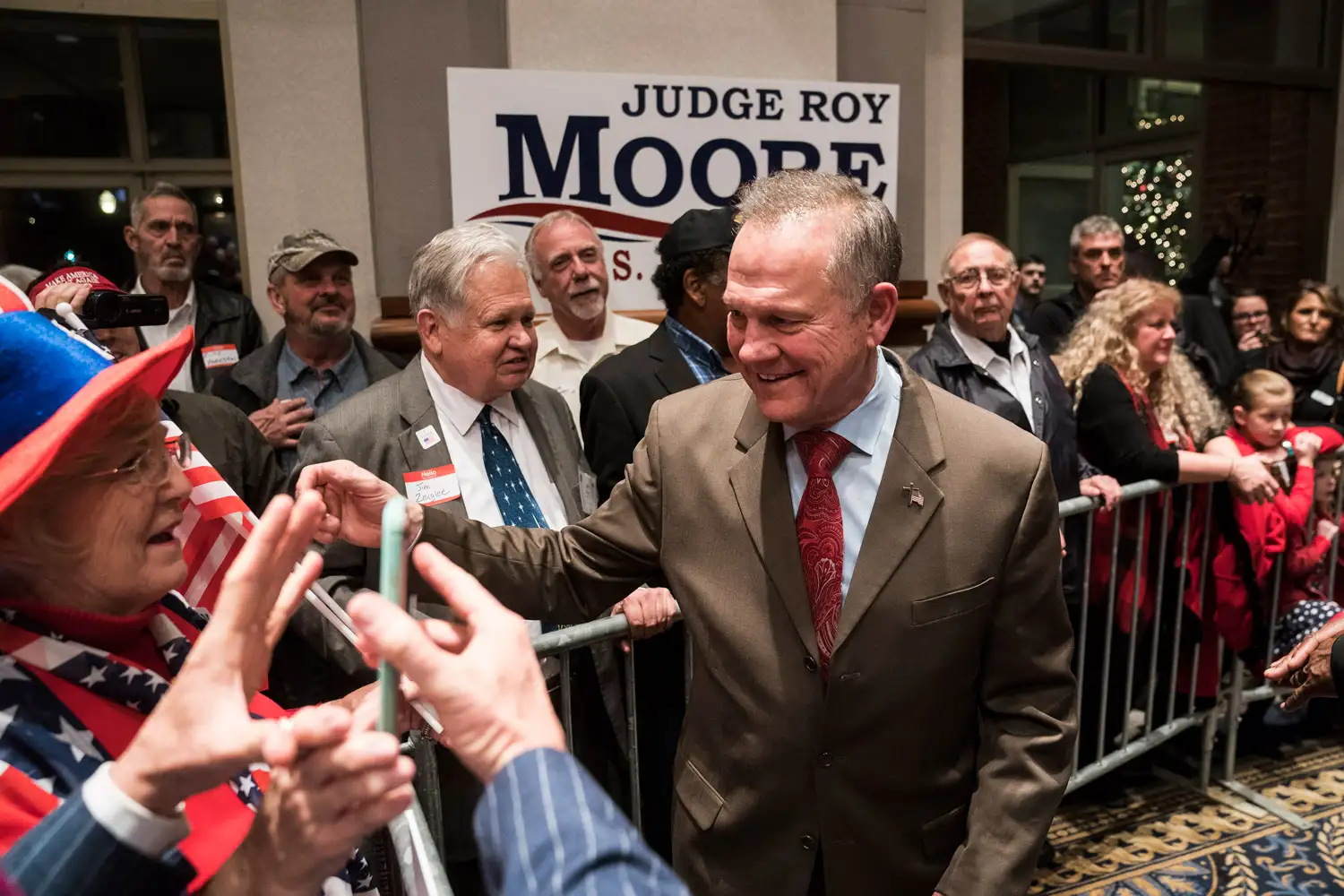
In recent years, Isaak served as legal counsel for disgraced former Alabama Senate candidate Roy Moore, whose campaign was famously upended by allegations of sexual misconduct with minors. She also stepped into the fray of the Jan. 6 Capitol riot, representing multiple defendants accused of participating in the attempt to overturn the 2020 election, though she later withdrew from two of those cases.
Unlike the federal judiciary, immigration judges are administrative officials who serve under the executive branch. Isaak was approved to begin hearing cases immediately, joining a system that critics argue is being fundamentally reshaped into a deportation machine.
The “Warm, Wet Hole” Rhetoric
The most explosive element of Isaak’s appointment involves her public commentary on women’s “value.” During a 2021 interview with 21 Studios—a media outlet that markets itself as “100% Toxic Masculinity. Zero Compromise”—Isaak, donned in a bright pink “Make America Great Again” hat, offered a polarizing dichotomy of womanhood.
Claiming she was echoing a lesson from her own “toxic” mother, Isaak told the outlet there are only “two types of women.”
“There are good, solid, valuable women who are major assets to men… and then there’s a warm, wet hole,” Isaak said. “If you’re a warm, wet hole, that’s your value. Your value is that you offer sexual gratification to a man and that’s not the case at all. Ladies, if you want to destroy a relationship… then be a warm, wet hole.”
The rhetoric wasn’t an isolated incident. In 2022, she delivered a speech titled “The Warm Wet Hole” at a men’s rights conference. During that appearance, she asserted that “there’s more men abused by women” in domestic violence cases than the reverse—a claim directly contradicted by a February 11 FBI report finding that nearly 75 percent of domestic violence victims are female.
A Purge and a Pivot
Isaak’s appointment comes as the EOIR undergoes a radical transformation. Director Daren Margolin stated that the office is “committed to reducing the immigration court backlog and unwinding the policies of the Biden Administration,” which he characterized as “de facto open border and amnesty.”
Since President Donald Trump’s return to the White House, the administration has moved to purge the ranks of the 73 immigration courts, installing scores of new judges. Critics argue many of these appointees lack specialized training and serve as “rubber stamps” for the administration’s aggressive deportation agenda.
While temporary judges like Isaak are appointed to renewable six-month terms, congressional Democrats have already moved to introduce legislation that would mandate stricter qualifications and limit the continuous renewal of these temporary seats.
The Soldier and the Therapist
Before becoming a lightning rod for gender politics, Isaak served as a child therapist and a U.S. Army veteran. She later served as a military lawyer within the Judge Advocate Corps, a background her supporters cite as evidence of her discipline and legal acumen.
Her firm told PEOPLE that Isaak would be away from her Montgomery and Enterprise offices for an “extended period” due to her new federal appointment. Neither the Justice Department nor the EOIR immediately responded to requests for comment regarding the vetting process for the Atlanta bench.
As Isaak begins her term, the legal community and advocacy groups alike are watching to see how an attorney who built a career on the “rights of men” and “toxic masculinity” will handle the vulnerable populations of the immigration court—a system where, for many, the judge’s “discretion” is the only thing standing between them and a flight out of the country.