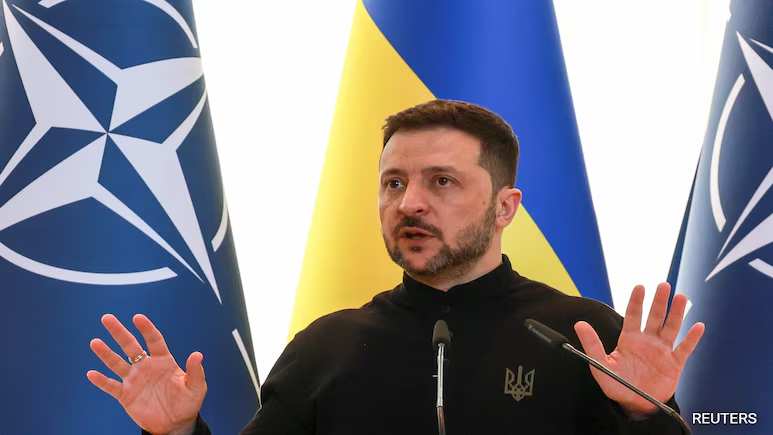
In a pivotal shift that could reshape the trajectory of the war in Ukraine, President Volodymyr Zelensky announced Tuesday that his country is prepared to engage in direct talks with Russia—but only once the fighting stops and a ceasefire is in place.
Speaking at a press briefing in the presidential office in Kyiv, Zelensky said that Ukraine remains open to negotiations in “any format” as long as the battlefield quiets down.
“We are ready to record that after a ceasefire, we are ready to sit down in any format so that there are no dead ends,” Zelensky declared.
But the Ukrainian leader didn’t sugarcoat the road ahead, warning that peace wouldn’t come easy or fast.
“It will not be possible to agree on everything quickly,” he said, referencing thorny issues such as the status of contested territories, long-term security guarantees, and Ukraine’s aspirations to join NATO—topics likely to provoke fierce debate and stiff resistance from Moscow.
The statement comes just ahead of a high-level diplomatic summit in London on Wednesday, where Ukrainian delegates will meet with officials from the United States, Britain, France, and Germany. Zelensky confirmed that his delegation has been authorized to discuss both full and partial ceasefire terms.
This flurry of diplomatic movement, led by Western allies, signals a renewed urgency to find an off-ramp to the bloody conflict that has raged since Russia’s full-scale invasion in February 2022.
Adding another layer to the week’s political theater, Zelensky said he would be open to meeting with former U.S. President Donald Trump during the upcoming funeral of Pope Francis—should such an encounter take place.
The developments come as Ukraine faces growing pressure—both on the battlefield and from international partners—to find a diplomatic resolution. Yet with so many unresolved geopolitical landmines on the table, any peace effort may be fragile, conditional, and intensely scrutinized.