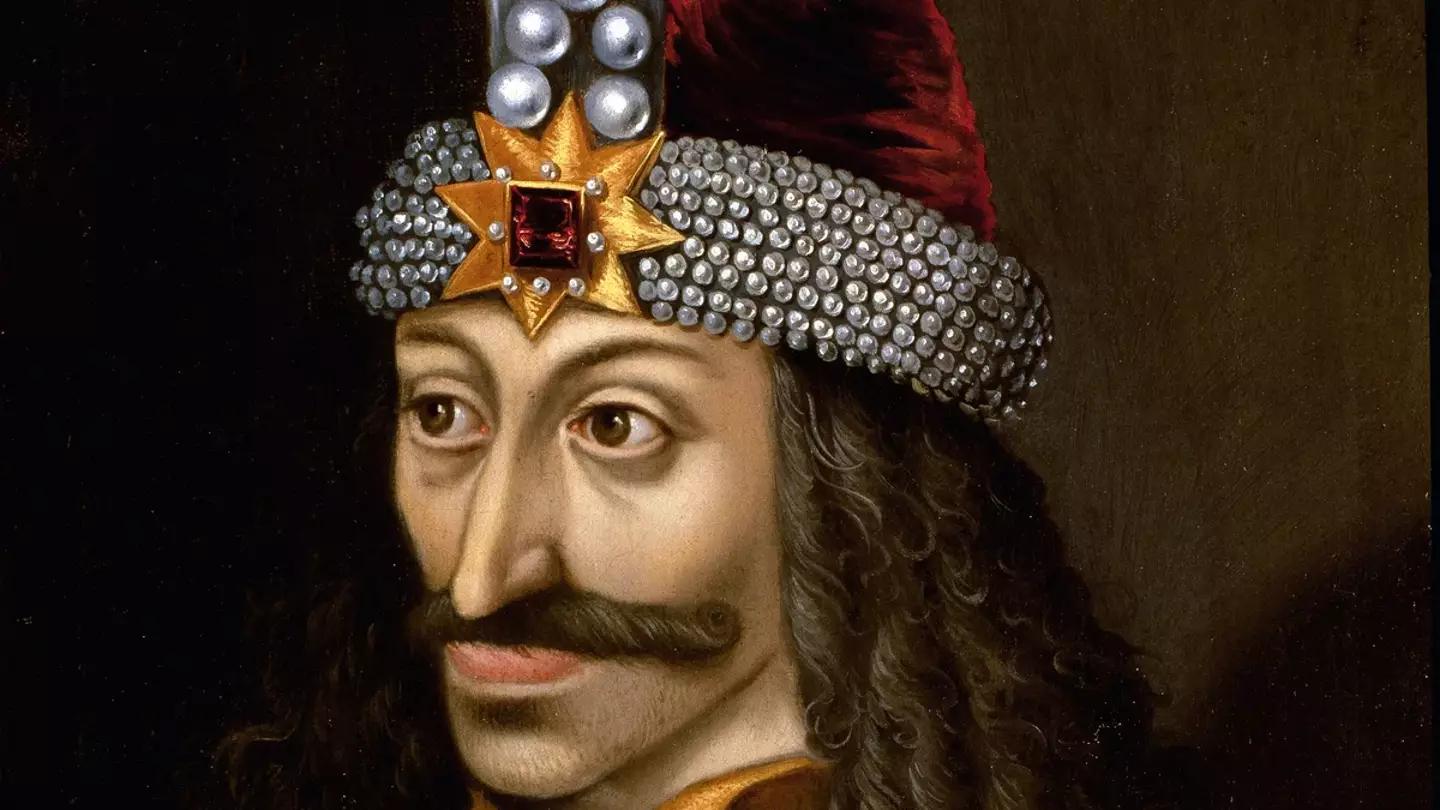
The legend of Count Dracula may have just taken a sharp turn—right out of Romania and into southern Italy.
A team of international researchers now believes they’ve uncovered the final resting place of Vlad Tepes, the real-life inspiration for Count Dracula, in an unexpected location: Naples. According to a newly examined tomb inscription, the infamous Romanian prince—also known as Vlad the Impaler—may actually be buried within the walls of a centuries-old monastery in the heart of the Italian city.
The discovery centers around a crypt inside Cappella Turbolo, a tucked-away chapel located within Santa Maria La Nova, a now-deconsecrated Gothic church in Naples’ historical center. The building dates back to the late 13th century, although it wasn’t fully completed until 1620 due to earthquakes and a deadly explosion at the nearby Castel Sant’Elmo in 1587.
So why Naples? And how did one of history’s most feared rulers end up there?
A Tomb, a Dragon, and a Mystery
The renewed interest in the site stems from an intriguing Latin inscription etched into a tomb within the Turbolo Chapel. Among the words researchers believe they’ve identified are “Blad”—interpreted as a form of Vlad—and “Balkan”, referencing the region he once ruled. Combined with other symbolic carvings—like a dragon and Egyptian motifs—the clues have reignited a theory first proposed by Italian scholars in 2014.
According to this theory, Vlad III was not killed in battle and beheaded by enemies in 1476, as many historical accounts suggest. Instead, he may have been captured by the Ottomans, then quietly released thanks to the intervention of his daughter, Maria Balsa.
Maria, as the story goes, had been adopted by a noble Neapolitan family after fleeing persecution. When her father died, she is believed to have arranged his secret burial in the tomb of her father-in-law, Matteo Ferrillo, within the chapel.
The Dracula Family Legacy
The hypothesis is bolstered by linguistic clues. The name Dracula itself is derived from Dracul, meaning “the Dragon”—a title given to Vlad’s father upon joining the chivalric Order of the Dragon. In Romanian, Dracula means “son of the Dragon.” The presence of dragon iconography within the tomb’s decorative elements aligns eerily well with this lineage.
Though attempts to locate Vlad’s grave in Romania—most famously at the Snagov Monastery—have proven inconclusive, the Naples theory offers a compelling alternative backed by architecture, language, and symbolism.
While no official excavation or DNA testing has yet been conducted to verify the claim, the evidence has certainly breathed new life into an old mystery.
And if proven true, the revelation would not only shift the historical narrative of Vlad the Impaler—but also relocate one of Europe’s darkest legends from the Carpathian Mountains to the sun-drenched streets of Naples.