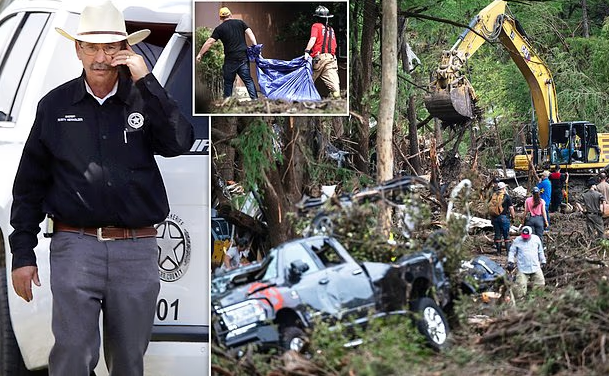
As floodwaters slowly receded across parts of Texas on Saturday, federal, state, and local officials gathered in hard-hit communities to assess the widespread devastation left behind by one of the most severe flash flooding events in recent memory. With homes washed away, roads torn apart, and dozens of lives lost, leaders called for unity, prayer, and a long road of recovery ahead.
Standing amid the wreckage in Kerr County, one of the hardest-hit areas, local officials praised the tireless efforts of first responders and everyday citizens who risked their own safety to help their neighbors.
“The rescue workers have done a phenomenal job,” officials said. “Texans are coming together like they always do in times of tragedy. We’re seeing bravery, compassion, and resilience across the board.”
Still, the sheer scale of the destruction shocked many, especially in the Hill Country region, where normally tranquil rivers transformed into raging torrents within hours.
“Nobody saw this coming,” declared Rob Kelly, Kerr County’s chief elected official, as he addressed the media and emergency personnel. “This wasn’t just another flood—it was a catastrophe of historic proportions.”
But while the political and emergency leadership scrambled to describe the disaster as sudden and unforeseen, not everyone agreed with that narrative.
A Decade-Old Warning Ignored
Rusty Hierholzer, a retired sheriff with four decades of service in the Kerr County Sheriff’s Office, says officials have known about the threat for years—and simply failed to act.
Speaking in an exclusive interview with the Daily Mail, Hierholzer revealed that as early as a decade ago, he had urged local leaders to invest in early warning systems akin to tsunami sirens—something he believes could have saved lives in this latest tragedy.
“Unfortunately, people don’t realize we live in what’s called ‘Flash Flood Alley,’” Hierholzer said. “It’s one of the most flood-prone regions in the entire country, and I’ve been warning about this for years.”
Despite multiple smaller flooding events over the last two decades, Hierholzer says that local and state governments were reluctant to dedicate the funding and infrastructure required to create an effective alert system—something that could have warned residents minutes or even hours before water levels surged.
“The technology exists. We’ve seen it used in other parts of the country and around the world. But it was never prioritized here,” he added.
The Cost of Inaction
The impact of the flooding has been devastating. In Kerr County alone, dozens of lives were lost, including children at summer camps, and emergency officials confirmed that entire communities were left inaccessible for days, delaying rescue and relief efforts. Across the state, the death toll has surpassed 80, with hundreds of homes damaged or destroyed, and thousands of Texans displaced.
Search and recovery efforts are ongoing, with federal disaster teams assisting local agencies in locating the missing and clearing dangerous debris.
Local faith leaders and nonprofit organizations have stepped in to provide shelter, food, and emotional support, as a mental health crisis now begins to emerge in the aftermath of the physical destruction.
“It’s not just homes and roads that were washed away,” said one Red Cross volunteer. “People are traumatized. They’ve lost family members, pets, their entire livelihoods. Some of them will never recover.”
Looking Ahead
As officials continue to survey the damage and calculate the cost—which is already expected to run into the billions of dollars—some, like Hierholzer, hope this will finally be the moment that Texas takes flood preparedness seriously.
“I’m not pointing fingers for the sake of blame,” Hierholzer said. “But if we don’t learn from this, then we’re bound to repeat it. The next flood may be even worse.”
In the meantime, Texans are left to mourn, rebuild, and demand answers—while the waters may be retreating, the questions are only beginning to rise.