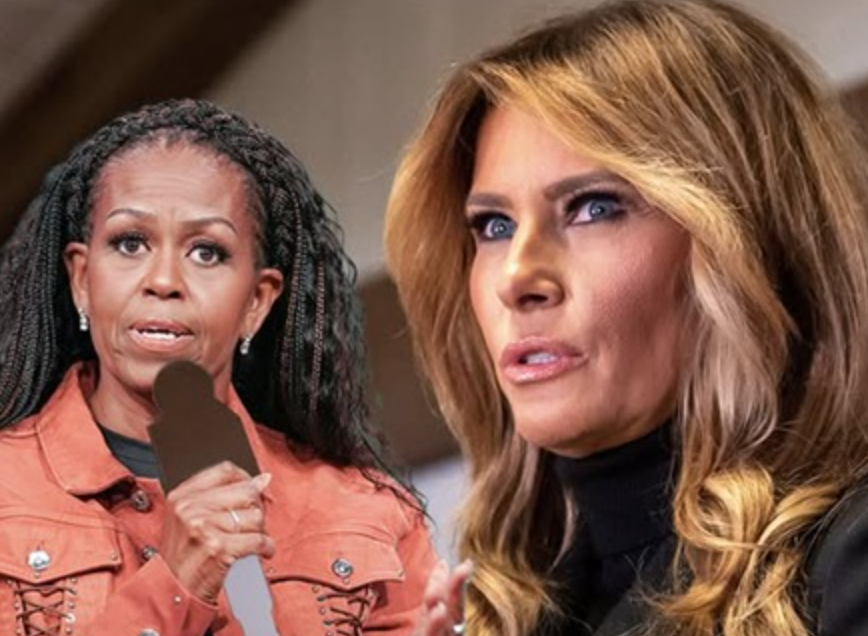
A comprehensive new survey of the American psyche has reignited a perennial national conversation: How do we truly measure the women of the East Wing? In an era where the personal is inextricably political, a recent study of approximately 2,255 U.S. adults offers a revealing X-ray of public memory, showcasing a sharp contrast between the golden-hued nostalgia for historical figures and the vitriolic partisan lens applied to the modern era.
The poll, which asked respondents to rank a roster of First Ladies on a spectrum from “outstanding” to “poor,” functions as more than a mere popularity contest. It serves as a diagnostic tool for a nation deeply divided, illustrating how the office of the First Lady—a role with no formal job description—has become a lightning rod for broader cultural and political anxieties.
The Camelot Constant: Jacqueline Kennedy’s Enduring Aura
Decades after she left 1600 Pennsylvania Avenue, Jacqueline Kennedy Onassis remains the undisputed gold standard of the American ceremonial imagination. Emerging as the most positively regarded figure in the survey, Onassis’s numbers transcend the typical demographic splits that plague modern polling.
Her legacy, described by respondents as both “enduring” and “historically influential,” suggests that the public still craves the mixture of cultural sophistication and stoic grace she embodied. In the eyes of the American public, Kennedy Onassis is less a political figure and more a permanent cultural fixture, a reminder of an era before the 24-hour news cycle began dissecting every East Wing gesture through a red-or-blue filter.
The “Steady State” Tier: Advocacy as an Anchor
Following the high-water mark of Camelot, a group of First Ladies emerged with robust, net-positive reputations that seem rooted in their specific brands of advocacy. This “steady state” tier includes:
-
Rosalynn Carter and Nancy Reagan: Both women continue to be rewarded by history for their post-White House service and their ironclad dedication to specific causes—mental health and drug awareness, respectively.
-
Lady Bird Johnson and Barbara Bush: Their favorability suggests a public appreciation for the “grandmother of the nation” archetype and environmental stewardship.
-
Laura Bush and Michelle Obama: Despite serving in more contentious times, both maintain favorability ratings that suggest they successfully navigated the transition from political spouse to national advocate.
Michelle Obama, in particular, stands as a modern anomaly. Her consistently high marks are tied to her pivot away from the purely ceremonial toward “heavy-lift” initiatives like public health and education. For many, she represents a blueprint for the modern First Lady: a high-profile professional who manages to maintain a distinct, favorable identity separate from the grinding machinery of her husband’s administration.
The Polarization Trap: The Modern East Wing
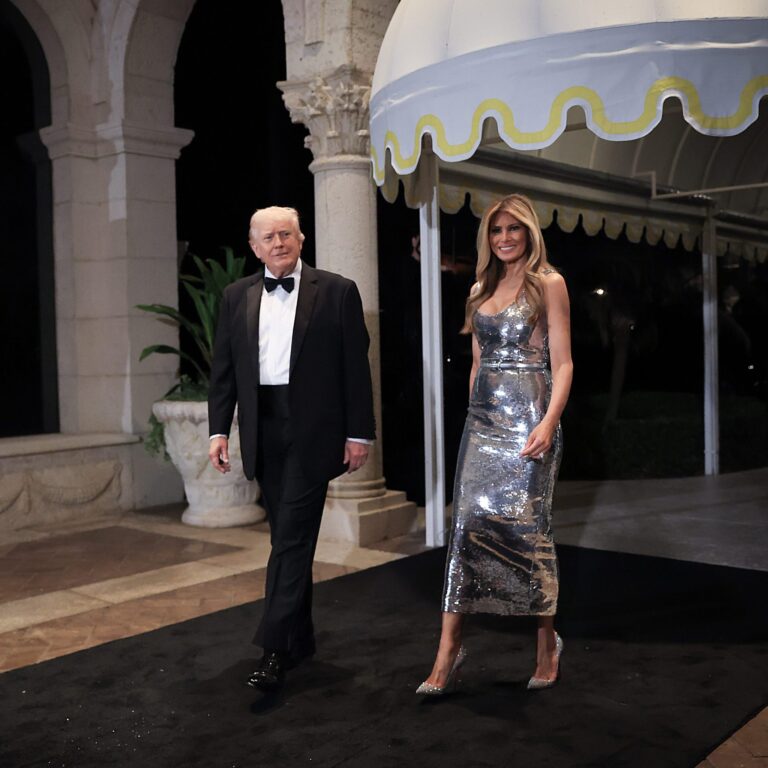
The data takes a stark, colder turn when moving into the current century’s most contested figures. The survey highlights a “polarization trap” where the First Lady is no longer viewed as a unifying domestic symbol, but as a proxy for the President himself.
Melania Trump and Hillary Clinton find themselves at the center of this storm, both receiving net negative ratings. However, the reasons for their placement are as different as their tenures. For Melania Trump, the data reveals a textbook case of partisan sorting: her “outstanding” marks come almost exclusively from Republican-leaning participants, while Democrats view her through a sharply critical lens.
Similarly, Hillary Clinton’s ratings remain tethered to the decades of political combat that defined her husband’s presidency and her own subsequent career. For these women, the “personal role” is eclipsed by the “political brand,” suggesting that in the current climate, it is nearly impossible for a First Lady to outrun the shadow of the Oval Office.
The Biden Context and the “Historical Distance” Factor
Even the current occupant of the East Wing, Dr. Jill Biden, is not immune. Her slightly negative net rating—though less polarized than her immediate predecessor—reflects a nation that evaluates its public figures in real-time through the prism of inflation, policy debates, and executive performance.
This leads to a compelling takeaway from the study: The “Historical Distance” Effect. The survey suggests that time acts as a polisher. Figures like Lady Bird Johnson or Barbara Bush are now viewed through a cultural or humanitarian lens, their husband’s legislative failures largely forgotten by the general public. Conversely, modern First Ladies are evaluated in the heat of the “now,” where every wardrobe choice or social initiative is weaponized in the theater of partisan warfare.
Methodology and The Human Factor
To ensure the integrity of these findings, the pollsters employed a rigorous methodology, balancing the 2,255-person sample across age, gender, education, and geography. By weighting the results to match national population data and recent voting patterns, the survey provides a statistically sound mirror of the American electorate.
What that mirror reflects is a complex, evolving institution. While the First Lady often enjoys higher favorability than the President—a sign that the public still values the “humanitarian-in-chief” role—the office is clearly losing its immunity to the nation’s political fractures.
Ultimately, this data confirms that the American First Lady remains a powerful, symbolic vessel. Whether she is remembered as a cultural icon like Onassis or a partisan figurehead like Trump depends less on her own actions and increasingly on the volatile temperature of the nation she serves. In the story of the American Presidency, the East Wing is no longer a refuge from the storm; it is part of the weather.