In the annals of law enforcement, there are scenes that a decade of service cannot erase. For the veteran officers in Kansas who responded to a routine warrant call in 2010, that indelible mark was left by a six-year-old boy named Giovanni “Govi” Eastwood.
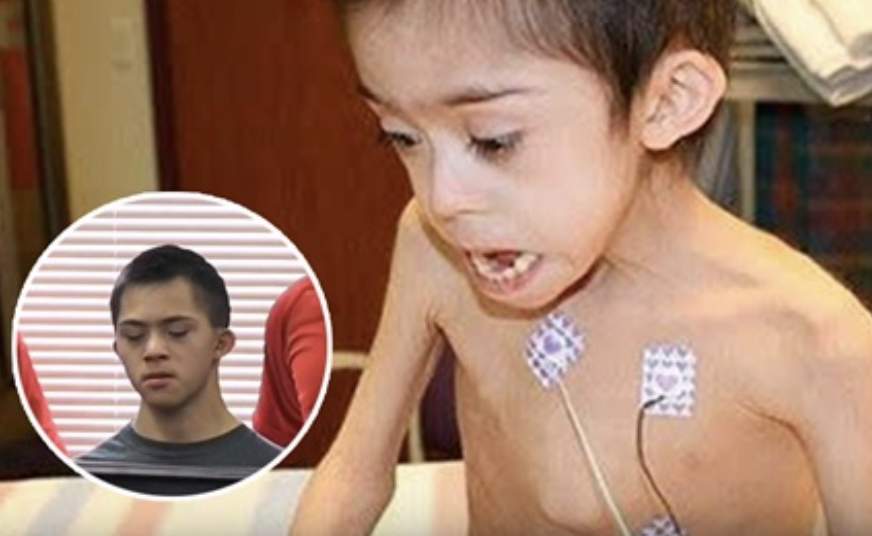
It was a case that didn’t just break the hearts of the community; it shattered the collective conscience. Govi, a child born with Down syndrome, was discovered in a state of skeletal neglect that defied the imagination of even the most hardened investigators. At six years old, he weighed no more than a toddler of three—a living, breathing testament to years of systematic starvation and profound medical abandonment.
The Intuition That Saved a Life
The nightmare began to unravel when authorities arrived at the family home to serve outstanding warrants for Govi’s mother, Rachel Perez. Initially, the scene appeared managed. Officers secured Govi’s siblings and prepared to clear the scene. Perez, practicing a chilling deception, provided misleading information regarding Govi’s whereabouts, convincing the police that every child under her roof was accounted for.
Yet, a veteran’s intuition is a powerful thing. Something about the atmosphere of the house—a lingering, unspoken wrongness—gnawed at the responding officers. Trusting that gut instinct, they bypassed the initial all-clear and returned to the residence for a secondary, more exhaustive sweep.
As they moved through the silence of the home, calling out into the shadows, they heard it: a faint, rhythmic sound emanating from above. It led them to the attic.
There, in a cramped, dark space devoid of bedding, toys, or even the most basic human necessities, they found Govi. He was alone, his body a frail map of muscle wasting and brittle bones. He was so physically depleted that he could barely muster the strength to move or cry out.
“It was one of the most disturbing moments of my career,” Sergeant John Klingele later reflected. The image of the underdeveloped child, hidden away like a shameful secret, would haunt him for years to come.
A Long Road Back from the Brink
The medical prognosis was grim. Doctors who admitted Govi into emergency care were blunt: had the officers not returned to that house, he would not have survived much longer. His recovery was not merely a matter of calories; it was a grueling reconstruction of a broken spirit and a neglected body.
While the legal system moved swiftly—resulting in the arrest and subsequent conviction of Rachel Perez—the focus remained on the boy who had been discarded. The investigation underscored a harrowing failure of child protective oversight, leaving many to wonder how a child could be erased from the world for so long without a single alarm being raised.
But where the system failed, family stepped in. Govi was eventually placed with his great aunt and uncle, Stacy and Joe Eastwood, who would go on to adopt him and his sisters.
The transition was arduous. Govi carried the invisible scars of the attic, struggling with profound trust issues and a paralyzing fear of the unknown. However, within the stable, nurturing walls of the Eastwood home, the child who had known only isolation began to find his voice.
From Honorary Deputy to Local Hero
The boy who once weighed less than a toddler transformed into a beacon of joy. His adoptive parents describe a child who, despite the darkness of his early years, possesses an innate ability to radiate positivity.
In a poignant closing of the circle, Govi was eventually reunited with the men who pulled him from that attic. At a ceremony hosted by the Sheriff’s Department, the once-frail boy stood tall to be named an Honorary Deputy. It was a celebration of resilience that left the room in tears.
Officer Klingele, witnessing the energetic, smiling youth before him, marveled at the transformation. The child who had been found in a state of near-death was now a boy who slept with his honorary plaque tucked beside him, a symbol of a life reclaimed.
The story of Giovanni Eastwood stands as a dual legacy. It is a grim warning of the depths of human neglect and a failure of vigilance, but more importantly, it is a soaring narrative of recovery. It serves as a reminder that while some may attempt to hide the light of a child in the darkest of corners, the human spirit, when fueled by love and a watchful community, is remarkably difficult to extinguish.