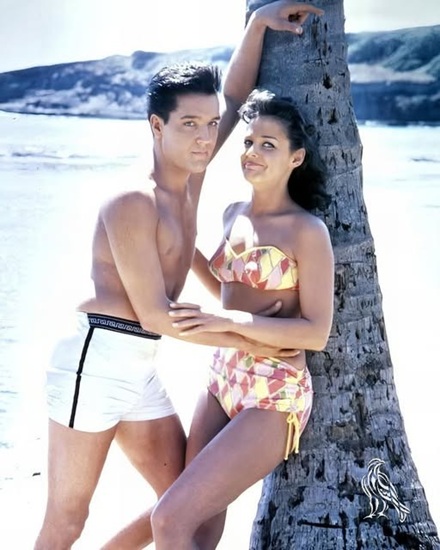
By late 1961, the world belonged to Elvis Presley. When the vibrant musical romantic comedy Blue Hawaii premiered, The King wasn’t just a household name—he was a global phenomenon rewriting the rules of stardom by dominating the charts and the box office simultaneously. Audiences weren’t just buying tickets for a movie; they were buying an escape, drawn in by a magnetic screen presence that effortlessly blended raw musical talent with an undeniable, boy-next-door charm.
Critics, predictably, dismissed Blue Hawaii as lightweight fluff. But the public disagreed, turning it into one of Elvis’s biggest commercial triumphs. More than just a box office hit, the film became the blueprint for Elvis’s entire 1960s cinematic career. This soon-to-be-famous “Elvis Formula” was simple but wildly effective: drop Elvis into an exotic vacation paradise, surround him with beautiful co-stars, keep the plot light, and keep the music flowing.
Behind this genius marketing strategy was Colonel Tom Parker. Elvis’s legendary manager saw the future clearly, realizing that blending tropical travel fantasies with easy-listening musical storytelling was a goldmine.
The King in Paradise
In Blue Hawaii, Elvis steps into the shoes of Chad Gates, a soldier returning home to Oahu. Chad finds himself caught between his high-society family’s expectations and his own desire for a surf-and-sand lifestyle.
What makes Chad unique in the Elvis filmography is that he isn’t a professional musician. Instead, his singing feels spontaneous. He bursts into song while driving down a coastal highway, relaxing on the beach, or just hanging out with friends. This creative choice gave the film an organic charm and birthed a soundtrack that remains one of the most iconic collections in pop culture history.
Among those tracks was a song that would outgrow the movie entirely: “Can’t Help Falling in Love.” With its emotional simplicity and timeless melody, the track became an instant classic, evolving from a movie serenade into a global anthem for weddings and milestone events across generations.
Imperfections in the Frame
Viewed through a modern cinematic lens, Blue Hawaii is far from technically perfect. If you watch closely, the seams of 1960s Hollywood production techniques start to show.
-
Continuity Glitches: In several driving scenes, sharp-eyed viewers can spot mismatched hand movements, sudden cuts, and shifting character positions.
-
Audio Desync: During some musical numbers, the synchronization between the actors strumming their instruments and the pre-recorded audio track is visibly off.
-
Ambient Noise: The audio mix occasionally lets in the real, unpolished ambient sounds of the Hawaiian wilderness—artifacts of an era before digital cleanup.
Yet, these quirks don’t ruin the experience. If anything, modern audiences view them as charming badges of historical authenticity that add to the movie’s nostalgic flavor.
Backstage Drama and a Golden Chemistry
The film we know today could have looked very different. Originally, the studio eyed actress Juliet Prowse for the female lead, hoping to cash in on her previous on-screen chemistry with Elvis. However, contract disputes and logistical demands saw Prowse walk away before the cameras rolled.
Enter Joan Blackman. It turned out to be a stroke of cinematic luck. Blackman and Elvis shared a natural, easygoing rapport that translated beautifully to the screen, anchoring the film’s romantic plot and becoming one of its most praised elements.
The Man Behind the Smile
While Blue Hawaii projected a sun-drenched, carefree paradise, Elvis’s internal world was much more complicated. Behind the scenes, the King was restless. Sources from the set revealed that Elvis often felt trapped by the lightweight nature of these musical comedies. He craved meaty, dramatic roles that would test his limits as an actor.
Despite his growing frustration with the formula, Elvis remained the ultimate professional.
He channeled high energy into every take and kept the set alive with practical jokes, playful banter, and an easygoing attitude between scenes. During downtime, he unwound by practicing his golf swing, hosting visitors, and indulging his passion for the sleek sports cars that defined his personal style in the early ’60s.
A Lasting Cultural Snapshot
The true co-star of the film was Hawaii itself. Showcasing pristine coastlines, luxury resorts, and winding island roads, the movie did wonders for the islands. Released just a couple of years after Hawaii achieved U.S. statehood, Blue Hawaii acted as a glamorous, feature-length tourism brochure, cementing the islands in the global imagination as the ultimate romantic getaway. While many of those original filming locations have changed or vanished over the decades, they still attract film tourists and Elvis devotees today.
Ultimately, Blue Hawaii grew into something much larger than a box office hit; it became a cultural time capsule. It captures Hollywood filmmaking at a crossroads and stands as a monument to Elvis Presley at the absolute absolute peak of his global fame. It remains a beautiful contradiction—showcasing both the dazzling heights of his charm and the creative limitations that would define his Hollywood years.