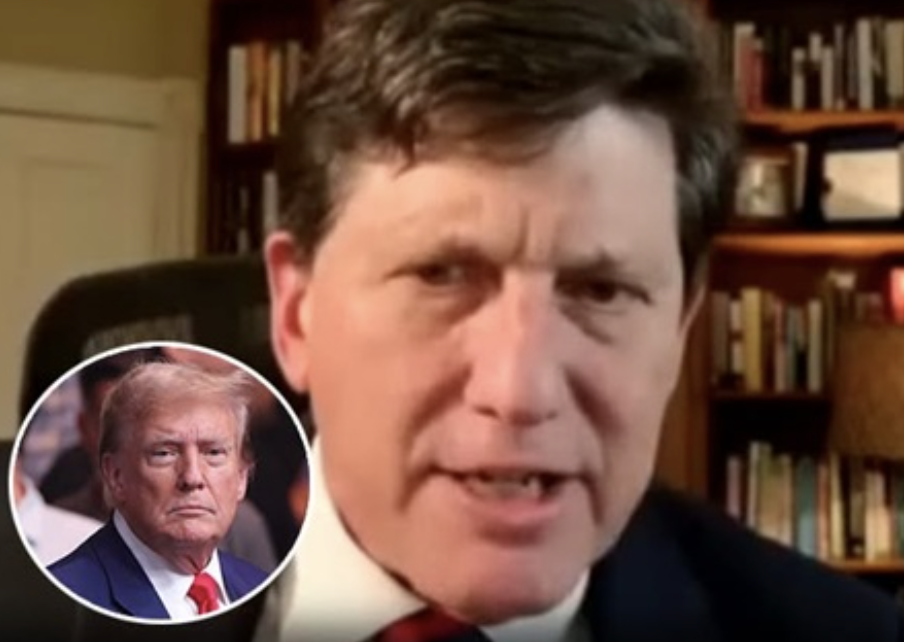
In the high-stakes arena of modern American politics, a volatile debate is unfolding at the intersection of psychiatry and national security. It centers on a question that is as unprecedented as it is polarizing: Is the leader of the free world displaying signs of dangerous cognitive decline, or is he simply playing the same aggressive, hyper-confident political hand that brought him to power?
At the heart of this storm is Dr. John Gartner, a psychotherapist who has spent years breaking one of his profession’s oldest taboos. As the founder of Duty To Warn—an organization of mental health professionals and citizens who believe they have an ethical obligation to sound the alarm on public figures they deem dangerous—Gartner is leading a controversial charge.
The debate has reached a fever pitch following Donald Trump’s return to the White House. Critics, political opponents, and a faction of mental health experts argue that the President’s speeches and late-night social media salvos have grown increasingly erratic and hostile. Yet, his fiercely loyal base and political allies dismiss the outcry as nothing more than a coordinated partisan hit job, weaponizing psychology to achieve what they couldn’t at the ballot box.
To date, there is no official medical diagnosis, no leaked clinical report, and no statement from White House physicians suggesting Donald Trump suffers from dementia or any other cognitive illness. Legally and medically, the President remains fit to serve.
The Anatomy of a Warning
The friction between clinical observation and public speculation recently collided during an interview on SiriusXM radio. Speaking with political commentator Dean Obeidallah, Gartner leveled his most direct charges yet, claiming Trump’s public conduct points toward severe narcissism and a dementia-related deterioration that directly impacts his judgment and impulse control.
Gartner’s argument hinges heavily on what he describes as “grandiose” behavior. He pointed to a steady stream of social media posts and rhetorical flourishes where Trump aligns himself with historic, heroic, and even messianic imagery. Where supporters see a master class in political theater and a middle finger to the establishment, Gartner sees clinical grandiosity—an inflated sense of self-importance that he argues is becoming more unmoored.
From praising his own achievements as rivaling the greatest presidents in American history to utilizing unusually personal, vitriolic language against his adversaries, Trump’s style is undeniably distinct. His defenders are quick to point out that this is not a medical symptom; it is the Trump brand. For decades—as a real estate mogul, a reality TV star, and a political candidate—provocative, larger-than-life rhetoric has been his trademark strategy.
But for Gartner, the calculus changes entirely when the man behind the microphone also commands the world’s most powerful military.
Echoes of Empires and the Ultimate Hyperbole
The anxiety shared by Gartner and his peers escalates when examining the historical figures Trump occasionally invokes. In public remarks, Trump has drawn comparisons between himself and dominant rulers of antiquity, including Julius Caesar, Napoleon Bonaparte, and Alexander the Great—men defined by their absolute authority and vast imperial conquests.
Gartner notes a chilling disparity: modern commanders-in-chief possess destructive capabilities that ancient or 19th-century emperors could scarcely conceive. A reckless hand on modern weapon systems, Gartner warned, could trigger catastrophic global consequences.
However, Gartner’s warnings veered into highly controversial territory when he predicted that Trump could potentially “kill more people than Hitler.”
The backlash was swift and severe. Critics across the political spectrum accused Gartner of using inflammatory, irresponsible hyperbole that cheapens the atrocities of World War II and deepens an already fractured national divide. For many political analysts, the comment crossed the line from professional concern into raw, partisan opinion.
The Ethics of the “Goldwater Rule”
Gartner’s public declarations throw a harsh spotlight on a long-standing ethical civil war within the psychiatric community. Under the American Psychiatric Association’s “Goldwater Rule”—established after psychiatrists publicly questioned the mental fitness of 1964 presidential candidate Barry Goldwater—professionals are strictly discouraged from diagnosing public figures they have not personally evaluated. The rule exists to protect the integrity of the profession and prevent medicine from being used as a political cudgel.
Yet, a rebellious contingent of experts argues that the rule is an outdated gag order. They contend that when a leader possesses the nuclear codes, a collective “duty to warn” the public overrides professional etiquette.
For his part, Trump has consistently mocked questions regarding his mental acuity. He routinely boasts of his physical health and “mental sharpness,” frequently citing cognitive tests he claims to have aced during his campaigns. The White House has consistently backed these assertions, releasing medical reports certifying his fitness for office and accusing the media of distorting verbal slips and isolated incidents to inflict political damage.
Meanwhile, the opposition watches every verbal mix-up and aggressive tweet with a magnifying glass, insisting that the immense global impact of presidential decision-making demands unrelenting scrutiny.
A Nation Divided by Perception
Ultimately, the debate over Trump’s mind is a mirror reflecting the deep, systemic fractures of American society.
To his supporters, Trump’s unyielding defiance represents strength—a necessary bulwark against entrenched political elites. To his critics, that same behavior symbolizes instability, polarization, and a dangerous normalization of extremism.
While Dr. Gartner’s stark warnings continue to reverberate across social media, they remain speculative theories, not medical facts. There is no verified clinical proof that Donald Trump is incapacitated by cognitive disease.
What remains indisputable, however, is that the intersection of mental fitness and political power has become a permanent battleground. In an era dominated by a 24-hour news cycle and instant digital reach, the psychological state of a leader is no longer just a matter for the history books—it is a fierce, ongoing debate playing out in real-time on the global stage.