The family of a 33-year-old Texas Army veteran who died while in jail during a mental health crisis is suing county officials, claiming his death was preventable and the result of cruel and negligent treatment.
A federal wrongful death lawsuit filed Tuesday accuses Angelina County, jail staff, and a nurse of failing to provide life-saving medical care to Glenn Smallwood Jr., who was arrested in June 2023 for misdemeanor public intoxication while reportedly suffering from a severe psychiatric episode.
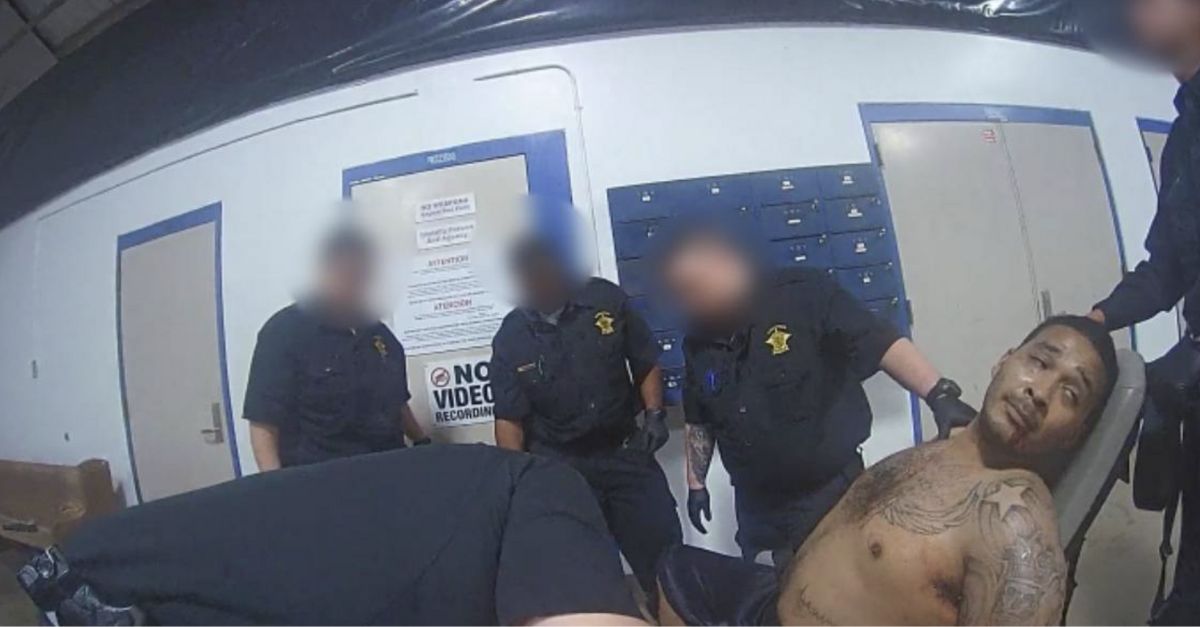
According to the lawsuit—filed by civil rights attorney Erik Heipt on behalf of Smallwood’s estate—he was “paranoid, confused, sweating, shaking, unsteady, and bleeding from his mouth” when brought to the Angelina County Jail in Lufkin, Texas. Despite his visible distress, the jail followed its standard policy for intoxicated individuals: they strapped him to a restraint chair to “sober up.”
Smallwood’s condition quickly deteriorated. He became unresponsive, began vomiting, and appeared to struggle to breathe in the position he was strapped. Body camera footage cited in the lawsuit reportedly shows guards laughing and joking while Smallwood was visibly ill. One guard was quoted as saying, “I might throw up if I see that again, man, I can’t,” while others allegedly tightened his restraints even further.
The lawsuit claims guards eventually wheeled Smallwood into a “detox” holding cell, where they saw him moaning and losing consciousness—but still left him alone. A nurse with “limited training and scope of license” attempted a sternum rub and used smelling salts to revive him briefly, then left him unattended.
Fifteen minutes later, Smallwood was dead.
The lawsuit reveals Smallwood had been diagnosed with schizoaffective disorder and had recently sought psychiatric help from the Burke Center, a local mental health facility. While there, he was reportedly in active psychosis, prompting the facility to begin paperwork for an involuntary hospital admission. But Smallwood left before the process was complete.
The Burke Center then issued a mental health warrant in hopes of securing hospitalization. However, when Lufkin police encountered Smallwood behaving erratically in public, they arrested him and took him to jail rather than to a hospital.
His family believes that decision cost him his life.
Smallwood had reportedly self-medicated with methamphetamine—known to worsen psychosis in people with mental illness. The lawsuit argues that authorities failed to recognize this as a medical emergency and instead treated him with disregard and cruelty.
“They treated him worse than an animal,” said John Smallwood, the veteran’s brother, in a statement to McClatchy News. “It’s disturbing to me that jail guards were joking and laughing when my brother was strapped in a chair, vomiting and losing consciousness.”
Sheriff Tom Selman, whose lieutenant was present during the incident and is named in the suit, issued a brief statement saying he had met with the Smallwood family and respected them, but declined further comment, citing legal advice.
Glenn Smallwood Jr. leaves behind three young children. His family is seeking both compensatory and punitive damages, hoping to hold those responsible accountable and prevent similar tragedies in the future.