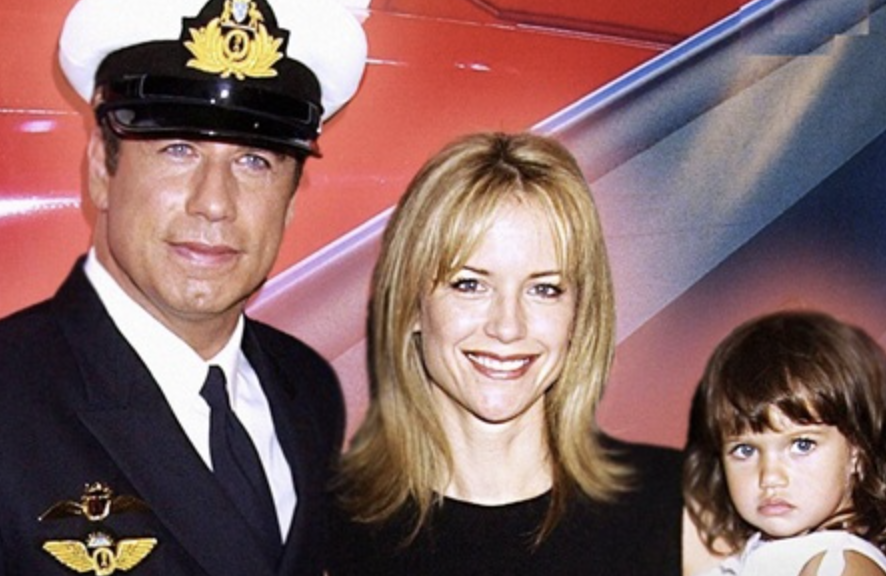
There is a distinct kind of magic that happens when Hollywood royalty descends upon the French Riviera, but at the 2026 Cannes Film Festival, the real story wasn’t just about the cinema. It was about legacy.
When John Travolta stepped onto the iconic Croisette, he brought more than just his enduring star power and a highly anticipated directorial project. Walking strictly by his side was his 26-year-old daughter, Ella Bleu Travolta. Together, the duo managed to effortlessly steal the spotlight, turning the festival’s rigorous gauntlet of red carpets and photocalls into a masterclass in family continuity and Hollywood grace.
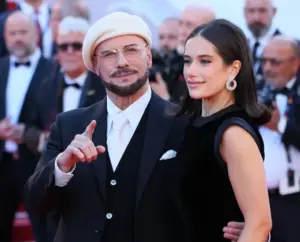
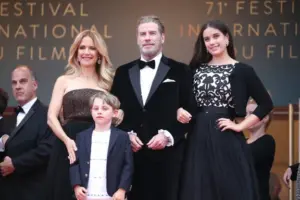
The buzz ignited the moment they arrived for their first major screening, flashing a unified front in impeccably coordinated formal wear. The elder Travolta, maintaining the vintage-inspired elegance that has defined his later-career aesthetic, wore a classic, tailored black suit complete with a vest and tie. He accessorized with a distinctive beret and round glasses—a nod to European chic that felt right at home in Cannes. Beside him, Ella mirrored his sophistication in a sweeping black velvet gown. With its simple silhouette, understated detailing, and fine jewelry, her look was a masterclass in quiet luxury, framed by softly styled hair that let her natural features do the talking.
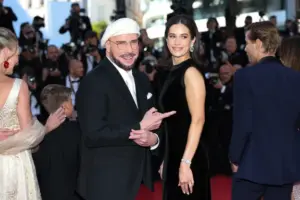
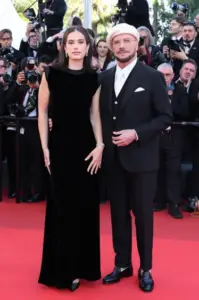
The fashion storytelling continued into the next day’s photocall. Pivoting to a more modern, structured aesthetic, Ella opted for a sharp white midi dress accented by contrasting black details. Her father stuck to his monochromatic guns, leaning into a sharp, all-black ensemble of a jacket, trousers, and boots, tied together by his signature accessories. For the legions of photographers capturing them from every conceivable angle, they were a visual dream: cohesive, polished, and undeniably connected.
Naturally, as these images ricocheted across the internet, the digital court of public opinion went into overdrive. But the conversation quickly shifted from fashion to genetics.
Social media platforms became flooded with side-by-side comparisons as fans debated a timeless question: Who does Ella look like? For many, the resemblance to her late mother, Kelly Preston—who tragically passed away in 2020 after a private battle with breast cancer—was undeniable and deeply moving. Preston, a widely respected actress and devoted mother, remains a foundational piece of the family’s public narrative. For others, Ella’s expressions and facial features were pure John.
Yet, while the internet debated her cheekbones, Ella herself has been quietly charting her own course. Now in her mid-twenties, she is navigating the tricky waters of being a “legacy kid” with remarkable poise. Rather than chasing overnight, flashy stardom, she has chosen a path of steady, deliberate development, building an independent identity within the entertainment industry while honoring her roots.
A massive part of that journey involves her father. The project that brought them to Cannes is a deeply personal, family-centered film directed by Travolta himself. Adapted from earlier creative work, the narrative dives into heavy, universal themes: travel, deep personal reflection, and the intricate web of emotional relationships. By casting Ella, Travolta didn’t just hire an actress; he infused the film with real-life stakes and an authentic emotional shorthand that money simply can’t buy. This onscreen collaboration is just the latest in a series of joint productions the pair have tackled in recent years, a professional alliance that continues to fascinate audiences eager to see how their off-screen bond translates to the screen.
Over the years, Travolta has never missed an opportunity to publicly champion his daughter. In past interviews, he has frequently spoken of her with a fierce, protective admiration, describing her as confident, creative, and remarkably grounded. He has long maintained that his role as a father is to support his children’s individuality, a sentiment that felt palpable in the way he shared the Cannes spotlight with her—never overshadowing, always supporting.
It is this potent mix of professional synergy and raw emotional symbolism that elevated their Cannes appearance from a standard promotional stop into something much larger. Yes, the international film industry was there to critique the art, and fashion critics were there to dissect the wardrobe. But for the public, watching a father and daughter navigate a major international stage together—carrying the memory of a lost matriarch while forging a path forward—was deeply resonant.
As expected with any high-profile celebrity appearance, the reactions online ran the gamut. Some viewers were genuinely touched by their tight-knit dynamic and shared work ethic, while others remained hyper-focused on stylistic critiques and visual DNA deep-dives. This swirling vortex of commentary only amplified the event’s digital footprint.
With the film slated for an international release later in 2026, the global press tour will undoubtedly keep the Travoltas in the headlines for months to come. For Ella, it adds another significant credit to a growing, diverse filmography. For John, decades after Grease and Pulp Fiction first cemented him in the cultural lexicon, this festival turn proves his enduring longevity and his evolving passion for directing intimate, character-driven stories.
Ultimately, Cannes 2026 provided a fascinating snapshot of modern celebrity culture. It proved that even in an era dominated by fleeting social media trends and rapid-fire content consumption, audiences still crave deep connection and familiarity. The enduring fascination with the Travolta family isn’t just about nostalgia; it’s about watching the torch being passed, gracefully, to the next generation.