Rain tapped gently against the hospital window, a steady, soft rhythm, as if the world outside were deliberately whispering, trying not to disturb the fragile reality unfolding within.
For weeks, my grandmother had lain in that quiet room. With each passing sun, her condition weakened, her presence in our world softening like a fading photograph. The doctors spoke with that practiced, careful precision unique to oncology wards—choosing gentle words that nonetheless carried the crushing weight of absolute certainty. There is not much time left, they told us. It was a truth we all understood, even as we collectively conspired not to say it aloud.
I anchored myself to her bedside almost every day. I held her hand tightly, fueled by the irrational, desperate hope that physical touch alone could keep her tethered to this life just a little bit longer.
We filled the creeping hours quietly. Sometimes we talked; sometimes we just sat in a heavy, shared silence that felt strangely, beautifully full. To pass the time, we began flipping through her old photo albums. Her thin, frail fingers moved slowly over the plastic sheets, stirring up memories that returned to her in vivid fragments. Every now and then, a burst of genuine laughter would pierce the ambient sadness of the room—usually when we stumbled upon an absurd, outdated hairstyle or a faded picture of a family gathering from a bygone era. They felt like snapshots from another lifetime entirely.
The Ghost in the Album
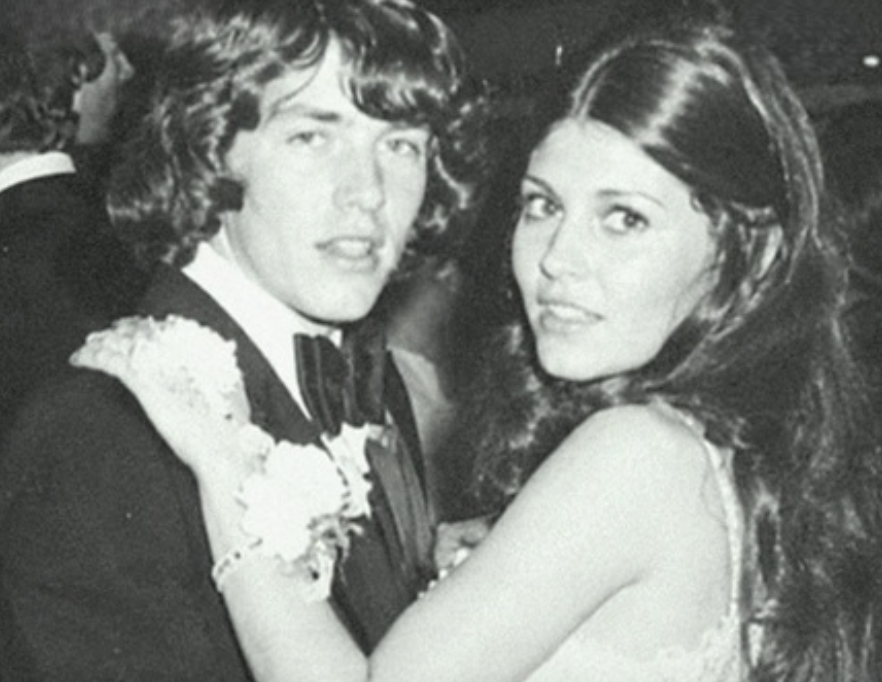
One evening, propped up against her pillows, she sat with a particularly ancient album resting across her lap. Its pages were yellowed and fragile, the edges curled tight with age, looking as though they might turn to dust if handled too quickly. She turned them with immense care, then suddenly froze on a black-and-white photograph of a young boy standing right beside her.
The change in her face was instantaneous. It was as if something buried deep within her soul had suddenly standard-awakened, jolted by the image.
“That was him,” she whispered. Her voice was barely a breath, a feather-light sound in the quiet room.
I leaned in closer, entirely unsure of what she meant, and asked her who she was looking at. Her fingers trembled slightly as she traced the contour of the boy in the photo.
“The boy I loved in school,” she said.
The words came out as if they had been trapped in a pressure cooker for decades, just waiting for the valve to release. I sat there, stunned. In my entire life, through all our hours of talking, she had never mentioned him. Not even once.
A Melody Unchained by Time
His name, she told me, was Henry. They were just teenagers when they met, long before my grandfather ever entered the frame. According to her memories, they were utterly inseparable for a time, sharing the kind of simple, everyday moments that feel monumental when you are young. He carried her books between classes; he made her laugh until her stomach hurt; he walked her home every single afternoon. Their connection, she explained, was entirely natural and unforced—as if it had simply always been meant to exist.
As she spoke, the sterile walls of the hospital room seemed to dissolve. In their place emerged something much warmer, distant, and alive. She vibrated with memories of high school dances, of conversations that stretched long past their curfew, and of one final, bittersweet night at prom when the two of them stayed behind in the gym long after everyone else had gone home.
The song playing in the background that night, she recalled quietly, was Unchained Melody. Even now, sitting on the edge of her life, she claimed she could still hear it playing whenever the world around her grew quiet enough.
But like so many chapters written in youth, theirs didn’t yield the ending they had map-pinned in their minds. After graduation, the gravity of real life pulled them apart. Families relocated. Letters were exchanged for a brief, hopeful window, and then, slowly, the ink dried up. Communication sputtered and stopped. There was no explosive argument, no dramatic betrayal—just the quiet accretion of distance and time stretching between two people until an absolute silence replaced everything they had built. For the rest of her life, she had believed, in her own quiet way, that he had simply moved on and forgotten her.
“Do you think he truly did?” I asked her softly, my eyes fixed on the old photograph.
She hesitated for what felt like an eternity, her gaze locked onto his youthful face.
“I don’t know,” she finally admitted, her voice cracking with a fragile, protected grief. “That was the hardest part. The not knowing.”
Then, as if navigating a sudden wave of marital guilt, she quickly added that she had loved my grandfather deeply. Yet, it was clear: that first love had never truly vanished from the hidden corridors of her heart.
The Promise and the Wall
Something shifted radically inside me in that moment. I looked at this woman who had given me everything, now slipping away, and asked her a question that felt almost reckless: “Would you want to see him again? If it were possible?”
Her eyes instantly welled with tears. “I’ve dreamed about it my whole life,” she said.
That was all the permission I required. Without calculating the odds or thinking too deeply about the logistical nightmare of tracking down a ghost from the mid-20th century, I made her a solemn promise. I told her I would find him.
That very night, the journalism instincts I didn’t know I possessed kicked into overdrive. I began digging through dusty public records, digital school archives, and any loose thread attached to his name. It was an uphill battle. Decades had washed over his trail, leaving scattered, incomplete, or entirely missing data. I hit wall after wall. There were dozens of men with the exact same name, endless dead ends, and moments of profound frustration where I wanted to slam my laptop shut. But every failure only sharpened my resolve.
The following morning, I called her old high school, expecting bureaucratic dismissals or confusion. Instead, the woman on the other end of the line paused, listening to the raw urgency in my voice, and promised to see what she could do. That single pivot of empathy unlocked a domino effect of small discoveries—archived addresses, disconnected phone numbers, and eventually, distant relatives who barely remembered Henry but were willing to dig up a lead.
But the real obstacle wasn’t the data. It was closer to home.
When I told my mother about the hunt, her reaction was immediate, visceral, and fiercely defensive. “Stop this right now,” she commanded.
She told me I was interfering in things I couldn’t possibly understand, arguing that certain chapters of the past were sealed for a reason and should remain untouched. Her fear was palpable, though she choked when trying to articulate it. It didn’t feel like anger; it felt like she was protecting a heavy, generational secret she had carried until her shoulders were sore.
The friction between us intensified over the next few days. My mother insisted that dragging Henry into reality would only inflict unnecessary pain and shatter the fragile, hard-won peace my grandmother had cultivated in her final days. I shot back with the journalist’s creed: that the truth, no matter how disruptive or painful, is always better than a comforting silence. Beneath her rigid resistance, I knew she was hiding something she wasn’t ready to face.
The Hidden Box
Then came the breakthrough, born of a daughter’s lingering secret. I discovered a box my mother had kept hidden away in the dark corners of her closet for years.
Inside lay the truth: dozens of letters, all meticulously addressed to my grandmother, all penned in the exact same elegant, careful handwriting. They were all from Henry.
He had never stopped writing. For decades, the letters kept coming—birthdays, holidays, ordinary Tuesdays—years of unanswered messages pulsing with memory, longing, and an unwavering devotion.
The realization shattered every narrative I had grown up believing. My grandmother had spent her entire adult life believing she was discarded and forgotten, but it was a lie. The letters had been intercepted and withheld by a family council long ago, an old decision forged in fear, a misguided attempt to preserve domestic stability at the cost of a woman’s truth. Through a cascade of tears, my mother finally confessed, explaining that she genuinely believed she was protecting everyone, shielding the family from a past that could destabilize the present.
Among the stack was a letter written very recently. Henry was asking, simply, if my grandmother was still alive.
That was the moment the axis shifted completely. The letter included a return address, and to my shock, it was only a short drive away. Without a second thought, I got into my car.
The Last Dance
The address led to a modest, quiet house framed by a simple, meticulously tended garden. When I knocked, the door swung open to reveal an elderly man. As he looked at me, a fragile sense of recognition flickered in his eyes.
I didn’t say a word. I just held up the black-and-white photograph from the album.
The transformation was instantaneous. His breath caught, and his voice broke into a thousand pieces as he said her name. There was zero confusion, no cognitive delay—only a profound, bulletproof certainty that time had failed to erode. He had been waiting for this knock, even when logic told him that waiting no longer made any sense.
I told him everything. That she was alive. That she was in a hospital bed blocks away. That she had never, not for a single day, stopped thinking about him. His hands began to shake violently as he gripped my arm, demanding that I take him to her immediately. The raw urgency in his voice carried the compressed weight of a lifetime of unreleased emotion. It wasn’t a debate about whether he should go; it was the only thing that mattered in the universe.
The next morning, I guided him into her hospital room. The atmosphere was completely suspended, as if the very air in the room was holding its breath, waiting for the impact.
When my grandmother opened her weary eyes and saw him standing at the foot of her bed, the confusion lasted for only a fraction of a second before total, radiant recognition took over. Her face transformed into a version of herself I had never seen before—a girl rediscovered.
They spoke in soft, hushed tones at first, terrified that loud voices might shatter the miracle of the moment. Then, Henry reached out and took her hand. She gripped it without a shred of hesitation. In that singular touch, decades of separation seemed to collapse into nothingness, reducing a lifetime of distance into a single, breathtaking present moment. There was no need for explanations, no room for old regrets—there was only presence, recognition, and the return of a love that had refused to die.
I reached into my pocket, pulled out my phone, and pressed play. The familiar, haunting strains of Unchained Melody filled the sterile room, weaving through the silence.
Henry stood by the guardrails of her bed, looked into her eyes, and asked her if she would dance with him. She nodded, tears cutting quiet tracks down her cheeks as we gently helped her to her feet.
Leaning on him, holding each other close, they moved slowly, meticulously, swaying to the music. It was a beautiful, heartbreaking sight: two elderly bodies relearning a dance their souls had never forgotten.
The Final Circle
When she passed away just a few days later, the room was filled with a profound, undeniable peace. There was no agonizing struggle, no lingering fear—just a calm, quiet exit. Rested in her lifeless hand was one of Henry’s letters, a physical piece of paper that had finally closed a circle left open for far too long. At the funeral, my mother stood shoulder-to-shoulder with me in the damp grass, her hand trembling inside mine, finally at peace with the past.
In the end, this journey taught me something that has altered the way I view human connection. Love does not simply expire because two people are forced apart by the currents of life. Sometimes, it just goes underground. It waits quietly, enduring through the decades and the distance, preserved in the small, sacred things—in hidden letters, in old photographs, and in unfinished moments.
And every once in a while, if life is merciful enough to grant it, those moments find their way back home.