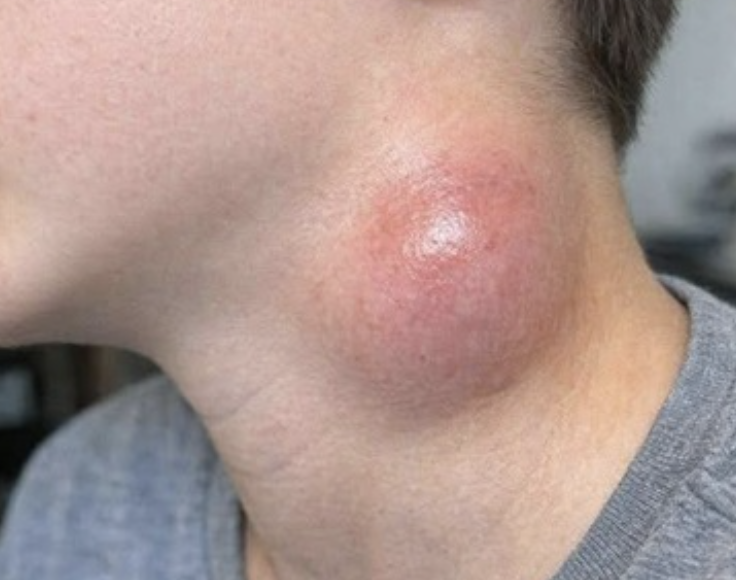
For any parent, the world can tilt on its axis in a fraction of a second. It usually happens during a routine moment—giving a bath, fastening a seatbelt, or leaning in for a goodnight kiss—when your fingers brush against it: a sudden, distinct lump in your child’s neck.
Instinctively, the mind races to the darkest possible corners. But as a seasoned reporter who has covered countless health crises and spoken with scores of pediatric experts, I can tell you that the data offers a reassuring counter-narrative. While the sight or feel of a new swelling is undeniably alarming, the overwhelming majority of these lumps are not sinister. Instead, they are the visible evidence of a young immune system doing exactly what it was designed to do: fighting off a common, everyday infection like a cold, a sore throat, or a minor virus.
Understanding the mechanics behind these swellings is the first step in disarming the immediate panic, allowing parents to transition from fear to focused, calm observation.
The Art of the Calm Assessment
When you first discover a lump, your initial executive decision shouldn’t be a frantic internet search; it should be to maintain absolute composure. Children are remarkably adept emotional mirrors, absorbing and reflecting the anxiety of their caregivers. If you panic, they panic.
Instead, take a breath and conduct a gentle, mindful examination. The physical characteristics of the lump tell an important story:
-
Texture: Most benign, reactive lymph nodes feel relatively soft or rubbery.
-
Mobility: They will often shift slightly under your fingertips rather than feeling anchored.
-
Sensitivity: They may be mildly tender to the touch, which is typical for an active immune response.
These swellings frequently materialize at the tail end of a minor illness and can stubbornly linger for days—or even weeks—after the runny nose and cough have vanished. In the medical community, the gold standard for a child who is otherwise vibrant, eating well, and playing normally is “watchful waiting.” It is a strategy of disciplined monitoring, keeping a close eye on the lump’s trajectory while deliberately avoiding the temptation to frequently poke, prod, or manipulate the tissue, which only causes further irritation.
Red Flags: Knowing When to Cross the Medical Threshold
While patience is a virtue in pediatric care, journalism teaches us that every story has critical turning points. For parents, that means knowing exactly which symptoms demand immediate escalation to emergency or urgent medical evaluation.
Beyond these acute emergencies, some neck lumps stem from localized bacterial infections. Unlike viral reactions, these require a professional diagnosis and a course of antibiotics. In these scenarios, the lymph node may become intensely inflamed, highly sensitive, and noticeably warm to the touch. When you present these symptoms to a pediatrician, they may utilize diagnostic tools—ranging from blood panels to non-invasive imaging tests—to pin down the exact culprit. Securing an early clinical assessment ensures the infection is intercepted before it can escalate.
First, Do No Harm: Supportive Care at Home
While you are waiting for a scheduled clinic appointment, the objective is pure comfort. Think of home care as a supportive holding pattern. A warm compress applied gently to the affected side of the neck can work wonders to soothe mild, localized discomfort. Hydration is equally critical; keeping fluids moving supports the lymphatic system and bolsters the body’s natural defenses.
If your child seems uncomfortable, age-appropriate pain relievers can be utilized, but this should always be done in strict accordance with your pediatrician’s dosing guidelines. Above all, prioritize rest. The body expends an immense amount of metabolic energy to mount an immune response and recover.
However, a vital rule of frontline care is knowing what not to do. Under no circumstances should you attempt to squeeze, pinch, or forcibly “pop” a neck lump. These are not blemishes; aggressive manipulation can damage delicate tissue, push infections deeper into the neck spaces, or trigger severe secondary complications. Furthermore, bypass the unverified home remedies circulating on social media forums. Stick to the clinical playbook: observe, comfort, and wait for professional validation.
The Power of Professional Reassurance
There is a common misconception among parents that calling a doctor for a minor symptom is an overreaction. It isn’t. It is the definition of responsible guardianship. Modern healthcare infrastructure is designed to handle these exact moments of uncertainty through accessible triage networks, including:
-
24/7 Nurse Advice Lines: Perfect for running through a checklist of symptoms.
-
Telehealth Consultations: Ideal for a visual assessment without leaving the house.
-
Urgent Care Clinics: Ready for same-day, walk-in evaluations when your primary doctor is booked.
Utilizing these resources isn’t just about treating the child; it’s about treating the parent’s anxiety. Even if the conclusion is that the lump is entirely benign, the peace of mind that comes from a professional opinion is invaluable.
Ultimately, a sudden neck lump is a test of a parent’s resolve. By balancing vigilant observation with an awareness of genuine red flags, you can navigate the situation safely, rationally, and without unnecessary panic. Staying informed allows you to protect your child’s health with clarity, ensuring that minor issues run their natural course while serious conditions receive the rapid, expert intervention they require.