Mother ‘Heartbroken’ After Disabled Daughter, 11, Banned from Bouncy Castle Over Fears She’d “Damage It”
An 11-year-old girl from Sunderland was left crushed after being told she couldn’t join in the fun at her cousin’s birthday party—because of her disability.
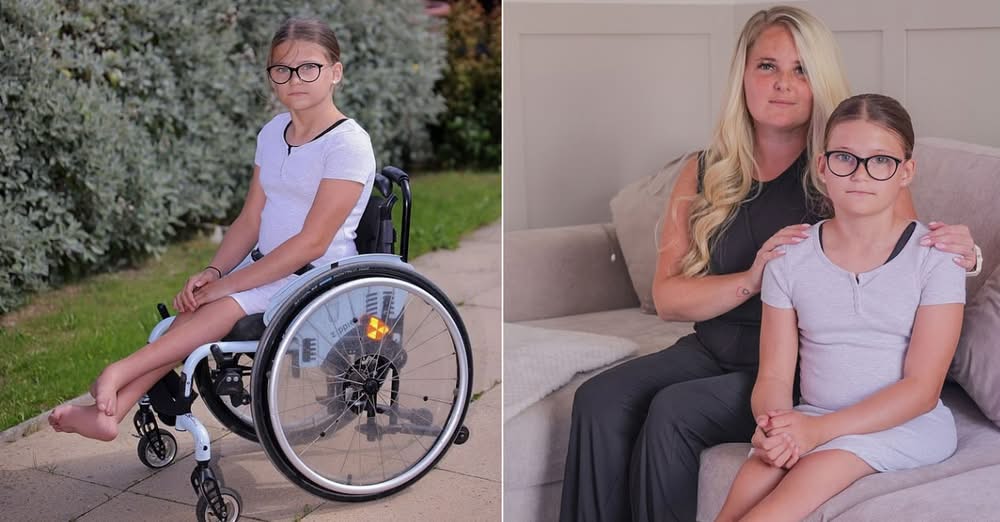
Rubie O’Brien, who lives with spina bifida and uses a wheelchair, was barred from playing on a Mario Kart-themed bouncy castle, despite initially being allowed on. Her mother, Ciara Heffernan, said the decision left Rubie excluded and humiliated, forced to watch from the sidelines while other children played.
“She was absolutely gutted,” said Ciara. “She came and sat quietly with us adults—it was heartbreaking.”
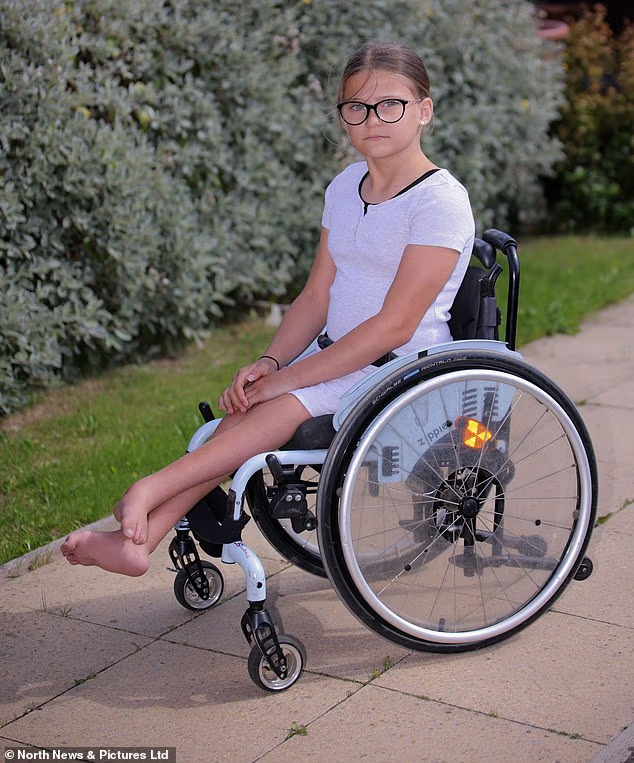 **Rubie O’Brien (pictured), who has spina bifida, was devastated after being removed from the bouncy castle at her cousin’s birthday party**
According to Ciara, a 34-year-old carer, Rubie had been happily bouncing and dancing inside the inflatable when a male staff member from the events company, Elite Entertainments, asked her to get off—claiming her movements could damage the equipment.
“My partner was told that Rubie, who was bouncing on her bottom and wiggling her hips, could harm the castle,” said Ciara. “The man even mimicked how she was moving. It felt cruel.”
 **Rubie and her mother, Ciara Heffernan. Ciara says she’s always told Rubie there’s no such thing as “you can’t.”**
The party took place in South Shields, South Tyneside. The inflatable came with a disco ball inside, and Rubie—initially allowed on—was dancing joyfully with the other children.
But a short while later, Ciara’s sister was approached and told Rubie needed to get off for “health and safety reasons.” When questioned further, staff reportedly cited fears Rubie could damage the structure.
“This child has climbed, danced, traveled—she’s done more than most able-bodied kids. A bouncy castle never seemed like an issue before.”
 **Staff told Rubie to come off the inflatable after expressing concerns her movements might damage it**
Elite Entertainments, the company behind the setup, defended their actions. Julie Nelson, a company representative, said the incident had been misunderstood.
“Safety is always our top priority,” said Nelson. “Had we known about Rubie’s condition, we could have provided a larger castle to accommodate her needs safely.”
She also explained that the party had far more children than anticipated—36 instead of the usual 25—which increased risks.
“If a child had landed on her while she was lying down, it could have led to injury. We consulted the castle’s manufacturer afterward, and they confirmed we acted appropriately.”
But Ciara remains unconvinced.
“I’m not angry about safety precautions. I’m angry that my child was singled out. If too many kids were on, she should’ve been told to wait—not banned.”
 **Ciara says the exclusion goes against everything she’s taught her daughter about resilience and equality**
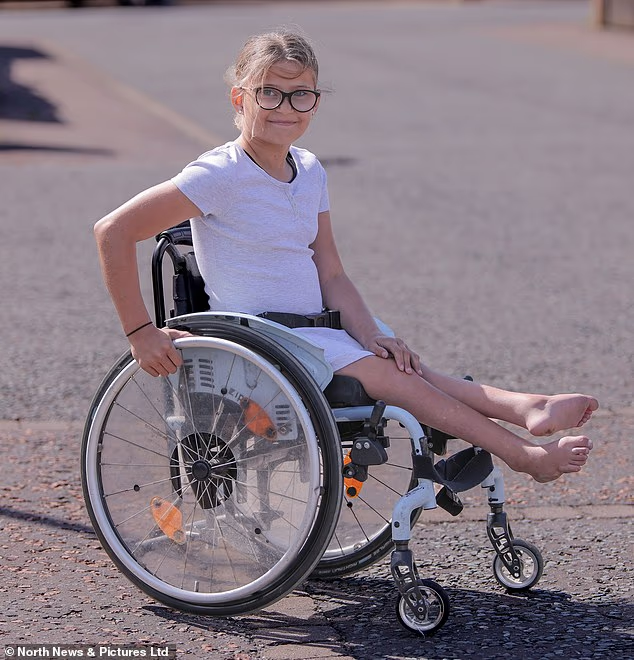 **Rubie has never before been denied access to a bouncy castle, her mother said**
 **After being told to leave the inflatable, Rubie spent the rest of the party sitting with the adults**
Ciara says the experience has been difficult to explain to Rubie, who has always been taught that her disability doesn’t define what she can or can’t do.
“All I’ve ever wanted is for her to have the same opportunities as any other child. That day, she was made to feel different—and not in a good way.”
What is Spina Bifida?
Spina bifida is a birth defect that occurs when the spine and spinal cord don’t develop properly in the womb. It affects around 700 babies in the UK and up to 2,000 in the US each year.
During early pregnancy, the neural tube—which forms the brain, spinal cord, and surrounding tissues—fails to close completely. This leads to gaps in the spine, and in severe cases, part of the spinal cord may protrude outside the body.
There are three main forms:
-
Spina bifida occulta – Mildest form; often symptomless.
-
Meningocele – A sac of fluid protrudes, but the spinal cord remains in place.
-
Myelomeningocele – The most severe type, where spinal nerves and tissues are exposed.
While some children have minor symptoms, others may experience paralysis, incontinence, or infections. Folic acid supplementation during pregnancy can significantly reduce the risk.