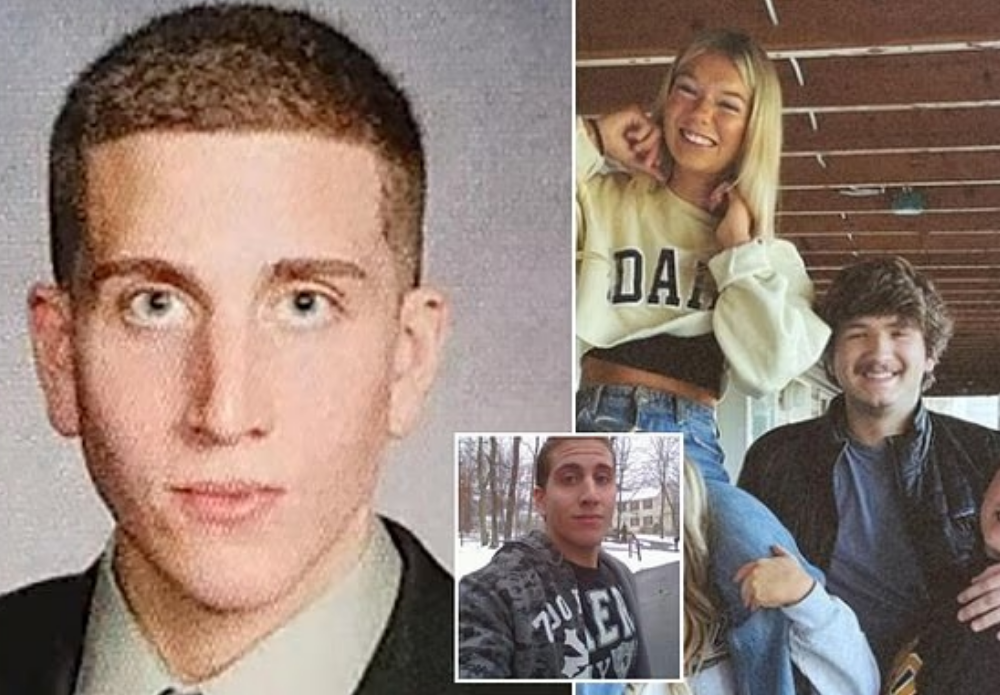
Before Bryan Kohberger was accused of one of the most haunting mass killings in recent American history, before he allegedly crept into a student house in Moscow, Idaho and murdered four college students in their sleep, he was just another troubled kid with secrets—secrets that, in hindsight, seem like ominous clues to the horror that would follow.
Those who knew him growing up say there were always signs. Small ones at first. Then larger, more disturbing ones that were often dismissed as “weird” or “awkward” but never dangerous. Until it was too late.
Kohberger’s high school classmates remember him as “odd,” and not in a quirky, harmless way. He had a reputation for making sick, unsettling comments, especially about women. A former female peer recalled how he’d stare at her in class and make vulgar remarks under his breath—whispers that chilled her even then. Some of those comments, she said, had an eerie edge of violence.
Then there were the drugs. As a teenager, Kohberger reportedly spiraled into a heroin addiction. His rapid weight loss and erratic behavior didn’t go unnoticed. He became withdrawn and gaunt, his eyes always darting, always watching. Friends said he got clean eventually, but something about him never quite returned to normal. The damage, it seemed, had already been done.
At one point, in an obsessive effort to regain control over his body and mind, Kohberger adopted a bizarre, hyper-restrictive vegan diet. He refused to eat any food that had come into contact with animal products—including cookware that had once touched meat. Even his family found it exhausting. It wasn’t just a lifestyle—it was a compulsion. A need to dominate and control every aspect of his consumption. One that foreshadowed a much darker appetite.
But perhaps most revealing of all was the nickname that followed him in school: “Bryan the Creeper.” A name no teenager wants—but one he seemingly earned. Classmates say it wasn’t just because of his strange stares or awkward silences, but because there was a lurking sense of menace in the way he carried himself. Like he was always on the outside looking in—studying people, analyzing them, cataloging them.
After his arrest in connection with the brutal stabbing deaths of Kaylee Goncalves, Madison Mogen, Xana Kernodle, and Ethan Chapin, those long-forgotten stories came rushing back. Suddenly, the quiet loner with a criminal justice degree and an obsession with serial killers didn’t seem so harmless anymore.
Today, as the nation awaits his trial, the world is left to wonder: Were there ever enough warning signs to stop him? Could his descent into darkness have been prevented? Or was it always just a matter of time before Bryan Kohberger—shaped by years of inner torment and silent rage—would finally explode into violence?
What’s certain now is that his childhood wasn’t just troubled. It was a blueprint.