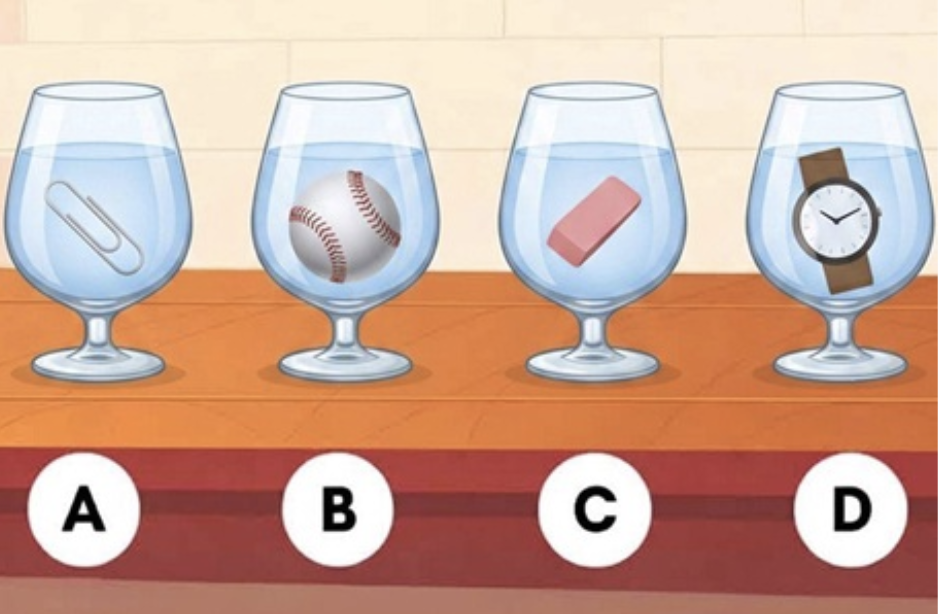
At first glance, it looks like a standard middle-school science diagram—simple, clean, and utterly unremarkable. You’re presented with four identical glasses: A, B, C, and D. Each appears filled to the exact same brim with water. But look closer. Nestled inside each vessel is a different everyday object, and while the setup looks perfectly balanced, that symmetry is a carefully constructed trap.
The question is deceptively straightforward: Which glass contains the most water?…