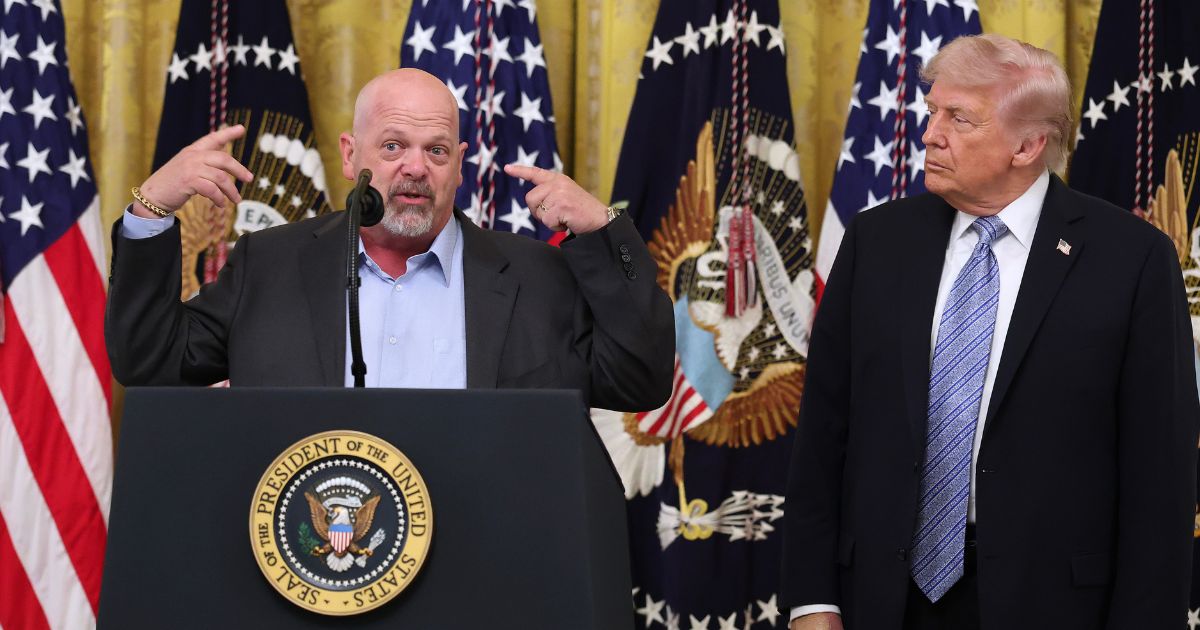
Standing in the heart of the West Wing on Monday, Rick Harrison—the shrewd face of the “Gold & Silver Pawn Shop” and the cornerstone of the hit series Pawn Stars—took his signature bartering skills to the national stage. But this time, he wasn’t looking for a deal; he was offering a full-throated endorsement.
Handed the microphone during a high-stakes small business summit, Harrison stood shoulder-to-shoulder with President Donald Trump and abandoned all professional neutrality. For Harrison, the value of the current administration isn’t up for negotiation.
NEW: Pawn Stars’ Rick Harrison joins President Trump at the White House:
“Literally he’s going to go down as maybe the best president ever. I love this guy.”
“The backbone of this country is small business. Plain and simple.”
“The last guy in office, all we heard was that we… pic.twitter.com/kq9lbTemYs
— Fox News (@FoxNews) May 4, 2026
A Historical Perspective from the Shop Floor
“I’m a history buff and I know a lot about this White House thing and everything,” Harrison remarked, leaning into the populist charm that has made him a household name. He didn’t mince words regarding the President’s legacy: “Literally, he’s going to go down as maybe the best president ever. I love this guy.”
Harrison’s praise wasn’t just personality-driven; it was rooted in the bottom line. He specifically cited the tangible impact of the administration’s fiscal maneuvers on the private sector.
“God bless you for letting me get 100 percent depreciation. It really helps out,” Harrison noted, highlighting a specific tax provision that has resonated with capital-heavy businesses. “I just want to say he’s amazing. He’s done so much.”
The Great Political Divide
The veteran pawnbroker didn’t just laud the incumbent; he drew a sharp, jagged line between the current leadership and the previous administration. Harrison took direct aim at former President Joe Biden, characterizing his tenure as one that viewed business owners with inherent suspicion. He accused the previous administration of treating entrepreneurs like “bad people” who were perpetually failing to pay their “fair share.”
In Harrison’s view, this isn’t just political theater—it’s a fundamental ideological chasm that defines the modern American landscape:
-
The Republican View: Small businesses are the essential engine of the nation, deserving of fuel rather than friction.
-
The Democratic Approach: Entrepreneurs are often framed as a problem to be managed, regulated, and curtailed.
Payroll vs. Policy
The core of the “Harrison Doctrine” is a straightforward plea for economic breathing room. His affinity for Trump’s platform is built on a simple, shop-owner logic: cut taxes, slash the red tape, and allow creators to build something substantial without being crushed by the weight of the state.
To Harrison, these are the basic tenets of common sense. However, he suggested that such logic is often lost on those who have never faced the visceral pressure of making payroll or the late-night anxiety of keeping the lights burning in a storefront.
Ultimately, the contrast Harrison highlighted reflects two competing visions of the American Dream. Where the left frames the economy around what the government is owed from the labor of others, the current administration—and the entrepreneurs who support it—see an economy defined by what individuals can build and how many people they can hire.
The common narrative often casts pawn shops in a predatory light, but that caricature ignores the grit required to do what Rick Harrison has done: transform a single Las Vegas storefront into a global powerhouse and a genuine cultural landmark.
This wasn’t a stroke of luck. Harrison’s empire was forged through decades of high-stakes deal-making and calculated risks, eventually birthing a brand so magnetic it now serves as a primary destination for tourists from around the world.
Crucially, this success didn’t happen in a vacuum. Harrison’s growth acted as a tide that lifted a fleet of other small-scale boats. His shop sustains a vast ecosystem of independent operators—specialists who restore antiques, appraisers who lend their expertise, and the tradespeople who clean, repair, and transport the inventory.
This is the nuance often buried under the weight of modern political rhetoric. While critics on the left frequently demand that job creators liquidate their success to fund ideological shifts, they ignore the reality that small businesses are not isolated islands of luxury. They are interconnected hubs. When a business like Harrison’s expands, its neighbors thrive; when it falters, the ripple effect of struggle is felt across the entire community.
Harrison’s career has been defined by the daily grind of managing liquid capital and navigating high-stakes risk. In the world of real-world commerce, the margin for error is razor-thin. One catastrophic miscalculation can erase months of hard-won gains. For those living on that edge, the last thing they need is “Big Brother” looming over their shoulder, micromanaging their operations and dipping into their pockets.