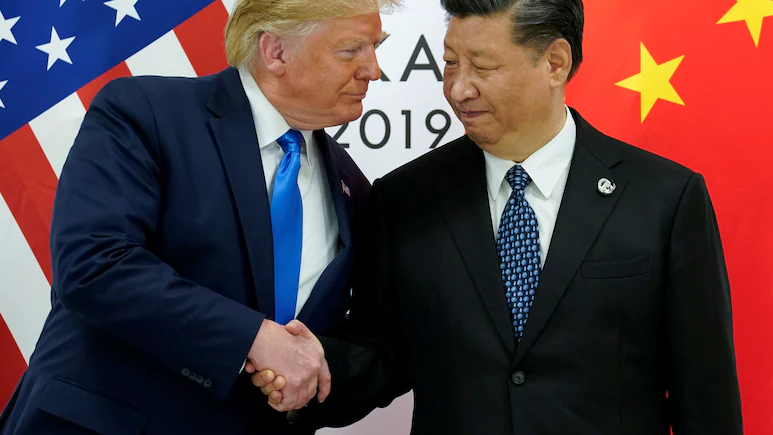
After months of aggressive rhetoric and record-high tariffs, President Donald Trump appears ready to soften his tone in the escalating trade war with China, acknowledging that the current 145% tariffs imposed on Chinese imports “will come down substantially”—though not entirely.
Speaking from the Oval Office on Tuesday, Trump struck a more conciliatory note as he discussed ongoing negotiations with Beijing, suggesting that a breakthrough is possible, but warning that if China doesn’t agree to terms, the U.S. will dictate them.
“Ultimately, they have to make a deal,” Trump said. “Otherwise, they’re not going to be able to deal in the United States. We want them involved, but if they don’t make a deal, we’ll set the deal.”
A Shift in Rhetoric Amid Global Slowdown
The president’s remarks represent a notable shift in tone as the International Monetary Fund (IMF) downgraded its global growth forecast, warning of a possible U.S. recession triggered by the trade war. While Trump insisted that his tariffs have been successful, economists and financial markets are sounding alarms about the damage to global commerce.
Trump claimed the talks with China were “doing fine” because “everybody wants to have involvement in American markets,” adding that the U.S. would ensure any future deal is “fair for everybody.”
“It’s a process that’s going to go pretty quickly,” he added, hinting at an accelerated timeline for resolving the standoff.
When pressed on the future of the massive tariffs currently in place, Trump acknowledged the need for reduction but emphasized that duties wouldn’t disappear entirely.
“145% is very high,” he admitted. “It won’t be that high. It got up there because we were talking about fentanyl… It will come down substantially, but it won’t be zero.”
He assured that any future tariffs “will not be anywhere near that number”, suggesting the administration is open to a recalibrated approach amid mounting pressure from economists, businesses, and international partners.
White House: “Tariffs Working, World Wants Deals”
Despite market turbulence and rising global concern, the White House has continued to defend the tariff strategy. Press Secretary Karoline Leavitt claimed that world leaders are now eager to strike bilateral trade agreements with the U.S. as a result of Trump’s hardline stance.
“The whole world is beating down our door,” Leavitt said, crediting Trump’s tactics with giving America the upper hand in global negotiations.
An Escalating Trade War—and a Tense Standstill
Since returning to office, President Trump has imposed tariffs as high as 145% on Chinese goods, citing national security concerns, particularly over fentanyl smuggling. Additional duties pushed some categories of goods to an effective rate of 245%, sparking backlash both at home and abroad.
In response, China retaliated with tariffs of up to 125% on American products and has vowed to “fight to the end” unless the U.S. eases its demands.
Currently, other countries face a blanket 10% U.S. tariff, though the White House has hinted that could change in July.
What Comes Next?
While the president’s remarks suggest a possible off-ramp to one of the most disruptive trade conflicts in modern history, the question remains: Will China agree to terms? And if not, will Trump follow through on his threat to “set the deal” unilaterally?
For now, global markets—and world leaders—are watching closely.