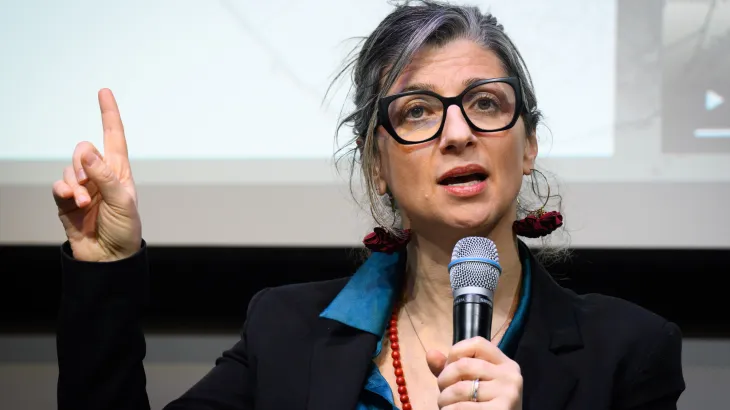
In a dramatic move underscoring its aggressive stance toward international critics of Israel, the Trump administration on Wednesday imposed sanctions on Francesca Albanese, the United Nations special rapporteur for the Occupied Palestinian Territories. The decision marks a striking escalation against one of the most vocal critics of the U.S.-supported Israeli military campaign in Gaza.
Secretary of State Marco Rubio announced the sanctions on social media just 45 minutes after HuffPost broke the story, citing a White House directive confirmed by a senior U.S. official.
“Albanese’s campaign of political and economic warfare against the United States and Israel will no longer be tolerated,” Rubio wrote on X (formerly Twitter). “We will always stand by our partners in their right to self-defense.”
Albanese swiftly responded on the same platform: “On this day more than ever: I stand firmly and convincingly on the side of justice, as I have always done.”
The sanctions were enacted under an executive order by President Donald Trump targeting the International Criminal Court (ICC) and its affiliates. The move will likely freeze any U.S.-based assets Albanese may hold, ban her from entering the U.S., and deter institutions from engaging with her professionally. Albanese, an Italian human rights lawyer, has repeatedly urged global powers to sanction Israel for what she describes as disproportionate and unlawful military operations in Gaza.
The move follows earlier Trump administration sanctions in February against ICC chief prosecutor Karim Khan, who later lost access to his Microsoft and banking accounts in the U.K. These actions stem from the ICC’s controversial decision to issue arrest warrants for Israeli Prime Minister Benjamin Netanyahu and former Defense Minister Yoav Gallant over alleged war crimes committed during the ongoing Gaza war. (The court has also issued warrants for senior Hamas leaders.)
Israel has rejected the charges against Netanyahu and Gallant and has asked the ICC to withdraw the warrants. In her response, Albanese cited the Rome Statute—the treaty establishing the ICC, signed in her native Italy—and declared: “I am proud of it.”
The timing of the sanctions coincides with Netanyahu’s visit to Washington, signaling continued alignment between the U.S. and Israel amid growing international outcry over the humanitarian toll in Gaza. So far, over 57,000 Palestinians have been killed, according to local authorities, with millions facing severe shortages of food, medicine, and clean water. On the Israeli side, the military reports 888 soldiers have died, including five this week in renewed clashes with Palestinian militants.
Critics say the sanctions against Albanese are an attempt to silence dissent and discredit legitimate international legal scrutiny. Brian Finucane, a former State Department legal advisor, condemned the decision as “over the top” and “entirely unnecessary.”
“If the U.S. disagrees with her legal interpretation, it can present its own case publicly,” said Finucane, now at the International Crisis Group. He suggested the move was likely influenced by Israel directly or via diplomatic channels, and part of a broader Trump administration push to shield Israel from accountability.
Notably, Finucane questioned Trump’s personal investment in the issue, hinting that the decision likely reflects the influence of hardliners in his administration. Among them, Ambassador to Israel Mike Huckabee has advocated controversial views, such as relocating Palestinians to other Muslim-majority countries. Secretary Rubio has similarly pushed for deporting U.S.-based students critical of Israeli actions.
The sanctioning of Albanese is expected to provoke backlash among U.S. allies and international legal advocates, many of whom view the action as an attack on the rule of law and the independence of the United Nations.
Dylan Williams, a senior fellow at the Center for International Policy, called the move “rogue state behavior” and warned: “Even if you think Netanyahu is innocent, undermining the ICC and its process puts the U.S. on the side of dictators and war criminals.”
Despite the mounting death toll and humanitarian crisis, the Trump administration maintains it is acting in defense of human rights. In a recent Cabinet meeting, CIA Director John Ratcliffe assured Trump: “Obviously you’re not going to stand or allow for any violations of international law by anyone.” Yet, as the administration continues to target critics of Israel while backing its military campaign, many question the credibility of that claim.