
Before the world ever learned his name, they noticed the hair. In the hyper-stylized landscape of the 1980s—an era where attitude was currency and aesthetic was everything—James Spader’s thick, feathered mane was an instant calling card. It framed a face that seemed perpetually, effortlessly bored; a countenance coolly detached from the frantic energy of the decade. He possessed an innate aura that fit seamlessly into Hollywood’s emerging cinematic identity, rendering him visually unforgettable long before he ever picked up an award. He was a casting director’s dream, even if those same directors didn’t yet have the slightest clue what to do with him.

But the slick, privileged veneer he projected on screen was a complete illusion. Behind the effortlessly aristocratic gaze lay a gritty, unglamorous reality that looked nothing like a standard Hollywood origin story. To survive the unforgiving concrete of New York City, a young Spader took on whatever grueling, odd jobs came his way. He shoveled horse manure in stables, bussed tables in crowded diners, and hauled loads as a truck driver. In one of the more surreal chapters of his survival years, he even taught yoga classes—later confessing with characteristic candor that he would occasionally drift off to sleep during the sessions. These early trials became the bedrock of his career mythology, proving just how much discomfort he was willing to endure simply to stay within striking distance of the theater world.
Born on February 7, 1960, in Boston, Massachusetts, Spader’s roots were planted not in the dirt of manual labor, but in the fertile ground of academia. His parents, Jean and Stoddard Greenwood Spader, were both educators, raising him in an intellectually structured environment that prioritized literature and critical thought over Hollywood ambition. He spent his formative years wandering the halls of prestigious New England prep schools, including the Brooks School and the legendary Phillips Academy in Andover. It was an environment of privilege and high intellect—he even crossed paths with future avant-garde theater director Peter Sellars—yet the traditional academic path failed to hold his interest.
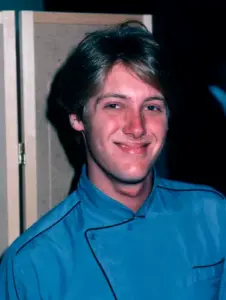
For Spader, the classroom was a distraction; the school stage was the destination. The pull of storytelling and performance quickly eclipsed his studies, leading to a radical, high-stakes gamble: at just 17 years old, he dropped out of the eleventh grade, packed his bags, and headed for New York.
What followed was a decade-long masterclass in resilience. The auditions were relentless, the callbacks sparse, and the roles minuscule. Yet, the exhausting days spent working the restaurant shifts and stable floors did something vital: they stripped away any romanticized notions of fame. Spader wasn’t chasing stardom; he was chasing survival. This pragmatic approach allowed his career to evolve organically, shaping a performer who was deeply comfortable with discomfort.
When the industry finally figured out how to use him, they realized his true power lay in the shadows. Casting directors discovered that Spader possessed a rare, uncanny ability to inhabit characters who were fiercely intelligent, emotionally complex, and profoundly ambiguous. While his peers scrambled to play the traditional, clean-cut hero, Spader carved out a lucrative niche playing outsiders, smooth-talking antagonists, and unsettlingly charismatic elites.

Early roles in Endless Love and Tuff Turf offered glimpses of this edge, but it was his performance as Rip, the wealthy, sociopathic drug dealer in Less Than Zero, that turned heads. He embodied the moral rot and excessive privilege of the 1980s with an almost hypnotic charm. Then came Pretty in Pink. As Steff, the arrogant, linen-suit-wearing high school aristocrat, Spader delivered a masterclass in cold precision and quiet disdain. He created the definitive “rich villain” archetype of the era, performing the role with such lethal believability that audiences routinely struggled to separate the actor from the character in real life.
Yet, just as Hollywood threatened to permanently typecast him as the decade’s quintessential yuppie sociopath, Spader pivoted. The 1990s brought a seismic shift when he teamed up with an emerging director named Steven Soderbergh for the indie masterpiece Sex, Lies, and Videotape. Playing a soft-spoken, voyeuristic stranger drifting through town, Spader delivered a performance of astonishing psychological subtlety. The film took the industry by storm, and Spader walked away with the prestigious Best Actor Award at the Cannes Film Festival, instantly elevating him from a cult favorite to a heavyweight dramatic actor.
Throughout his career, Spader’s choices have remained delightfully, stubbornly unpredictable. He has never been driven by the typical Hollywood engines of vanity or commercial strategy. Instead, he chooses roles based on pure curiosity—and sometimes, pure financial necessity. He has freely admitted in interviews that he often took jobs simply because he needed to pay his bills, a refreshing honesty that kept his filmography wonderfully eccentric.
This fearlessness eventually paved the way for a spectacular second act on television. As the brilliant, morally flexible attorney Alan Shore in The Practice and its hit spin-off Boston Legal, Spader weaponized his sharp wit and rapid-fire delivery. His performance became a cultural phenomenon, earning him multiple Emmy Awards and a Golden Globe. Years later, he captured a whole new generation of global viewers as Raymond “Red” Reddington in The Blacklist. As the enigmatic, fedora-wearing criminal mastermind, Spader once again blended lethal danger with effortless charm, dominating the small screen for a decade.
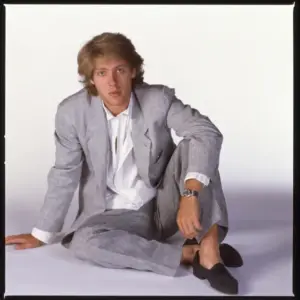
Off-screen, the actor remains famously elusive. Snubbing the glitz of Los Angeles, he lives a quiet, highly private life in New York City with his longtime partner, Leslie Stefanson. He is famously candid about his personal quirks, openly discussing his severe obsessive-compulsive tendencies and how a strict adherence to routine and structure dictates his daily life. Rather than hiding these traits, he views them as central to how he processes the world and approaches his craft. He balances this intensity with a famously self-deprecating wit, often poking fun at his own physical changes, weight fluctuations, and periods of sheer laziness during grueling television production schedules.
Decades after he first stepped onto the screen, James Spader remains an anomaly in modern entertainment: an actor who became an icon by refusing to fit into any box. His journey from shoveling manure in New York stables to commanding global television audiences is a testament to the power of sheer individuality. In a town built on conformity, Spader’s enduring legacy is his refusal to play anyone’s game but his own.