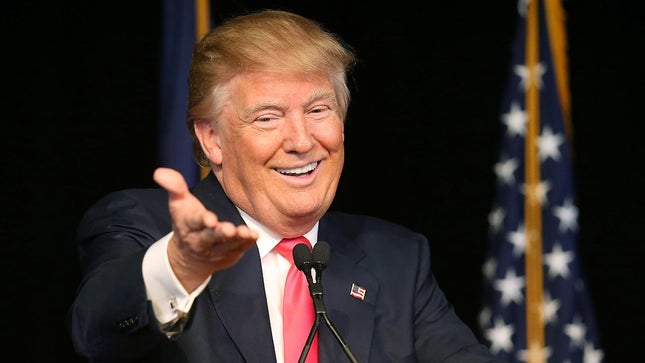
The U.S. Constitution places the power of the purse squarely in the hands of Congress. But in today’s Washington, congressional Republicans seem more willing than ever to hand that power over to President Donald Trump.
In recent months, Trump has wielded executive authority with increasing audacity — halting funding streams, shutting down agencies, and imposing sweeping tariffs — actions that traditionally fall under Congress’ jurisdiction. With the Supreme Court’s conservative majority backing many of these moves, the executive branch’s reach has expanded in ways once unthinkable.
Now, Republicans in Congress are poised to go even further by legitimizing some of the president’s most aggressive spending cuts, despite bipartisan unease.
On Thursday, GOP lawmakers are expected to approve a controversial package of budget rescissions totaling $9 billion. The cuts target previously approved funds for global humanitarian aid, public health programs, and public broadcasting — including NPR and PBS. Many of these cuts were first introduced earlier this year by the so-called Department of Government Efficiency, a short-lived experimental unit led by billionaire Elon Musk.
For many Democrats — and some Republicans — the move is a tipping point.
“At what point are my Republican colleagues going to stand up for this branch of government? Why would you run for office?” asked Sen. Brian Schatz (D-Hawaii) in a Senate floor speech Wednesday, blasting Trump’s unilateral dismantling of the United States Agency for International Development (USAID).
Sen. Lisa Murkowski (R-Alaska) echoed the frustration: “We are lawmakers. We should be legislating… What we’re getting now is a direction from the White House, and I don’t accept that.”
Republicans, however, defended the cuts as necessary belt-tightening. Sen. John Barrasso (R-Wyo.) derided certain U.S. foreign aid initiatives as wasteful and out of sync with American priorities.
“We should never be funding vegan food in Africa, social media mentorship in Europe, or Net Zero Cities in Mexico,” Barrasso said. “These programs are unaccountable, unnecessary, and truly out of touch.”
The rescissions bill, which requires only a simple majority in the Senate to pass, is threatening to derail fragile bipartisan negotiations on broader spending packages. Democrats warn that allowing a partisan majority to retroactively cancel agreed-upon funding sets a dangerous precedent.
“We have never, never before seen bipartisan investments slashed through a partisan rescissions package,” said Sen. Patty Murray (D-Wash.), the top Democrat on the Senate Appropriations Committee. “Do not start now.”
Even some Republican lawmakers are uneasy.
Retiring Sen. Thom Tillis (R-N.C.) cautioned that undermining previous budget deals could backfire. “If someone in the administration goes and cuts something that was clearly part of a deal… they’re destroying our chances of getting trust for the next appropriations bill,” he said.
Senate Minority Leader Mitch McConnell (R-Ky.), who voted against the bill, said the administration hadn’t provided adequate transparency on how the cuts would be implemented. “They would like a blank check,” McConnell said. “And I don’t think that’s appropriate.”
One concession was made: after backlash from GOP senators, the White House agreed to restore $400 million for PEPFAR, the life-saving HIV/AIDS relief initiative launched under President George W. Bush.
But the rest of the cuts remain — a gutting of critical global aid that some see as a betrayal of American leadership.
“Donald Trump, aided by a band of loyalists and ideologues, has chosen instead to inflict death and disease and starvation on the world’s most vulnerable,” Sen. Schatz said. “We used to be the indispensable nation that people counted on. Now, we are the cause of suffering.”
The growing consensus in Washington is unmistakable: Congress is ceding its constitutional role as the nation’s chief appropriator — and Trump is more than ready to take its place.