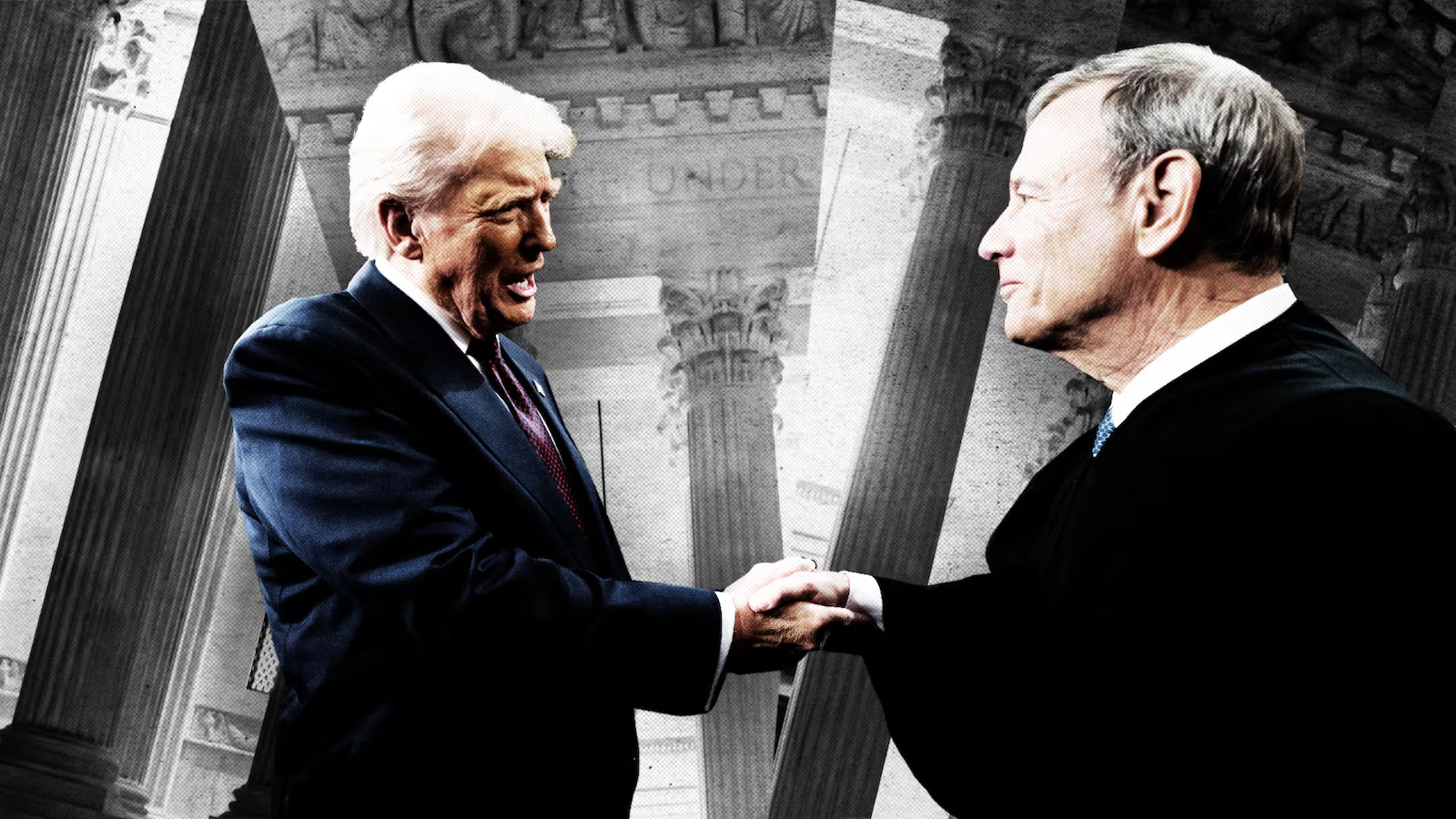
Chief Justice John Roberts offered praise for President Donald Trump during a closed-door meeting with top federal judges this spring — comments that surfaced just as the Supreme Court increasingly faces scrutiny for bolstering Trump’s authority with minimal public explanation.
At a March 11 session of the Judicial Conference of the United States — the chief policymaking body of the federal judiciary — Roberts addressed growing anxiety among judges about Trump’s willingness to obey court rulings, especially those that challenge his more controversial policies.
According to a memorandum obtained by The Federalist, conservative-leaning outlet, U.S. District Judge James Boasberg confronted Roberts directly, expressing concern that the Trump administration might ignore court decisions altogether, triggering a constitutional crisis.
Roberts pushed back, downplaying the risk of such a crisis and speaking respectfully of the president. He reportedly pointed to Trump’s civility during past interactions — including the 2025 State of the Union address where Trump publicly thanked the chief justice for administering the oath of office — as signs of a functional, if unconventional, relationship.
The memo, based on an attendee’s account, offered a rare glimpse into Roberts’ behind-the-scenes efforts to maintain institutional stability amid growing polarization between Trump and the judiciary.
But critics argue that Roberts’ reassurances ring hollow in light of recent decisions from the high court. With a 6–3 conservative majority, the Supreme Court has consistently handed Trump key victories using the so-called “shadow docket” — unsigned rulings issued with little explanation or oral argument. These rulings have allowed Trump to unilaterally fire civil servants, expand executive power, and sidestep lower court injunctions, often without a full legal opinion from the Court.
Just this week, the Court enabled the Trump administration to carry out sweeping dismissals at the Department of Education. No reasoning was provided.
Legal experts have warned that this pattern undermines judicial transparency and accountability. Yet for Trump, it’s been a windfall.
“I’m grateful to the Supreme Court for solving a very complex problem,” Trump said last month following a major decision curbing the ability of lower courts to block his executive orders. He specifically praised Justice Amy Coney Barrett, who authored the majority opinion, as well as Roberts and other conservative justices, calling them “great people.”
The Court’s conservative bloc — which includes Justices Clarence Thomas, Samuel Alito, Neil Gorsuch, Brett Kavanaugh, and Barrett — has increasingly aligned with Trump’s agenda. Some of these justices have faced ethical controversies: Thomas over his wife’s alleged involvement in efforts to overturn the 2020 election, and Alito for flying an inverted American flag outside his home — a symbol associated with the “Stop the Steal” movement.
Judge Boasberg, who raised alarms during the March meeting, has been a particular thorn in Trump’s side. As chief judge of the D.C. District Court, he has issued multiple rulings blocking Trump-era deportations, citing due process concerns. He also presided over the “Signalgate” case, involving leaked cabinet communications related to military operations — a scandal that further inflamed tensions.
In retaliation, Trump publicly called for Boasberg’s impeachment, branding him a “troublemaker and agitator.” That push was ultimately rebuffed — and met with a rare public statement from Roberts, who reminded the nation of the judiciary’s independence.
“For more than two centuries, it has been established that impeachment is not an appropriate response to disagreement concerning a judicial decision,” Roberts said. “The normal appellate review process exists for that purpose.”
Despite those words, Roberts’ own role in the Court’s rightward shift remains under scrutiny. His efforts to project institutional neutrality increasingly clash with a judicial reality shaped by aggressive executive power, rising politicization, and a court that is now openly reshaping the balance between Congress and the presidency — often behind closed doors.