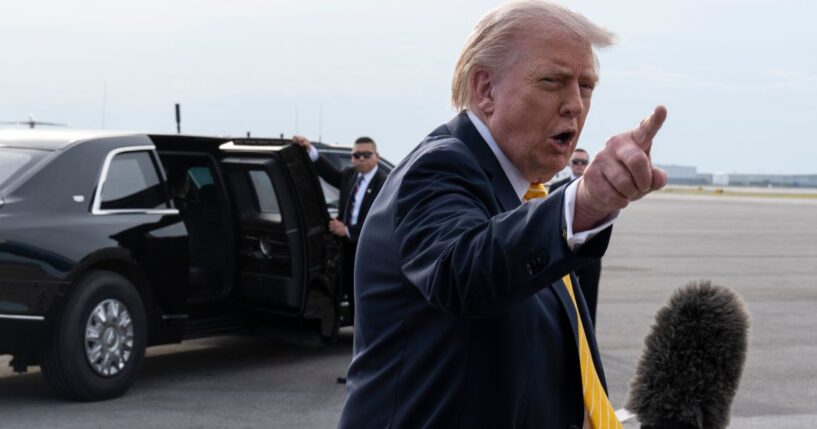
After months of diplomatic friction and high-stakes posturing, the frost between Washington and its European allies appears to be thawing. NATO Secretary General Mark Rutte signaled a definitive turning point on Monday, suggesting that European capitals have finally “gotten the message” from President Donald Trump regarding the escalating conflict with Iran.
The shift isn’t just rhetorical. According to reports from Reuters, several European nations are now moving to honor dormant military basing agreements and are signaling a newfound readiness to help secure the volatile Strait of Hormuz—a vital artery for the world’s energy supply.
“Europeans Have Listened”
Addressing a press scrum, Rutte acknowledged the previous rift in the transatlantic alliance while emphasizing a new era of cooperation.
“Yes, there has been some disappointment from the U.S. side, but Europeans have listened,” Rutte stated. “They are now making sure that all the bilateral basing agreements are being implemented.”
The Secretary General further detailed a surge in maritime commitments, noting that “more and more” European allies are currently prepping minehunters and minesweepers. These assets are earmarked for the “next phase” of operations: a coordinated effort to clear the strait of Iranian munitions.
A Coalition of the Willing
While Spain remains a notable holdout—having previously declared its bases off-limits for Iran-related operations—Rutte painted a picture of a broad and deepening logistical web. NATO is actively coordinating with U.S. officials across a diverse geographic footprint. The list of nations currently engaged in talks over basing and logistics includes:
-
The Powerhouses: Britain, France, and Germany
-
The Mediterranean & Adriatic Flank: Italy, Greece, Croatia, and Montenegro
-
The Strategic Perimeter: Romania and Portugal
The Stakes of Operation Epic Fury
This sudden alignment marks a dramatic reversal of fortune for the Trump administration. As recently as March, the European Union had flatly rejected the Commander in Chief’s requests for a maritime security coalition.
However, the economic reality of Operation Epic Fury has seemingly forced Europe’s hand. As Iran continues its campaign to disrupt international shipping, the resulting spikes in global oil and gas prices have hit European economies where it hurts most.
Trump’s Hardline Diplomacy
The breakthrough follows a period of blistering criticism from the White House. In March, President Trump publicly lambasted Spain and the United Kingdom for failing to meet NATO spending targets and resisting his administration’s tactical requests.
The President’s frustration with Madrid, in particular, remains palpable.
“Some of the European nations have been helpful and some haven’t,” Trump told reporters recently. “And I’m very surprised… Spain has been terrible. In fact, I told Scott [Bessent] to cut off all dealings with Spain.”
Despite Spain’s refusal to grant access, the President remained characteristically defiant regarding American military reach. “Now Spain actually said that we can’t use their bases. And that’s all right. We can use their base if we want. We can just fly in and use it. Nobody’s going to tell us not to use it.”
For now, the tide in Brussels seems to be turning in Washington’s favor, as the necessity of a clear waterway outweighs the previous hesitation of the European bloc.
.@POTUS: “Some of the European nations have been helpful, and some haven’t—and I’m very surprised. Germany’s been great… Spain has been terrible. In fact, I told Scott to cut off all dealings with Spain.”
“By the way, I’m not happy with the U.K. either.” pic.twitter.com/Q9qtyDVDbx
— Rapid Response 47 (@RapidResponse47) March 3, 2026
Trust Fractures and Troop Withdrawals: The Friction Behind the Front
The recent movement toward cooperation masks a deeper, more turbulent undercurrent in the transatlantic relationship. Tensions reached a fever pitch in early April when President Trump revealed he had intentionally withheld critical intelligence from Berlin regarding a U.S. strike against Iran. His reasoning was blunt: a fundamental lack of trust in German leadership to prevent leaks.
This diplomatic chill has translated into a significant shift in American military footprint. On Saturday, Washington announced the withdrawal of 5,000 troops from German soil, a drawdown slated for completion within the next six to 12 months. The move followed a biting critique from Chancellor Friedrich Merz, who—per the Associated Press—remarked that the United States was being “humiliated” by the Iranian leadership.
The NATO Ultimatum
While European nations are now pivoting toward the Iran conflict, the path to this point has been paved with unprecedented pressure. Less than two weeks ago, reports surfaced of an internal Pentagon email that sent shockwaves through the alliance. The document reportedly outlined a contingency plan to suspend Spain from NATO and, in a move that would upend decades of British diplomacy, revisit the sovereignty of the Falkland Islands.
These maneuvers are symptoms of a long-standing grievance. Despite the recent expansion of NATO involvement, President Trump’s skepticism toward the alliance remains a cornerstone of his foreign policy—a sentiment that has only hardened since his first term.
An Alliance on the Brink
The President has consistently framed the partnership as a lopsided arrangement, frequently threatening a total U.S. withdrawal from the treaty organization. His rhetoric centers on three recurring grievances:
-
Perceived Arrogance: A belief that European capitals take American security guarantees for granted.
-
Lack of Gratitude: Disappointment in the level of diplomatic and logistical support for U.S. initiatives.
-
Financial Disparity: A continued frustration with the “unwillingness” of member states to meet their agreed-upon defense spending obligations.
As minehunters head toward the Strait of Hormuz, the question remains whether this new cooperation is a lasting strategic shift or merely a desperate effort by European leaders to preserve an alliance that the American Commander in Chief is increasingly willing to walk away from.