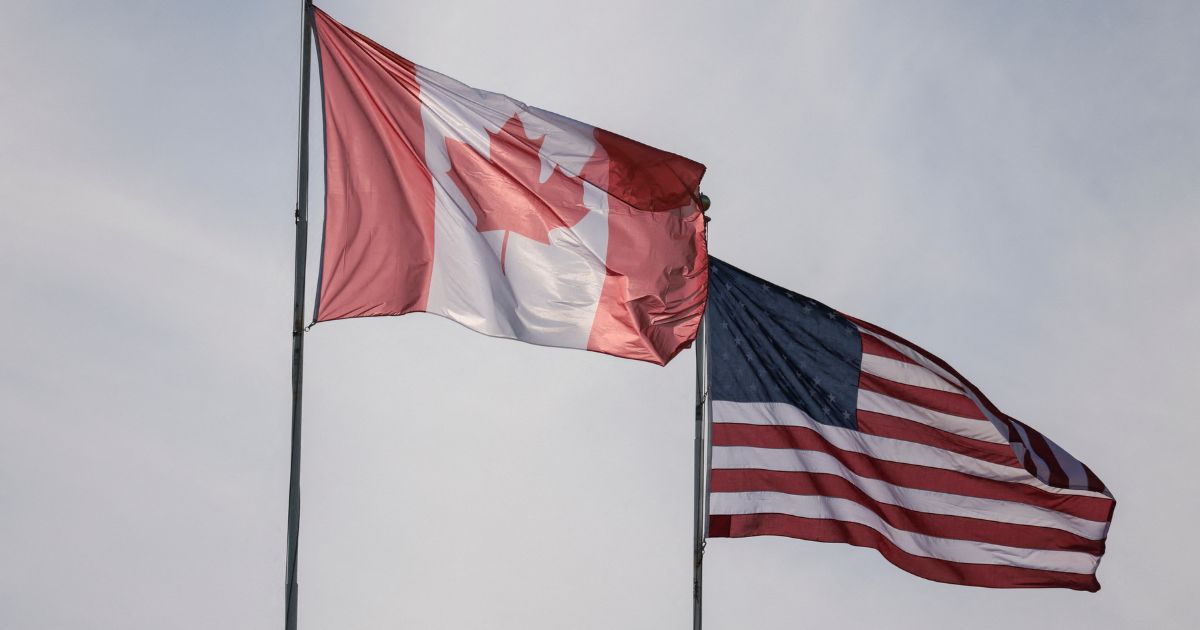
A new Pew Research Center survey has sparked international debate after revealing a surprising contradiction: a majority of Canadians view the United States as both their most important ally and their greatest threat.
Conducted from January to April 2025, the global opinion poll asked respondents across dozens of countries to name both their top ally and the nation they believe poses the greatest danger. While many respondents around the world still considered the United States to be their closest ally, Canada’s response stood out for its puzzling duality.
According to Pew’s findings, 55% of Canadians identified the U.S. as their most important ally—a sentiment that would typically reflect trust and cooperation. But astonishingly, 59% of the same group also labeled the United States as the greatest threat to their country’s well-being.
The irony wasn’t lost on analysts or the public. How can one country be both your best friend and your worst enemy?
And it wasn’t just Canada. In nations like Kenya and Spain, the U.S. tied for the top spot in both the “ally” and “threat” categories. In at least ten other countries—many of them U.S. allies in Europe—the U.S. ranked second, or tied for second, as a global threat.
Meanwhile, nations that have drawn international concern for aggressive or destabilizing behavior—such as China, Russia, North Korea, or Iran—failed to top the list for many respondents, including those in Canada. For instance:
China, with its record of cyberespionage, territorial expansionism, and trade manipulation, was considered less threatening than the U.S.
Russia, amid its ongoing war in Ukraine, came second or third in many rankings.
North Korea and Iran, despite their hostile rhetoric and weapons programs, were similarly overshadowed.
Even more striking was the sentiment south of the border. In Mexico, 68% of those surveyed said the United States posed the greatest threat to their country—a figure that some attribute to America’s hardline policies on border control, drug cartels, and immigration enforcement.
This perception gap raises important questions: Why do nations that benefit from American defense, trade partnerships, and humanitarian aid simultaneously view the U.S. as a danger?
Critics argue that these numbers reflect growing anti-American sentiment, amplified by political disagreements, media narratives, or backlash against American foreign policy. Others point to rising nationalism or a tendency to scapegoat the U.S. for global instability.
Some, however, see the contradiction as evidence of complex interdependence: the U.S. looms so large on the global stage—economically, militarily, and culturally—that for many countries, it inspires both trust and unease.
Former President Donald Trump has often used this sentiment to justify his “America First” approach, arguing that the U.S. should not continue to sacrifice its interests for countries that criticize it from the sidelines. “We rebuilt Europe. We protect allies. We respond to disasters. And still, we’re treated like the villain,” his allies contend.
Ultimately, these poll results suggest that America’s global role remains both admired and resented—sometimes in equal measure.
Whether this growing skepticism leads to greater distance or renewed dialogue among allies remains to be seen. But one thing is clear: if nations continue to rely on U.S. aid, protection, and diplomacy, they may need to reconcile their fears with the very partnership they depend on.
In the end, the choice may not just be America’s to make—it could rest with those who, knowingly or not, are playing both sides.