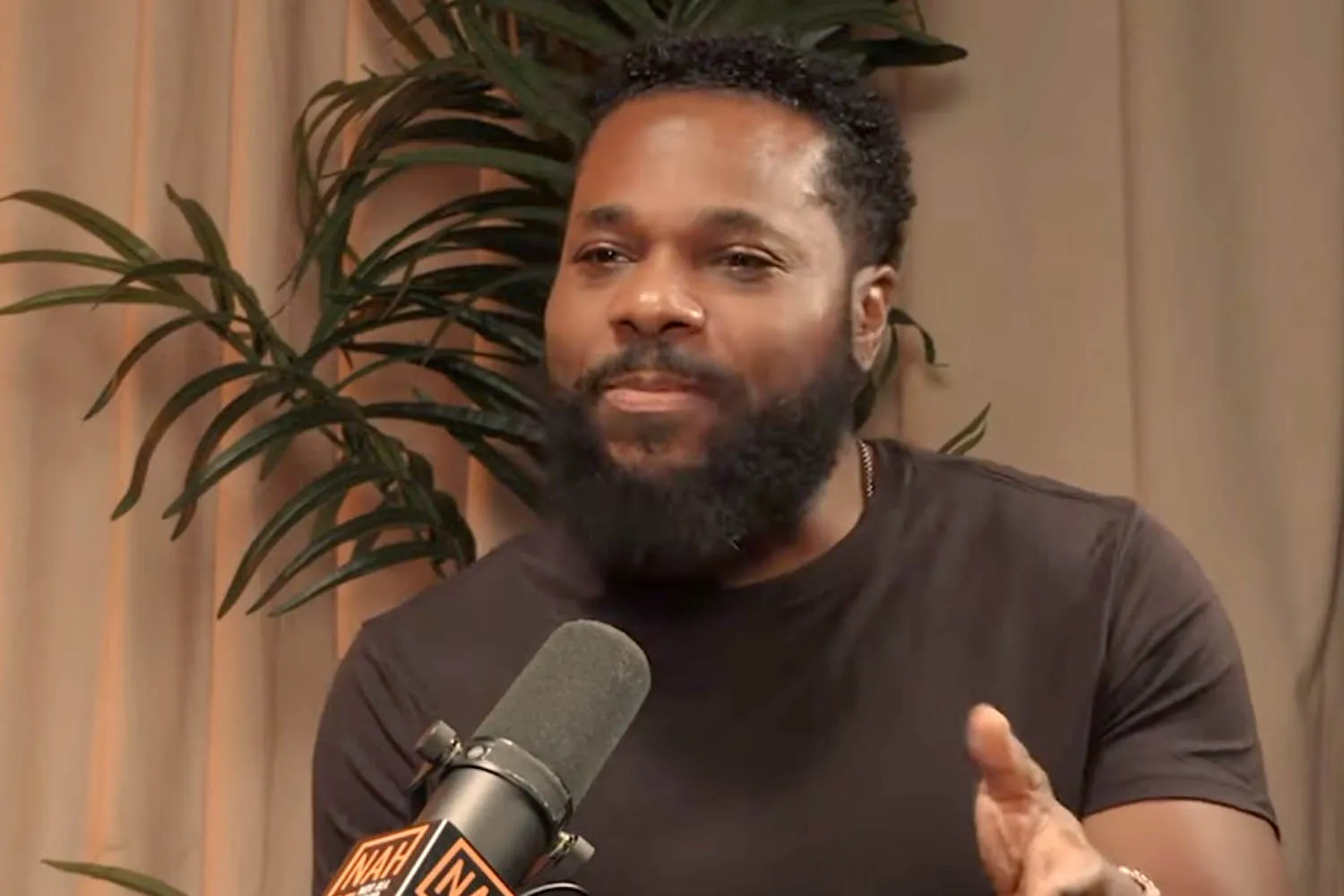
“It made me realize that there could be a misconception,” Warner explained. “That when we say Not All Hood, it might sound like we’re saying the hood is bad. But what we’re really addressing is that mainstream media usually shows only one version of Black culture—‘the hood’—without acknowledging the full scope. Ironically, that same hood is the origin of what becomes mainstream American culture. It gets co-opted and diluted, but it all starts there.”
Warner emphasized that instead of distancing from it, the hood deserves to be celebrated “just as much as every other part of Black life.”
Throughout the episode, Warner continued to dig into deeper issues about race, legacy, and representation, including how his understanding of the term Black excellence had evolved. He shared how a recent discussion with a conservative-leaning friend had challenged him. The conversation centered around reports that Arlington National Cemetery may be quietly removing historical information about Black soldiers from its educational materials.
Warner’s friend had argued that Black soldiers should just be remembered as “American soldiers,” eliminating race from the discussion entirely. Warner, however, pushed back.
“I told him, ‘If you take away the fact that they’re Black, you’re erasing the entire struggle that defined their existence. You’re ignoring that there was a time when Black men weren’t allowed to serve, and that the fact they fought anyway makes their legacy even more powerful,’” Warner said. “Black soldiers are some of the most patriotic Americans alive, even as they fight for freedoms they themselves don’t get to enjoy.”
This moment sparked a revelation: he had once believed that attaching “Black” to terms like “excellence” made it sound like a subset of the larger idea. “But now,” he said, “I see it differently. Black excellence isn’t about money or fame. Black survival—enduring, overcoming, building in the face of every obstacle—that is Black excellence.”
As the episode drew to a close, Warner voiced a heartfelt affirmation of the resilience and spiritual wealth of Black communities, even in a society where the playing field remains unequal.
“Everything we have to draw on—spiritual, emotional, political—just to even exist in this space, is what makes us rich,” he said. “That’s our wealth. That’s Black culture.”
The episode marked the latest installment in a podcast that had become increasingly personal for Warner since its launch in June 2024. Not All Hood, he once told PEOPLE, was created to explore the full spectrum of the Black experience—beyond stereotypes, beyond headlines, and beyond what he called “the monolith.”
“It’s a place where I feel safe enough to be vulnerable,” Warner said. “To talk about things I wouldn’t have been able to share on screen, especially when the world only knew me as ‘Theo.’”
That space—raw, honest, and celebratory of complexity—now stands as a final testament to Warner’s voice, vision, and ongoing cultural legacy.
He is survived by his wife and young daughter, whose names he chose to keep private throughout his life. His sudden passing has left a void in both the entertainment world and among those who followed his thoughtful commentary off screen.