J6 Prosecutors Tell Congress They’re ‘Proud’ of Locking Up Americans for Misdemeanors
Two former Department of Justice prosecutors who handled January 6 cases have openly admitted — and even boasted — about sending Americans to prison for minor offenses stemming from the Capitol riot. Their remarks came during testimony before the Senate Intelligence Committee, in a hearing focused on the events of January 6, 2021, and their aftermath.
Mike Romano, once a federal prosecutor in the DOJ’s Public Integrity Section, took the stand and made no attempt to downplay the scale of the prosecutions. In fact, he celebrated it. “Thanks to the work of our team, the Justice Department charged more than 1,500 people with crimes and obtained criminal convictions against almost 1,300 people,” Romano told lawmakers. “We ensured that the rioters would face accountability, no matter how short-lived. Our work created a public record of the crimes committed that day.”
The “no matter how short-lived” line was no throwaway remark — it was a pointed reference to the mass pardons issued by President Donald Trump after taking office in January 2025. Still, Romano insisted that the prosecutions were worth it, even if many of those convictions were for low-level misdemeanors that will nevertheless follow defendants for life.
Sara Levine, another former DOJ prosecutor, was even more impassioned in her testimony, delivering a long and emotional account of her hiring, her years at the department, and her role in pursuing January 6 defendants. She did not express regret for the lasting personal and financial consequences faced by many of those she prosecuted — including families losing their primary breadwinners and defendants being branded with permanent federal records. Instead, Levine made clear that she viewed her work as a badge of honor.
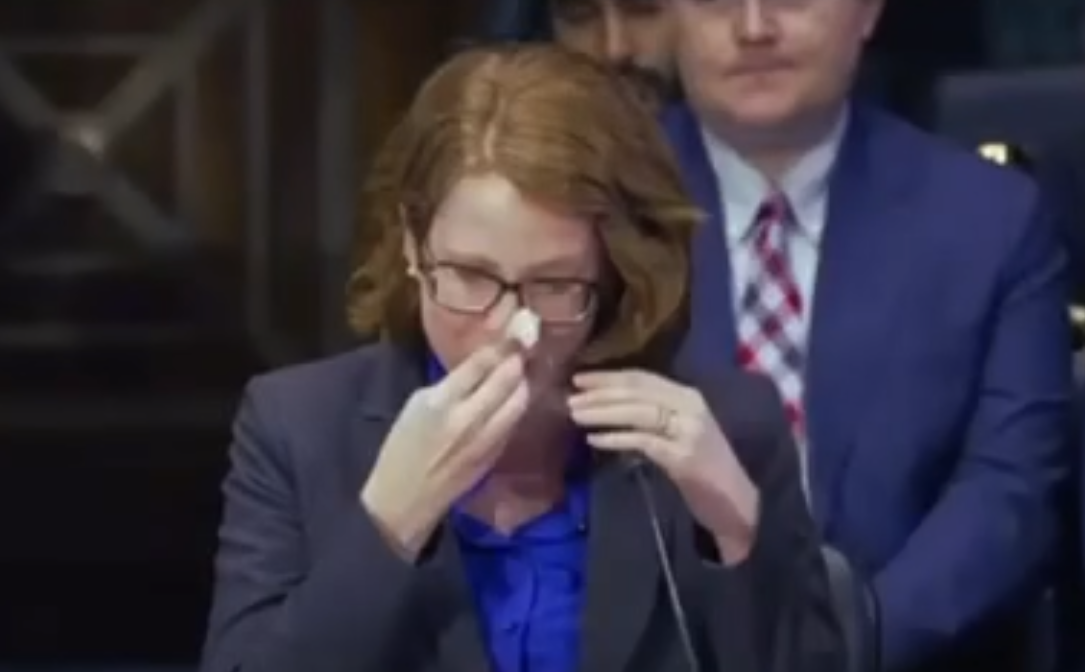
What stung most for Levine was not the criticism of the prosecutions, but that her efforts were undone. “Jan. 20, 2025, the president pardoned almost all of the defendants charged on Jan. 6 and commuted the sentence of every other rioter,” she said through tears. “I was heartbroken — all that effort to pursue justice for the officers and the country was wiped away with a single proclamation.”
The hearing underscored the lingering divide over the January 6 prosecutions: for critics, it confirmed suspicions that the DOJ pursued an overly aggressive campaign to criminalize political dissent, even at the misdemeanor level; for defenders like Romano and Levine, it was about cementing a record of accountability, regardless of whether the punishments lasted.
Disgraced J6 prosecutor CRIED in front of a Senate hearing after she was FIRED for her weaponized prosecutionspic.twitter.com/mIaE4IgPz7
— Martin Walsh (@martinwalsh__) May 27, 2025
In the years following January 6, 2021, President Joe Biden’s Department of Justice poured vast resources into pursuing individuals who had been present at the U.S. Capitol that day — not only those accused of violence or property damage, but also attendees charged with lesser offenses. For four years, the FBI knocked on doors, questioned neighbors, and in some cases raided homes, leaving lasting disruptions in the lives of ordinary Americans.
Critics argue the DOJ prioritized not the nation’s most pressing threats, but rather the optics of conviction counts. The department’s prosecutors, many of whom saw January 6 as a defining mission, have shown little willingness to acknowledge that the effort may have crossed into overreach.
In several cases, defendants were detained for more than a year before trial, raising concerns about violations of the Sixth Amendment’s guarantee of a speedy trial. Others were convicted and imprisoned for charges so minor that in different circumstances they might have been resolved with fines or probation.
Yet, as those prosecutions played out, political tides shifted. President Donald Trump’s approval ratings have remained steady, and his party has regained a clear edge over Democrats on the issues voters consistently rank as most important: the economy and inflation.
According to the latest Napolitan News Survey, Republicans now lead Democrats by 8 points on the economy (R+8) and by 6 points on inflation (R+6). This marks a reversal from just last month, when Democrats had briefly pulled ahead on inflation (D+4) and nearly closed the gap on the economy (R+1).
Earlier in the year, Republicans enjoyed double-digit advantages on both issues — R+10 on the economy in January and February, and R+11 and R+9 on inflation in February and January, respectively. The recent rebound in GOP trust appears closely linked to positive public reaction to Trump’s new trade deal with China and a general uptick in economic optimism.
Inflation (29%) and the economy (25%) remain the top concerns for voters. Immigration and health care follow as the next most pressing issues, each named by 12% of respondents. Republicans currently hold a decisive 16-point lead on immigration, while Democrats are more trusted on health care by 12 points.
Overall, 42% of voters say they trust Republicans more on the most important issues, compared to 41% for Democrats. Six percent trust both parties equally, while 10% trust neither.
On immigration enforcement specifically — including controversial proposals for mass deportations — Trump has escalated the fight. He recently called on the U.S. Supreme Court to “put an END to the quagmire that has been caused by the Radical Left,” after a Biden-appointed federal judge blocked the deportation of illegal immigrants to South Sudan.
The juxtaposition is striking: while Biden’s DOJ spent years securing convictions for January 6 defendants, Trump has been reshaping the national conversation back toward the economy, trade, and immigration — and the polling numbers suggest voters are listening.