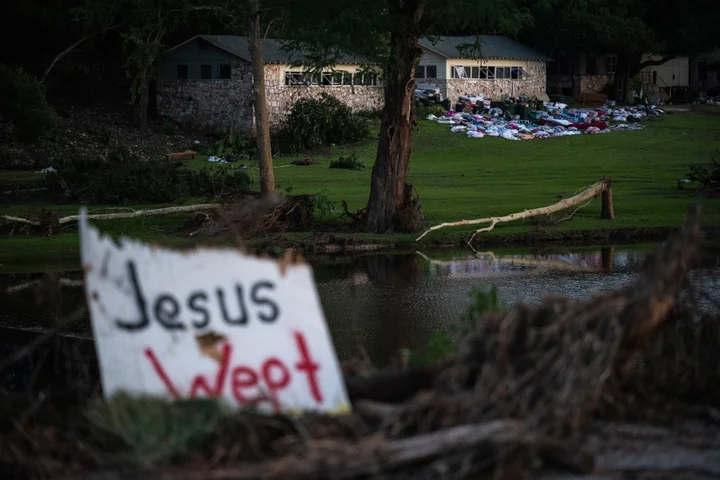
More than 100 lives were lost in the catastrophic Texas floods — including at least 28 children, most of them at a Christian summer camp swept away by rising waters. The horror has shaken a nation, but these young lives are not the first to be shattered by climate-fueled disasters. And tragically, they will not be the last.
The White House may have called the floods “an act of God,” but let’s be clear: this was not divine will. It was the foreseeable outcome of a worsening climate crisis — a crisis made deadlier by years of denial, deregulation, and dangerous budget cuts.
As a FEMA responder, a nurse, and a woman of faith, I know firsthand that this wasn’t simply a natural tragedy. It was the product of human decisions — political choices that have gutted our ability to prepare for and respond to climate disasters.
In hospitals, I’ve watched patients suffer as buildings overheat during heatwaves. My own cousin was denied a dignified funeral because a morgue lacked the cooling to preserve his body. Through my organization, Health4Peace, we’ve sent funds meant for lifesaving treatment — only to find they’re diverted to air conditioning units just to keep the lights on.
These are the hidden costs of climate breakdown: systems stretched thin, lives quietly devalued, and priorities rearranged for survival.
Too often, I hear well-meaning people say “God is in control” — as if that’s an excuse to stay silent. But my faith demands I speak up. God gave us stewardship, not permission to abdicate responsibility. Silence in the face of preventable tragedy is a betrayal — not just of our beliefs, but of our children.
And make no mistake: it is children who suffer most. Their developing bodies make them more vulnerable to heat, polluted air, contaminated water, and disease. Their minds are equally at risk — studies have shown links between early exposure to natural disasters and increased rates of PTSD, anxiety, and depression.
The numbers are staggering. In 2024 alone, over 11 million Americans were displaced by climate-fueled disasters. More than 400 million students globally have lost school time since 2022 due to extreme weather events. Fires in New Mexico last summer burned over 1,400 structures. In Los Angeles this year, schools and hospitals have been scorched beyond repair.
And summer camps — like the one in Kerr County where dozens of children died — are dangerously overlooked. Every year, 26 million American kids attend camps, often in remote, high-risk areas. But there are no national safety standards for weather resilience. Warnings are delayed. Protocols are vague. Lives are lost.
Why? Because we’ve defunded the systems meant to protect them. During his first term, President Donald Trump attempted to slash FEMA’s pre-disaster mitigation budget by two-thirds. Now, he plans to eliminate it entirely. The National Oceanic and Atmospheric Administration (NOAA) — which provides critical forecasting — faces a $2.3 billion cut, including the shuttering of a lab working on flash flood prediction.
This isn’t a partisan issue. It’s a moral one.
What could be more bipartisan, more fundamentally American, than protecting our children? MAGA Republicans often speak of “family values” — but what greater value can we uphold than safeguarding the future of our families?
Instead of gutting the Department of Education’s emergency preparedness arm, we must retrofit schools, camps, and childcare centers to withstand today’s climate. We must restore funding for early warning systems and ensure every community — not just wealthy ones — has resilient infrastructure.
We also need to address root causes: cutting emissions, rebuilding natural flood barriers, and investing in clean, safe, sustainable development.
And we must prepare the next generation. Climate literacy should be a requirement — not a luxury. Young people deserve to understand the crisis they are inheriting and to be equipped with tools to lead.
Some programs are already doing this. Duke Divinity School, in partnership with the Muslim World League’s Faith For Our Planet, is training young interfaith leaders to build climate resilience. Youth networks like Climate Generation’s YEA! are organizing students across public schools to take on real climate projects. But these heroic grassroots efforts cannot substitute for federal leadership.
No local initiative can fill the gap left by gutted national policy.
The Texas floods are not just a wake-up call — they are a test of our national character. Will we turn away again, or finally rise to meet the moment?
Our children are not props in a culture war. They are not collateral damage in a political agenda. They are the future. And they deserve a country willing to fight for them — not one that looks away.