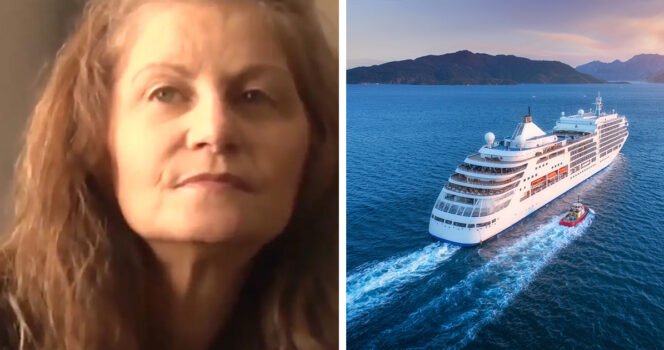
The steel hull of the MV Hondius currently serves as a floating isolation ward off the sun-drenched coast of Cape Verde, but for those trapped inside, the tropical horizon offers no solace. As the vessel sits in a diplomatic and medical deadlock, a survivor of the rare and unforgiving hantavirus is lifting the veil on the harrowing physical toll of a disease that has already claimed three lives aboard the Dutch cruise ship.
While the world watches the standoff—with local authorities steadfastly refusing to allow a single soul to disembark—the narrative of the outbreak is shifting from international logistics to the visceral, human terror of a silent killer.
A Pathogen in the Shadows
Hantavirus is not a singular entity but a family of viruses harbored in the dark corners of human infrastructure, carried by the seemingly innocuous presence of mice and rats. Unlike the respiratory wildfires of the last decade, this pathogen is typically transmitted through contact with rodent urine or droppings; though human-to-human transmission remains a biological rarity, the confined quarters of a cruise ship have turned the Hondius into a high-stakes petri dish.
The crisis reached a fever pitch earlier this week when global headlines confirmed the first three fatalities. Now, nearly 150 passengers and crew members remain in a state of suspended animation, tethered to a ship they cannot leave, while medical teams identify a growing cluster of suspected infections.
In a dispatch posted to X on Wednesday, WHO Director-General Tedros Adhanom Ghebreyesus confirmed a complex international extraction:
“Three suspected hantavirus case patients have just been evacuated from the ship and are on their way to receive medical care in the Netherlands in coordination with WHO, the ship’s operator and national authorities from Cabo Verde, the United Kingdom, Spain, and the Netherlands.”
While Tedros emphasized that the WHO is working tirelessly to monitor those on board and track passengers who previously disembarked, his reassurance that the “overall public health risk remains low” has done little to stifle the digital echoes of 2020.
“Not the Next Covid”
As social media feeds fill with speculative dread, drawing parallels between the MV Hondius and the early days of the Diamond Princess, WHO epidemiologist Maria Van Kerkhove moved to douse the flames of panic during a recent press conference.
“This is not the next Covid, but it is a serious infectious disease,” Van Kerkhove stated, according to ABC News. She acknowledged the localized terror of those currently trapped: “If people get infected, and infections are uncommon, they can die. People on the ship who are hearing this are very scared, rightly so.”
Van Kerkhove’s mission is one of clinical clarity, urging the public to recognize that for the vast majority of the population, the risk of exposure is virtually zero. However, for the unlucky few who do inhale the microscopic pathogens, the “low risk” statistic vanishes, replaced by a brutal physiological assault.
The Survivor’s Testimony: A “Rabid” Descent
To understand the fear radiating from the MV Hondius, one must look at the scars of those who have survived the American strains of the virus, which often manifest as Hantavirus Pulmonary Syndrome (HPS). With a mortality rate staggering between 20% and 40%, HPS is a direct attack on the heart and lungs.
Debbie Zipperian, a rancher from Montana, knows the speed of this descent. In 2011, a routine chore—entering an old chicken coop to retrieve her cat’s food bowls—became a brush with death. She was inside for less than five minutes.
“My face was this close to it,” she told KPAX-TV, recalling the moment she likely inhaled dust laced with contaminated rodent droppings.
The incubation period was a deceptive calm. A week later, the storm broke: agonizing backaches, crushing fatigue, and a neck pain that defied standard treatment. By the time she reached the hospital, her body was in revolt. As HPS took hold, Zipperian plummeted into a state of respiratory failure, hallucinations, and profound confusion.
“I flat-lined twice,” she revealed. The trauma was not just physical but psychological; she was so distressed that doctors found it nearly impossible to sedate her for ventilation. Her late husband later described her behavior in the throes of the virus as becoming “hysterical like a rabid bobcat.”
The Long Shadow of Recovery
Zipperian eventually emerged from the darkness after a week in a coma-like state, but the virus was not finished with her. Even years later, the “survival” tag feels incomplete. The infection left her with permanent spinal and neurological damage, forcing her to undergo the grueling process of relearning how to walk. In 2018, seven years after those five minutes in the chicken coop, she continued to battle cognitive deficits in memory and concentration.
As the MV Hondius remains anchored off Cape Verde, Zipperian’s story serves as a chilling blueprint of the battle currently being fought in the ship’s infirmaries. For the 150 souls on board, the struggle isn’t just against a diplomatic blockade—it’s against an ancient, opportunistic killer that turns the very air they breathe into a weapon.