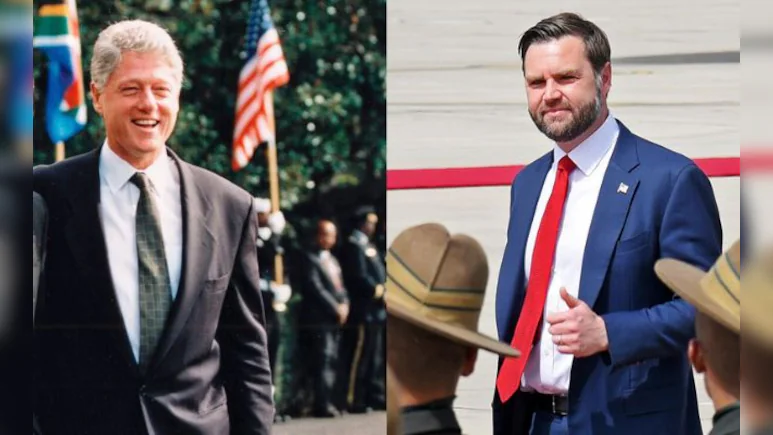
In a horrifying act of violence that has drawn disturbing parallels to a dark chapter in U.S.-India diplomatic history, at least 26 civilians were massacred on Tuesday in Jammu and Kashmir—just a day after U.S. Vice President JD Vance arrived in New Delhi for his first official visit to India.
The attack took place in the serene Baisaran Valley, near Pahalgam in the Anantnag district, a popular tourist spot nestled in the Himalayas. What should have been a peaceful afternoon turned into a bloodbath when four to six heavily armed terrorists, reportedly disguised in military-style uniforms, emerged from the surrounding forests and opened fire on a group of tourists.
A Scene of Chaos and Religious Targeting
According to eyewitnesses, the assailants initially posed as police officers, calling tourists over by name before suddenly unleashing gunfire. Survivors described a horrifying scene where the attackers singled out non-Muslims, allegedly demanding that victims recite the Kalma, the Islamic declaration of faith. Those who couldn’t were executed on the spot.
One chilling account came from a survivor who said a terrorist spared a woman, telling her, “Go tell Modi what happened here today.”
Among the victims were a 26-year-old officer in the Indian Navy and an Intelligence Bureau official, adding a further layer of national trauma to an already devastating attack.
A Haunting Parallel to 2000: The Chittisinghpura Massacre
The Pahalgam massacre comes eerily close to replicating events from 24 years ago, when then-President Bill Clinton arrived in India in March 2000. Just hours before his historic state visit began, terrorists attacked the Sikh village of Chittisinghpura, also in Anantnag district, killing 35 Sikh men in cold blood.
In that attack, the killers wore Indian Army uniforms, navigated silently through fields under the cover of darkness, and gathered villagers before executing them at point-blank range. It was the first large-scale targeting of Sikhs during Kashmir’s insurgency, and its symbolism was unmistakable—meant to send a message during the presence of a high-profile U.S. leader.
Now, with JD Vance on Indian soil, terrorists have once again turned Kashmir into a theater of horror, choosing a symbolic moment to make their statement.
Rising Fears, Political Repercussions
The timing of the attack has not gone unnoticed in diplomatic circles. The gruesome assault during an American vice president’s visit is being viewed as an attempt to embarrass India on the world stage, test its internal security, and resurrect fears of sectarian violence.
Indian officials have yet to release a formal statement connecting the attack to Vice President Vance’s visit, but many are drawing the comparison to Clinton’s trip—seen by some as a blueprint for shock and disruption whenever high-profile American dignitaries visit the region.
Security forces have launched a massive manhunt to track down the attackers. No group has claimed responsibility yet.
The Message Behind the Massacre
While the tactical goal of the terrorists remains unclear, the symbolic message is chillingly consistent with past patterns: strike during moments of international visibility, target religious minorities, and amplify fear through spectacle.
Vice President JD Vance, whose trip was meant to reaffirm U.S.-India strategic ties, now finds himself in a politically charged and emotionally fraught environment—underscoring the volatility that still surrounds the Kashmir conflict.