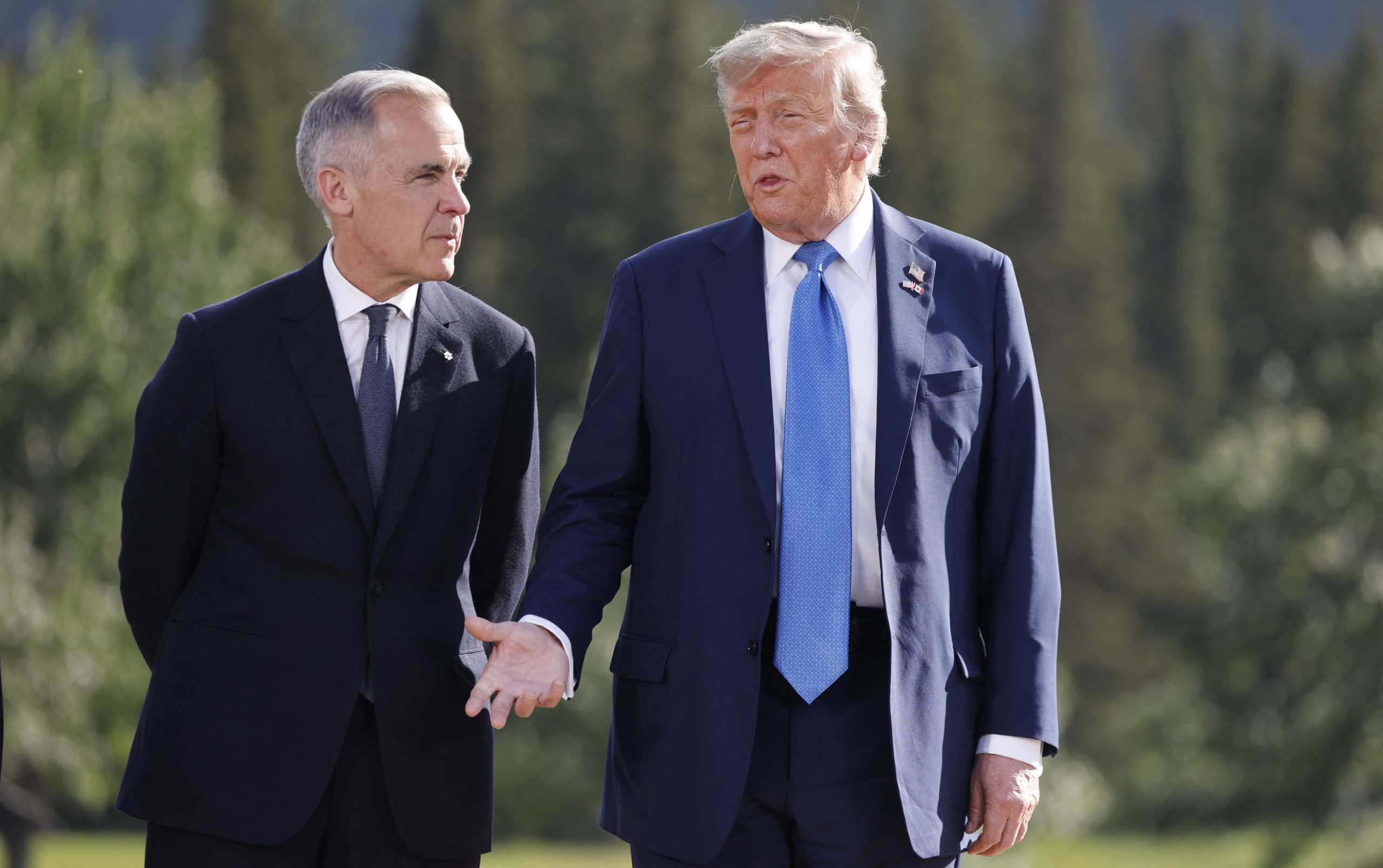
Canada Pushes Back After Trump Slaps Surprise Tariff Hike
In politics, timing is rarely accidental. And sometimes, it’s the pause before the strike that speaks the loudest.
At exactly 4 a.m. on August 1, a long-rumored U.S. tariff hike landed—not in Washington, but across the northern border. It reverberated through the steel corridors of Ottawa and echoed across Canada’s industrial heartland. What had been debated, signaled, and briefly postponed came crashing down. The reaction from Canada? Swift, firm, and unusually reflective.
But this clash had been brewing long before that early morning wake-up call.
Tariffs as a Trump Signature Move
Donald Trump’s fondness for economic brinkmanship is nothing new. Now a dominant force in the 2025 election cycle, Trump has again turned to tariffs to reshape America’s trade posture.
Back on April 2, Trump unveiled a sweeping 10% baseline tariff on nearly all foreign imports—a populist move cast as economic patriotism. Critics saw something else: a shot across the bow of global trade.
Most countries, including Canada, responded with caution. A 90-day pause was negotiated—an effort to buy time. That time expired August 1. Canada’s penalty: a tariff increase from 25% to 35%, effective immediately.
The stated reason? National security—specifically, fentanyl trafficking.
Fentanyl or a False Flag?
According to the Trump administration, Canada is failing to stop fentanyl from reaching U.S. communities. But Prime Minister Mark Carney wasn’t having it.
“Canada accounts for only 1% of U.S. fentanyl imports,” Carney said. “And we’ve been working intensively to further reduce even that.”
In a strikingly composed statement, Carney accused Trump of using a real public health emergency as a political prop. “We reject the premise,” he said. “And we reject the punishment.”
Then, instead of threatening retaliation, he made a strategic pivot.
“Canadians Will Be Our Own Best Customer”
Carney’s response wasn’t a call to arms—it was a call to identity.
“We can give ourselves more than any foreign government can ever take away,” he said. “By building with Canadian workers and by using Canadian resources to benefit all Canadians.”
The line landed. It lit up broadcasts in Alberta, trended on X (formerly Twitter) in Quebec, and made its way onto signs in downtown Toronto by sundown. In an era obsessed with GDP and global rankings, Carney offered something more grounded: economic self-respect.
Who Pays for Tariffs?
Though dramatic, the 35% tariff doesn’t cover all Canadian goods. Much remains protected under USMCA (Trump’s own successor to NAFTA).
Still, “exempt” doesn’t mean untouched. Non-essential machinery, certain chemicals, and intermediate manufacturing goods are already affected. U.S. companies sourcing from Canadian suppliers are revisiting contracts. Costs are rising. Deliveries are delayed.
And as always with tariffs, the real cost lands on the consumer.
Tariffs are taxes on imports—when U.S. firms pay more, they pass those costs downstream in the form of price hikes, job cuts, or lower investment.
Trump’s Rationale: “Common Sense”
Trump seems unfazed by the backlash. Speaking at a Pennsylvania rally the night before the tariff hike, he said, “Why should we let other countries sell into our market without paying their fair share?”
“America First doesn’t mean America alone,” he added. “But it sure doesn’t mean America last.”
He spared Mexico for now, extending their tariff reprieve another 90 days. China, however, remains in a standoff with the U.S., as both sides hover above 100% tariffs on certain goods. Negotiations have cooled, but tensions remain volatile.
What’s Trump Really After?
Some observers see an economic vision behind Trump’s tariffs: rebuild American industry by punishing offshoring. Others see strategy—forcing bilateral negotiations to replace multilateral norms.
Critics, including Carney, argue it’s more about destabilization than strategy—a calculated unpredictability designed to keep allies off-balance.
“It’s hard to negotiate,” said one senior Canadian diplomat anonymously, “when you don’t know if your trade partner will honor a handshake the next morning.”
Border Security: The Other Front
Carney didn’t sidestep the issue of border security. He leaned in.
Canada, he said, is making historic investments—thousands of new officers, enhanced surveillance, new legislation to target smuggling networks. But he drew a line.
“We will not allow our country’s integrity to be politicized for economic gains we never agreed to.”
What Comes Next?
For now, Canada is avoiding escalation. No retaliatory tariffs have been announced. But pressure is building. If the 35% hike drags into fall, domestic industries may demand countermeasures.
Meanwhile, Trump’s base applauds the move as bold leadership. In swing states like Ohio and Michigan, the message resonates: We don’t need the world—let the world need us.
But trade officials across the globe are asking a familiar question:
Can we plan around a country that resets its policy every 90 days?
Final Thought: Two Visions, One Fork in the Road
What unfolded this week wasn’t just a trade dispute. It was a philosophical divide between two ideas of power:
-
Trump: Strength is leverage. Lead by pressure.
-
Carney: Strength is self-sufficiency. Lead by example.
Both visions carry weight. Both have history on their side. And both come with risks.
But in 2025, amid rising volatility, Carney’s quiet confidence—his refusal to escalate, his appeal to domestic resilience—may prove more disruptive than Trump’s tariffs.
Because sometimes, the most powerful thing a country can do is stay grounded.