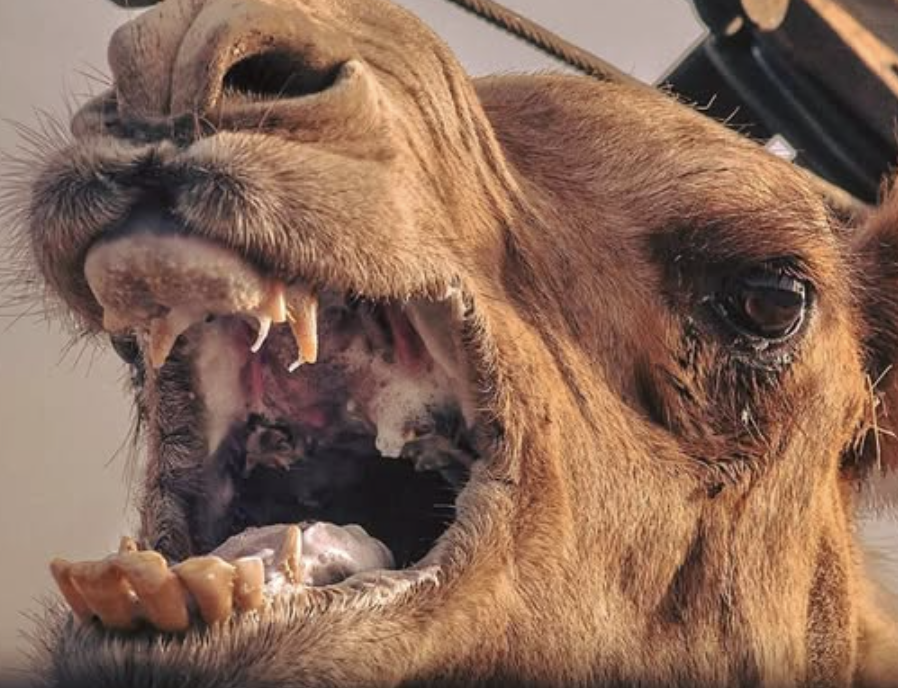
Out in the sun-bleached expanses of Rajasthan’s Barmer district, the desert summer does not negotiate. When the mercury punches past 45°C (113°F), the heat transitions from an inconvenience to a tangible threat, baking everything—and everyone—under a merciless sky. It is against this unforgiving backdrop that a chilling, highly graphic story recently erupted across social media, detailing a fatal confrontation between a desperate camel and its owner.
According to the viral accounts currently ricocheting across the internet, a working camel was allegedly left tethered outside for hours during the peak of a blistering heatwave, completely exposed to the elements without shade or water. The reports claim the animal’s owner had stepped inside to entertain guests, leaving the beast forgotten in the stifling heat. Witnesses described the camel growing increasingly restless, pacing and showing visible signs of distress as the temperature soared.
The story takes a violent turn when the owner finally returned. According to these unverified online posts, the overheated animal snapped, launching a fatal attack on its handler.
Separating Viral Drama from Desert Reality
As a journalist, the first rule of the desert is to look for tracks, not just listen to the wind. While the internet has been quick to feast on the most graphic details of this incident, it is crucial to note that no major, widely recognized international news organizations have independently verified the most extreme claims. The versions circulating on low-verification websites differ wildly in their facts, locations, and ultimate outcomes.
What the story does do, however, is shine a harsh spotlight on a broader, undeniable reality: camels are massive, powerful creatures. When pushed to their absolute physical limits by stress, dehydration, and extreme heat, their behavior becomes entirely unpredictable.
“Camels are famous for their endurance and generally calm demeanor,” say camel behavior experts. “But they are not machines. When subjected to prolonged physical distress, restraint, or what they perceive as a threat, they are fully capable of defensive aggression.”
Across India, the Middle East, and North Africa, these animals are the backbone of rural economies—serving as vital transport, farming machinery, and tourism icons. They are essential to daily life, but their utility depends entirely on a delicate balance of proper handling and welfare.
The Anatomy of a Breaking Point
Animal welfare specialists point out that tying a large animal in extreme heat without relief is a recipe for disaster. It triggers a profound panic response, combining severe dehydration with heat stress. When a creature that can weigh anywhere from 600 to 1,000 kilograms (1,300 to 2,200 pounds) panics, the math gets dangerous very quickly.
While the internet tends to dramatize these incidents for clicks, documented cases of camels injuring or killing humans do exist. However, they are rare, and they almost always share a common denominator: provocation, improper handling, or extreme environmental stress.
To understand the danger, one only needs to look at the animal’s sheer physical capability:
-
Bite Force: Adult camels possess immensely strong jaws capable of inflicting severe trauma.
-
Leverage: Their powerful neck muscles give them incredible leverage over a human handler.
-
Striking Power: They can deliver forceful, heavy kicks in multiple directions when they feel cornered.
Wildlife experts are quick to defend the species, emphasizing that camels are not naturally aggressive toward humans. Any violent reaction is almost always defensive. Local handlers are traditionally trained to read the warning signs—such as specific vocalizations, intense pacing, and visible restlessness. To ignore these signs is to invite catastrophe.
The Digital Distortion Field
The viral explosion of the Rajasthan story highlights a secondary epidemic: online misinformation. Shocking animal attacks are prime currency for entertainment-style websites and social media accounts looking to drive engagement. Fact-checkers routinely warn readers to approach these sensationalized tales with a healthy dose of skepticism, especially when they lack verified eyewitness testimony or official police reports.
Beyond the sensational headlines, the real conversation belongs to animal welfare groups who use these moments to advocate for the humane treatment of working animals. In extreme environments like the Thar Desert, basic necessities like hydration, shade, and mandated rest periods are not just matters of kindness—they are fundamental safety protocols.
When a tragedy or an aggressive outburst does occur, it is almost never an act of random malice by the animal. It is a direct reflection of environmental pressure or human oversight.
Ultimately, the takeaway from the whispers coming out of Barmer isn’t that we should fear these ancient desert companions. Instead, it serves as a stark reminder of our responsibility toward them. Whether in the heart of India or the dunes of the Middle East, understanding animal behavior and providing proper care remains the only true safeguard for ensuring humans and animals can safely coexist.