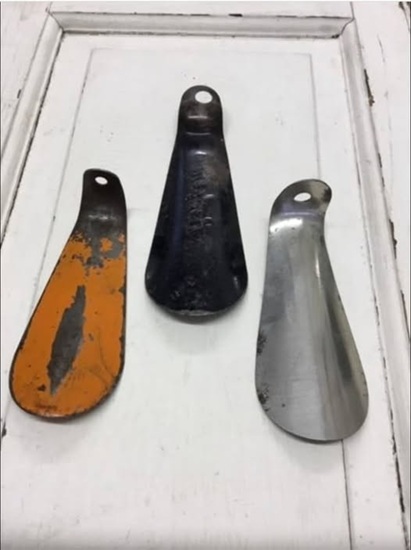
To the modern eye, stumbled upon in the musty depths of a grandparent’s chiffonier or rescued from a cluttered estate sale drawer, it looks like a relic of a forgotten science. It is a peculiar, crescent-shaped implement, smooth to the touch, curving like an exclamation point from a bygone era.
When photographs of these orphaned objects surface on digital forums, the internet’s collective imagination runs wild. Cyber-sleuths confidently brand them as arcane kitchen utensils, Victorian surgical instruments, or avant-garde decorative ornaments.
The truth, however, is far more grounded, yet infinitely more fascinating. This mysterious artifact is none other than the humble shoe horn.
Though deceptive in its simplicity, this unheralded champion of the wardrobe has spent centuries quietly executing a dual masterclass in ergonomics and preservation. It does two things flawlessly: it allows the human foot to glide seamlessly into footwear, and it safeguards the structural integrity of the shoe’s heel.
To trace the lineage of this unassuming tool is to journey back to the 15th century, where the story of the shoe horn truly begins.
From Aristocratic Luxury to Industrial Staple
In the late medieval period, footwear was not a disposable commodity; it was a bespoke luxury. Shoes were meticulously handmade, fiercely expensive, and built to endure. To ruin the heel was to ruin a minor fortune.
Thus, skilled artisans began carving the earliest shoe horns from the bountiful materials of the natural world: animal horn, bone, ivory, and resilient hardwoods. These mediums were chosen not merely for their durability, but for their ability to be polished into a glassy, friction-free surface that coaxed the foot forward without wounding the leather.
As European sartorial tastes grew more extravagant, the shoe horn evolved from a utilitarian necessity into a fierce status symbol. In the gilded corridors of aristocracy, even the most mundane ritual required a touch of opulence. Wealthy households commissioned shoe horns that doubled as works of art—engraved with intricate family crests, forged with gleaming silver and brass handles, or carved with breathtaking ivory filigree. In these elite circles, the tool was no longer just about protecting leather; it was a testament to personal refinement, elegance, and high social standing.
By the 17th and 18th centuries, the cobbler’s craft had reached new heights of sophistication. Footwear became more tailored, featuring tighter fits and rigid heel counters. This structural evolution made the shoe horn indispensable. Attempting to force a foot into these snug, uncompromising designs without assistance would buckle the heel counter, permanently ruining the shoe’s silhouette. By mitigating this daily strain, the shoe horn effectively extended the lifespan of premium footwear, securing its place as a permanent fixture in the global household.
Then came the Industrial Revolution, a seismic shift that recalibrated the manufacturing landscape. Factories began stamping out shoe horns on a massive scale utilizing robust metals like steel and brass, driving down costs and broadcasting the tool to the masses.
By the mid-20th century, the advent of synthetic polymers democratized the implement entirely. Plastic shoe horns—lightweight, inexpensive, and endlessly reproducible—flooded the market. While luxury variants survived, the tool had officially transitioned from an aristocratic privilege to an everyday staple for the common man.
The Anatomy of Design: Form Meets Function
The brilliance of the shoe horn lies in its stubborn refusal to change its fundamental geometry. Why alter perfection? Today, the market offers a diverse array of iterations tailored to the nuances of modern life:
-
The Travel Companion: Compact, pocket-sized variants designed to slip effortlessly into a briefcase or evening bag for the jet-setting professional.
-
The Long-Handled Savior: Extended models engineered specifically for those navigating mobility challenges, arthritis, or back pain. These elegant extensions allow the user to don their footwear while standing perfectly upright, transforming a painful morning struggle into a dignified, effortless routine.
-
The Modern Materials: From flexible, budget-friendly plastics and indestructible stainless steel to artisan-carved woods and leather-wrapped luxury pieces that cater to the contemporary dandy.
This enduring utility has sparked a vibrant subculture among antique enthusiasts and historical collectors. Vintage shoe horns are highly prized artifacts today, celebrated for their narrative and aesthetic value.
To gaze upon an antique shoe horn featuring a handle sculpted into the likeness of a roaring lion, a mythological deity, or an elegant floral bloom is to glimpse the domestic habits and artistic sensibilities of a lost era. Rare, well-preserved specimens frequently command impressive premiums at auctions, coveted as tangible snapshots of historical craftsmanship.
The Digital Renaissance and Quiet Sustainability
We live in a digital age obsessed with the hyper-modern, yet the internet has fostered a surprising counter-culture: a deep fascination with forgotten domestic tech. Online communities regularly viralize images of heirlooms pulled from attics and garages.
For younger generations raised in an era of canvas slip-ons and knit sneakers, discovering a vintage shoe horn evokes a sense of historical wonder. It serves as a stark poignant reminder of how quickly an object can slip from the cultural consciousness, despite having spent centuries as an absolute necessity.
“In an era dictated by planned obsolescence and blinking screens, there is a profound, almost comforting dignity in a tool that requires no electricity, no software updates, and no maintenance.”
It does one job, and it does it flawlessly, generation after generation. It is the embodiment of quiet practicality—a design philosophy where durability outshines novelty.
Yet, the shoe horn’s story is not merely one of nostalgia; it carries a surprising modern resonance in the arena of environmental sustainability. In a world choked by fast fashion and disposable consumerism, extending the life of what we already own is an act of quiet resistance.
By preventing the collapse of a shoe’s heel architecture, the shoe horn drastically reduces wear and tear. Footwear lasts longer, fewer pairs end up in landfills, and consumption slows down. This is particularly vital for high-quality leather goods, which are meant to age gracefully over decades rather than seasons.
An Enduring Legacy
For the uninitiated, the first trial of a shoe horn is often a revelation. The stubborn resistance of a stiff dress shoe, an engineered athletic shoe, or a tall leather boot vanishes instantly. Athletes, military personnel, and sartorial purists have long kept the tool close at hand to maintain the pristine lines of their footwear and prevent unsightly creasing. What begins as a minor curiosity quickly cements itself as an indispensable part of the morning ritual.
This rediscovery dovetails with a broader cultural awakening—a yearning for a time when everyday objects were built with an eye toward longevity and aesthetic grace. Our ancestors believed that even the most mundane household tool deserved to be beautiful.
Though casual footwear trends dominate the modern landscape, the shoe horn refuses to be marginalized. Walk into any high-end cordwainer in London or Tokyo, and your purchase will likely be accompanied by a complimentary shoe horn. Check into a five-star hotel, and you will find one resting quietly in the wardrobe. It persists because it solves a universal human problem with absolute efficiency.
From the hand-carved bones of medieval Europe to the sleek stainless steel lines of the 21st century, the shoe horn remains a masterclass in industrial design. It stands as a timeless testament to the idea that true innovation doesn’t need to be complex to change the world. Sometimes, the most brilliant inventions are the ones that simply help us step forward into our day with a little more grace.