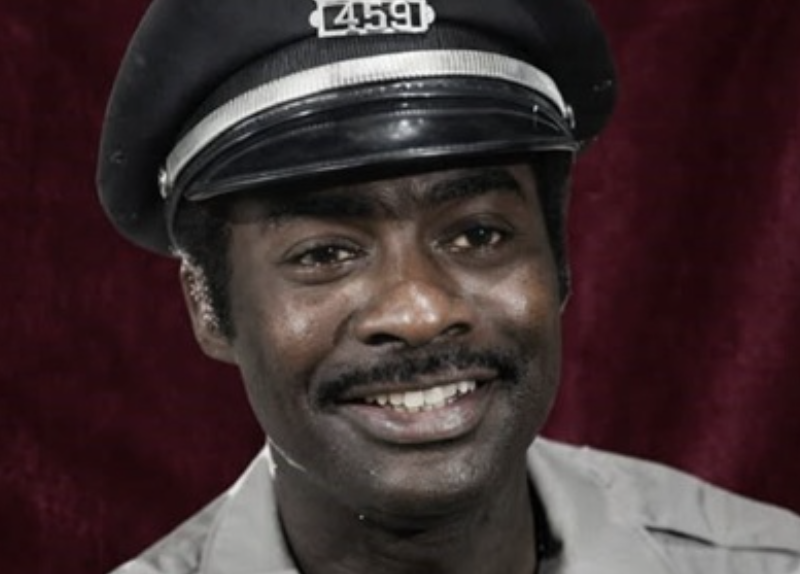
In a modern landscape where fame is a currency minted in noise and measured by the frantic pulse of constant self-promotion, Ed Bernard remains a striking anomaly. He is a vestige of a different creative philosophy—one where an artist’s presence is felt rather than announced. Bernard belongs to a storied lineage of performers who eschewed the crutch of spectacle and the vanity of personal publicity. His career was not a series of desperate bids for the spotlight, but a steady construction project built on the bedrock of consistency, rigorous discipline, and a hushed, total mastery of his craft. Across decades of work in both television and theater, he commanded a rare kind of institutional respect, earned not through the roar of public acclaim, but through the unshakable authenticity he breathed into every frame.
The Crucible of the Stage
Long before he became a staple of the American living room, Bernard tempered his talent in the unforgiving furnace of the theater. For actors of his vintage, the stage was the ultimate training ground—a high-stakes environment where the safety nets of the editing bay and the “second take” simply did not exist. This world demanded a specific kind of professional alchemy: a blend of immediate presence, surgical timing, and an unerring commitment to emotional truth. It was here, in the shadows of the wings and the heat of the footlights, that Bernard forged the professional armor he would wear throughout his long tenure in television.
Shaping a Golden Era
When Bernard made the leap to the small screen in the 1970s and ’80s, he stepped into an industry undergoing a seismic shift. This was an era of expanding horizons and deepening cultural weight, often cited as a “golden age” for serialized drama. Bernard didn’t just witness this evolution; he helped anchor it. In seminal series like Police Woman and The White Shadow, he delivered a brand of grounded realism that served as the spine for sprawling ensemble casts. He understood a fundamental truth that escapes many: the goal was not to outshine his peers, but to enrich the atmosphere of the story itself.
The Power of the Unspoken
Perhaps the most distinctive signature of Bernard’s work was his profound restraint. In a business that frequently mistakes volume for depth and histrionics for passion, Bernard weaponized subtlety. His performances were measured, intellectual, and deeply empathetic. He often served as the “center” of a narrative—the stabilizing force that allowed lead actors to soar and complex plotlines to breathe. This quiet strength made him indispensable; he was the rare actor who could dominate a scene without ever being the focal point.
A Reputation Built on Preparation
To work with Ed Bernard was to work with a technician who treated the craft with a workmanlike reverence. Directors and co-stars alike spoke of him with the kind of appreciation reserved for the most reliable of collaborators. He approached every script, regardless of the character’s “rank,” with a meticulous level of preparation and a selfless devotion to the ensemble. In a period when Hollywood was becoming increasingly transactional and fast-paced, Bernard’s steadfast commitment to the work—rather than the “biz”—insured his longevity.
Life Beyond the Lens
Away from the cameras, Bernard’s life mirrored the integrity of his performances. He was never a creature of the tabloids or a subject of manufactured controversy. Instead, he lived a life defined by a private sense of purpose, rooted in his family and a quiet adherence to his own moral compass. While the entertainment industry clamored for more access and more “content,” Bernard maintained a dignified distance, choosing a grounded existence over the ephemeral glow of the media circus.
As the years rolled on, Bernard executed a graceful pivot away from the industry’s relentless machinery. He chose a more reflective, personal pace, a transition that felt entirely consistent with the man who had always valued balance over visibility. It was not a retreat, but a conscious choice to prioritize the authentic over the public—stepping away from the Hollywood grind into a chapter of reserved, personal fulfillment.
The Enduring Impact of the Character Actor
Though he may have stepped back, the resonance of Bernard’s work is permanent. His contributions remain woven into the fabric of television history, serving as a masterclass in how supporting roles can elevate an entire production without overshadowing it. His trajectory serves as a poignant reminder that the “character actor” is the unsung hero of the medium. Performers like Bernard provide the texture, the realism, and the emotional gravity that make fictional worlds feel lived-in and true.
Within the grander arc of entertainment history, Bernard represents a standard of excellence that is too often overlooked in favor of the “star.” Yet, it is his brand of reliability that makes storytelling possible. He proved that the narrative is a collective labor, succeeding only when every contributor brings a sense of truth to their post.
A Legacy of Substance
Today, Ed Bernard’s career stands as a testament to a specific kind of artistic integrity. It was an era where long-term success was the byproduct of discipline and genuine talent. For viewers who still crave authenticity and the quiet power of a story well-told, his performances continue to strike a chord.
Ultimately, Bernard’s legacy isn’t found in a single viral moment or a loud outburst, but in the cumulative weight of a life’s work. He elevated every project he touched by simply being the most prepared, most honest version of himself. In the end, Ed Bernard didn’t just play characters; he helped build the foundation of an era, leaving behind a professional blueprint that continues to inspire those who value the essential, quiet dignity of the craft.