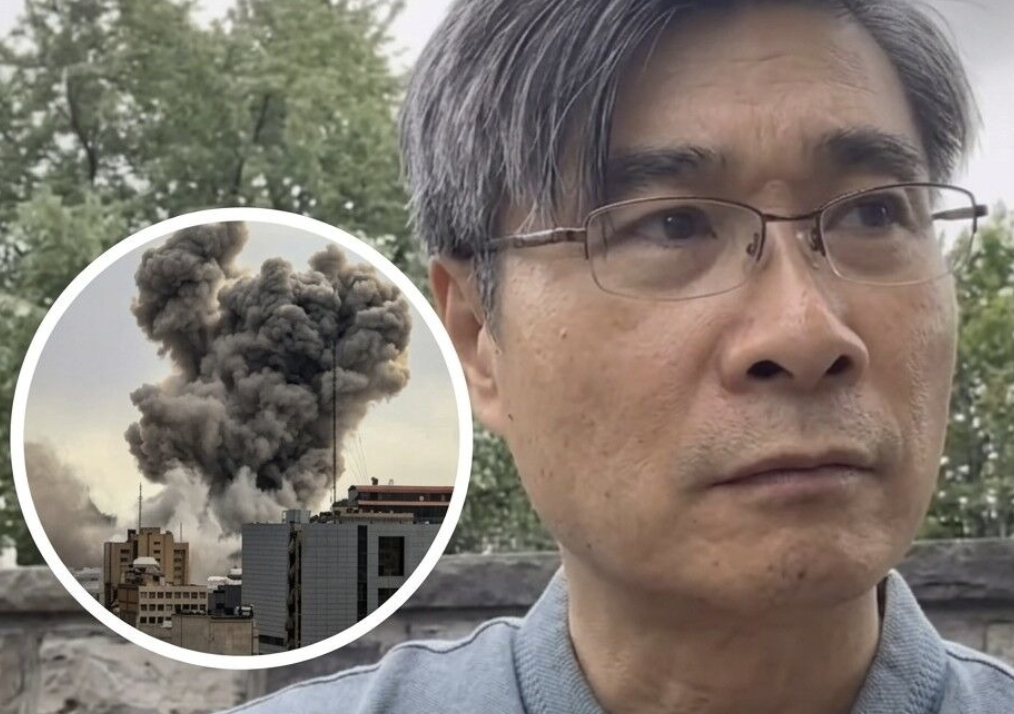
In an era dominated by algorithmic forecasting and rapid-fire punditry, an unconventional voice from China has captured the global imagination, earning the moniker of a modern-day “Nostradamus.” Yet, the man at the center of this viral storm commands authority not through mysticism or crystal balls, but through the cold, calculated calculus of historical precedent and strategic analysis.
Professor Xueqin Jiang, an educator and geopolitical analyst, has found himself thrust into the international spotlight after a series of chillingly accurate forecasts regarding United States-Iran relations began to materialize. What started as an academic lecture has evolved into a global digital phenomenon, sparking intense debate across social media platforms and policy corridors alike about the predictability of modern warfare and the shifting tides of global hegemony.
The Anatomy of a Prophecy: From Lecture Hall to Viral Reality
The genesis of the current frenzy dates back to 2024, during what appeared to be a routine academic lecture. Addressing an audience on the cyclical nature of global conflict, Professor Jiang laid out a triad of bold theses regarding the trajectory of international relations.
At the time, skeptics dismissed the assertions as speculative. Today, they read like a historical chronicle. Jiang’s first two milestones have already transitioned from forecast to fact:
-
The Return of Donald Trump: Jiang precisely anticipated the political resurrection and return of Donald Trump to the American presidency, viewing it not as an isolated political event, but as a symptom of deeper, systemic shifts within the American electorate and its foreign policy posture.
-
The Escalation of the Washington-Tehran Crucible: He warned of a severe and volatile escalation in tensions between the United States and the Islamic Republic of Iran—a friction point that has indeed reached a fever pitch, dominating current headlines and destabilizing global energy markets.
With two checks on his geopolitical scorecard, the international community has turned its collective attention to Jiang’s third, and most controversial, thesis.
“He isn’t dealing in magic; he’s dealing in patterns,” noted one viral commentary that garnered millions of impressions. “That is precisely what makes his final forecast so unsettling.”
The Third Prophecy: The Illusion of Asymmetric Victory
Jiang’s final, most polarizing prediction tackles the ultimate outcome of a hot war between Washington and Tehran. His conclusion challenges the foundational assumptions of Western military supremacy: the United States, despite its technological and budgetary dominance, may find itself unable to secure a definitive victory.
To understand Jiang’s thesis is to understand the difference between raw power and strategic endurance. His argument bypasses the superficial metrics of missile counts and aircraft carriers, focusing instead on the grueling realities of asymmetric warfare.
Jiang points to a sobering historical truth: superpower status does not guarantee success in protracted conflicts. The ghosts of past quagmires loom large over his analysis, serving as a reminder that superior firepower often blunts itself against the anvil of local resistance and geographic defiance.
According to Jiang, Iran is not an adversary caught off guard. Tehran has spent the better part of the 21st century preparing for precisely this contingency, weaving a sophisticated web of regional proxies, developing deeply entrenched defensive infrastructure, and mastering the art of asymmetric deterrence. A conflict on Iranian soil, Jiang argues, would not be a swift campaign, but a grueling war of attrition that could exhaust American political will and economic resources.
A Global Digital Battleground
As Jiang’s lectures circulate in translated snippets across TikTok, X (formerly Twitter), and Weibo, they have ignited a fierce intellectual proxy war online. The discourse highlights a deep polarization in how the public views the future of global power.
-
The Realists: One camp views Jiang’s insights as a masterclass in political realism. For these observers, his predictions are a validated critique of imperial overreach, grounded in the undeniable logic of military history.
-
The Skeptics: Conversely, critics argue that war is inherently chaotic and governed by the “black swan” events that no analyst—no matter how astute—can foresee. They caution against elevating an academic into a prophet, noting that treating conflict outcomes as predetermined ignores the fluid dynamics of real-time diplomacy and military engagement.
The Verdict of History
Ultimately, whether Professor Jiang’s final prediction manifests as historical truth or remains an unfulfilled hypothesis is almost secondary to the vital conversation he has provoked. His sudden prominence underscores a profound global anxiety regarding the fragile state of international peace.
In a world prone to forgetting the lessons of the past, Jiang’s methodology offers a sobering reminder: the future is rarely an anomaly. More often than not, it is merely the past repeating itself, written in a different language and projected onto a larger stage. As Washington and Tehran continue their perilous dance on the brink of escalation, the world watches the clock, wondering if the Chinese analyst’s darkest forecast is about to come true.