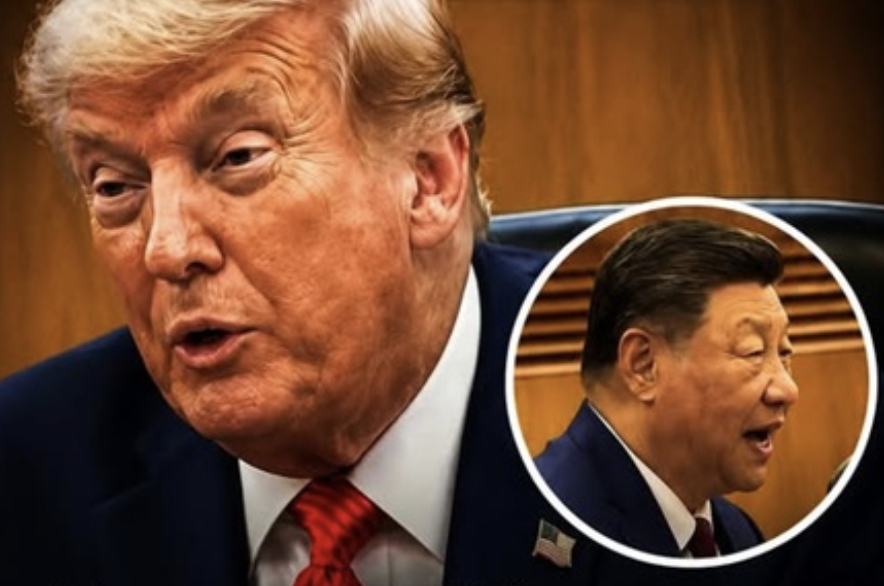
Behind the heavy, soundproofed doors of global summits, where the air conditioning is kept deliberately brisk and the silence is heavy with consequence, the world’s most critical geopolitical drama unfolds. To the uninitiated, these high-level diplomatic encounters between the United States and the People’s Republic of China look like bloodless choreography. Every gesture is scripted; every pause is calculated by an army of protocol officers; every phrase is weighed to the milligram on a scale of strategic ambiguity.
But stripped of the ceremonial handshakes and the sterile luxury of the briefing rooms, these summits are not polite exercises in international etiquette. They are high-stakes, full-contact wrestling matches disguised as drawing-room conversations. Shaped by decades of deep-seated ideological rivalry, profound economic entanglement, and existential security anxieties, these encounters pit the world’s two reigning superpowers against one another in a contest where the margin for error is razor-thin.
When Washington and Beijing sit down, the entire global apparatus holds its breath. A single cold stare or a fractional delay in a joint communique can trigger tremors across international markets, send allied capitals rushing to redraft contingency plans, and ignite the 24-hour news cycle. It is a masterclass in controlled tension, where spontaneity is virtually nonexistent, yet the undercurrents of global instability are palpable in every room.
A Clash of Titans: The Deconstructive vs. The Dynastic
At the heart of this modern diplomatic arena is an extraordinary collision of leadership philosophies and institutional styles. It is a matchup that transcends mere policy differences, representing two fundamentally incompatible worldviews.
On one side of the ledger is the highly personalized, transactional diplomacy that has defined recent American iterations—most vividly embodied by President Donald Trump. This approach treats foreign policy not as a sacred continuum, but as a series of corporate acquisitions and high-stakes renegotiations. It is a style driven by:
-
Personal Chemistry: A belief that complex, structural state conflicts can be smoothed over or unlocked through raw, face-to-face rapport.
-
The Art of the Deal: Framing historic geopolitical friction in terms of immediate economic concessions, trade balances, and transactional wins.
-
Public Disruption: Using press conferences and social media as leverage points to keep adversaries—and allies—permanently off-balance.
Contrasting sharply with this disruptive American methodology is Chinese President Xi Jinping, who commands a highly structured, hyper-institutionalized, and state-centered diplomatic machine. Xi’s approach is built on a vastly different temporal scale:
-
The Long Game: Looking past the immediate news cycle or the next election, anchoring strategy in decades-long horizons aimed at national rejuvenation.
-
Unyielding Sovereignty: A rigid, uncompromising defense of core national interests, historical narratives, and territorial integrity.
-
Geopolitical Equilibrium: Projecting an image of absolute domestic stability and predictable state power, avoiding the erratic swings of Western democratic cycles.
When these two diplomatic philosophies collide, the resulting friction is about far more than tariffs or tech intellectual property. It is an existential debate over how power should be wielded, how treaties should be negotiated, and how the global order should be governed in the twenty-first century.
The Anatomy of the Communique: Reading Between the Diplomatic Lines
When the closed-door sessions conclude, the diplomatic corps unleashes its final product: the joint statement. To the public, these documents can read like masterpieces of bureaucratic sedation—bland, repetitive text filled with aspirations of “mutual respect,” “win-win cooperation,” and “enhanced dialogue.”
Yet, to seasoned observers, the true story is found in the microscopic shifts in syntax. A verb changed from “agreed” to “discussed,” or the inclusion of a specific phrase regarding market access, can signal a profound diplomatic victory or a bitter, unresolved stalemate. The public messaging is designed to project stability and prevent market panic, but the real, bruising negotiations remain hidden entirely from view.
The friction points that dominate these secret sessions are well-known, yet immensely volatile. The battle lines are drawn over technology and trade sovereignty, focusing heavily on semiconductor supply chains, artificial intelligence restrictions, and targeted economic sanctions. Simultaneously, military posturing intensifies in the increasingly crowded airspace and maritime corridors of the Asia-Pacific region, where naval assets routinely shadow one another.
Then there is the Taiwan flashpoint—the most combustible and sensitive issue on the table. For Beijing, Taiwan represents an existential, non-negotiable question of territorial integrity under its “One China” principle, a stance it hammers home at every international forum. For Washington, the approach relies on a delicate, decades-old policy of “strategic ambiguity”—supporting Taiwan’s self-defense and maintaining regional stability without offering formal, explicit diplomatic recognition. It is a diplomatic tightrope where a single misstep could trigger a catastrophic kinetic conflict, meaning the issue is often referenced through coded, indirect language while remaining the most destabilizing variable in the relationship.
Escaping the Shadow of Thucydides
Beyond the immediate policy disputes lies a deeper, structural anxiety that haunts both Washington and Beijing. In academic and intelligence circles, this anxiety is frequently discussed through the lens of historical precedent—most notably the “Thucydides Trap.”
This ancient classicist framework suggests that when a rising power challenges an established hegemon, structural structural pressures make a historical clash incredibly difficult to avoid. While this is not an explicit doctrine or official policy for either nation, its shadow looms large over every negotiation room.
The structural pressure shapes how both capitals map out their long-term trajectories. The United States fights to maintain its global leadership, institutional dominance, and traditional alliance networks, while China steadily expands its economic footprint, military capability, and diplomatic gravity across Asia, Africa, and beyond. Both sides are acutely aware of this historical narrative, using these summits to actively manage the friction and prove the historical fatalism wrong.
The Paradox of Permanent Entanglement
What makes the U.S.–China rivalry entirely unique in human history, distinguishing it completely from the rigid ideological blocs of the old Cold War, is the reality of deep, systemic interdependence. The two nations are effectively fused at the economic hip.
The United States relies heavily on China’s massive manufacturing base and deeply integrated supply chains to fuel consumer markets, while Chinese industry depends on American capital, consumer demand, and foundational technology. Simultaneously, China’s vast holdings of U.S. debt and its expansion into global infrastructure complement the financial architecture managed by the West.
This economic reality creates a surreal diplomatic environment where fierce strategic competition must coexist with mandatory cooperation. Neither side can afford the total collapse of the other without triggering a global economic depression.
Furthermore, transcontinental challenges like climate change mitigation, global health security, and the stabilization of the international financial architecture are fundamentally unsolvable without a functional working relationship between Washington and Beijing. The superpowers are locked in a room together, mutually dependent, fiercely competitive, and fully aware that geopolitical reality dictates neither can leave.
The Mirage of the Breakthrough
Ultimately, the public hunger for dramatic, historic breakthroughs at these summits almost always goes unfulfilled. The media often magnifies a tense exchange of glances, a delayed dinner, or a symbolic gift into a grand narrative of triumph or disaster, occasionally distorting the reality of what actually occurred.
But the seasoned diplomat knows that real progress in this arena is measured in millimeters, not kilometers. The actual negotiations tend to be intensely procedural, focusing on granular policy details rather than theatrical outbursts. These high-level meetings are not designed to yield sudden, sweeping peace treaties. Instead, they function as essential pressure-release valves. They are vital platforms used to signal explicit intent directly to the highest levels of the opposing command structure, test boundaries, and establish guardrails to ensure that intense competition does not inadvertently veer into catastrophic miscalculation.
The trajectory of U.S.–China relations will continue to move through inevitable cycles of friction and engagement, tariff wars and temporary truces. Yet, the persistence of open communication channels—even during periods of profound military and political strain—reveals a deep, underlying pragmatism. Both capitals recognize the global fallout that a complete breakdown in communication would bring. In an increasingly interconnected and volatile world, the true metric of success for these summit meetings is not whether the two superpowers can learn to agree, but whether they can master the delicate, dangerous art of managing an evolving rivalry.