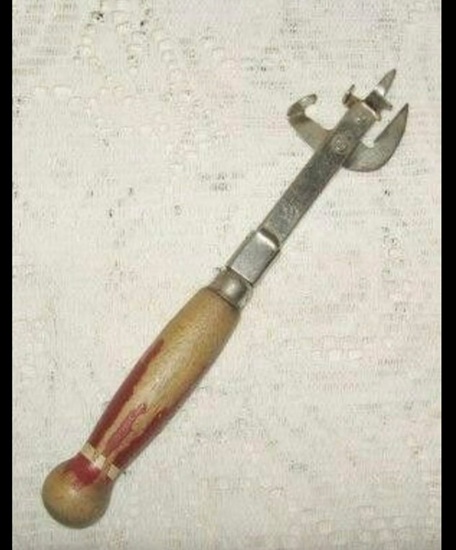
It began with a routine cleaning of a grandmother’s estate and ended as a viral masterclass in material culture. When a Reddit user unearthed a jagged, aggressively mechanical hunk of metal from the depths of a kitchen drawer, they didn’t see a culinary tool—they saw an enigma. The object was heavy, slightly intimidating, and entirely unrecognizable to its finder.
Hoping for a quick answer, the user posted a photograph of the relic online, casually musing whether it might be an archaic can opener or a forgotten multi-tool. They had no idea they were about to ignite a cross-generational digital firestorm. Within hours, the image morphed into a viral phenomenon, drawing thousands of amateur sleuths, historians, and nostalgic onlookers into a collective effort to decode a piece of forgotten household history.
The fervor surrounding the post underscored a fascinating modern reality: the everyday utilitarian objects of our grandparents’ era have become the baffling artifacts of today. As the image rippled across various social media platforms, the internet did what it does best—it speculated wildly. To younger digital natives raised on ergonomic, silicone-gripped gadgets, the item looked less like a utensil and more like a tactical weapon or a specialized piece of camping or fishing gear.
The comment sections quickly filled with a mix of genuine curiosity and dark humor, with users joking about the object’s fierce, almost menacing aesthetic. Yet beneath the comedy lay a stark generational divide. While Gen Z and Millennials stared blankly at the metallic contradiction, older internet users experienced a sudden, sharp jolt of recognition.
Memory, Muscle, and Metal
For those who grew up in mid-century kitchens, the object wasn’t a mystery; it was a memory. It was identified as a vintage-style, lever-action can opener—a design that ruled the culinary landscape long before the advent of safe-edge, smooth-turning modern alternatives.
Soon, the thread transformed from a guessing game into a living archive of domestic oral history. Veteran homemakers and older users stepped forward to explain the mechanics of the device, pairing their technical breakdowns with vivid, sometimes bloody, recollections. This wasn’t a tool for the faint of heart. Operating it required raw physical leverage:
-
First, the user had to forcefully puncture the tin lid with a heavy blade.
-
Then, using a calculated, rocking manual motion, they had to saw their way around the perimeter.
“It worked perfectly,” one commenter recalled, “but it left a jagged, razor-sharp edge on the tin that could slice your hand open if you weren’t paying attention.”
A chorus of replies echoed the sentiment, with users trading war stories of minor injuries and near-misses suffered at the hands of similar vintage utensils. These deeply personal anecdotes lent a bittersweet, cautionary nostalgia to the conversation. Through this crowd-sourced historical synthesis, the intimidating object was definitively unmasked. It stood as a monument to an era when preparing dinner required a distinct element of physical precision and risk.
A Blood-Stained Timeline of Innovation
To truly understand why this tool looked so alien to a modern audience, one must look to the bizarre, counterintuitive history of canned goods. In one of history’s great logistical oversights, the tin can was invented long before anyone figured out a dedicated way to open it. Early 19th-century soldiers and consumers routinely attacked their preserved rations with bayonets, hammers, chisels, or butcher knives.
It wasn’t until 1858—nearly half a century after canned food debuted—that American inventor Ezra Warner patented the first dedicated can opener. Developed primarily for the Union Army during the Civil War, Warner’s device was a fierce, lever-style mechanism featuring a sharp, curved blade. While it revolutionized field rations, its brute-force design and imposing size made it far too dangerous and impractical for the average home cook.
[1810s] Canned Food Invented (Opened with hammers/knives)
   │
[1858] Ezra Warner's Patent (Lever-style, military focus)
   │
[1870] William Lyman's Innovation (Rotary wheel introduced)
   │
[1930s] Electric Openers Arrive (Automation enters the home)
The true ancestor of the modern kitchen utensil arrived in 1870, courtesy of inventor William Lyman. Lyman introduced the revolutionary concept of the rotating cutting wheel, which tracked smoothly around the rim of the can. While a massive leap forward in usability, Lyman’s design still demanded a fair amount of grip strength and practice to keep the wheel on track. For the next several decades, manufacturers relentlessly tweaked this blueprint, gradually shifting the focus of kitchen engineering away from mere functionality and toward consumer safety and ergonomics.
The Century of Convenience
As the 20th century progressed, the evolution of the can opener mirrored the broader transformation of the modern home. Culinary technology raced to keep pace with an increasingly fast-paced society that demanded efficiency.
By the early 1900s, some manufacturers bypassed tools entirely, engineering cans with built-in metal keys that allowed consumers to literally roll back the lids. The 1930s introduced the luxury of automation with the debut of the electric can opener. Though early models were bulky, countertop-monopolizing behemoths, they heralded a new era where opening a meal required nothing more than the push of a button. By the 1950s, the design perfected itself into the ubiquitous, gear-driven handheld models we recognize today—tools specifically engineered to hide sharp blades and protect the user from harm.
Yet, despite a century of safety-focused engineering, the viral thread revealed a stubborn subculture of purists who still champion the old ways. A surprising number of commenters confessed that they still bypass modern gadgets in favor of their vintage, heavy-duty metal openers. They praised these mid-century relics as indestructible, reliable, and fundamentally superior to modern plastic alternatives that strip their gears after a few months of use. They openly acknowledged the danger of the ragged edges, but argued that a modicum of respect and proper handling was a small price to pay for a tool built to last a lifetime.
Ultimately, the digital postmortem of a grandmother’s kitchen tool proved to be about much more than a vintage can opener. It served as a compelling demonstration of how easily the context of daily life evaporates over the span of just a generation or two. What appeared to be a bizarre, threatening artifact to one group of people was, to another, a simple, comforting piece of their childhood. In solving the minor mystery, the global online community did something remarkable: they bridged a generational gap, turning a dusty piece of scrap metal into a shared celebration of human ingenuity and history.