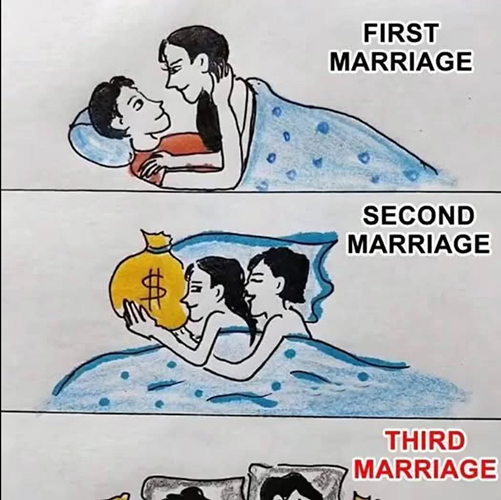
Marriage is rarely the static “happily ever after” depicted in storybooks; rather, it is a profound and restless journey. It is a dynamic process of human alchemy, shifting and expanding as we accumulate the scars and wisdom of life experience. For many, the transition from a first union to a second—or even a third—is not a sign of failure, but a roadmap of emotional maturation. It is a chronicle of individuals redefining their boundaries, sharpening their clarity, and ultimately discovering what they truly value in the long walk of a lifelong partnership.
The First Act: The Era of High Hopes
The inaugural marriage typically begins in a fever dream of idealism. It is a season defined by an abundance of hope and the intoxicating belief in a “perfect life” constructed of shared adventures and seamless emotional symmetry.
However, this first act often plays out on a stage of relative inexperience. Many young couples enter the fray without a full appreciation for the grit required to sustain a long-term bond. The early years act as a crucible, revealing the stark realities of balancing divergent personalities, the friction of domestic management, and the weight of unexpected external stressors. Without a seasoned toolkit of relationship resilience, these initial obstacles can feel like insurmountable walls. The struggle to reconcile glittering expectations with the mundane, often difficult, day-to-day realities frequently leads to a quiet disillusionment or sharp conflict.
The Second Act: The Pragmatic Pivot
By the time the ink dries on a second marriage license, the perspective has shifted from the clouds to the Earth. These unions are born from a more grounded, realistic vantage point. Having navigated the wreckage and the triumphs of a previous life, individuals enter the room with a sharper sense of identity and a more defined list of priorities.
Second marriages are often characterized by a cautious pragmatism. There is a heightened focus on the “how” of a relationship: open communication, the art of the compromise, and collaborative problem-solving. Yet, this stage introduces its own unique architecture of complexity.
-
The Blended Dynamic: Integrating children from previous lives requires a delicate alchemy of sensitivity and infinite patience.
-
Fiscal Friction: Financial landscapes are often cluttered with previous obligations, assets, and legal ties.
-
The Ghost in the Room: Emotional scars from the past can resurface unexpectedly, demanding a slow, deliberate process of trust-building.
Despite these hurdles, the hard-won wisdom of the first marriage often allows these couples to forge deeper emotional connections and establish the healthy boundaries that were missing the first time around.
The Third Act: The Pursuit of Authenticity
The third marriage often represents a total paradigm shift. At this stage, the noise of societal pressure and traditional expectations has largely faded. In its place is a laser focus on emotional intimacy, shared values, and mutual respect.
For those embarking on a third union, the goal is often simple yet profound: peace and genuine companionship. Having shed the weight of unrealistic ideals, these partners seek authenticity and radical acceptance. This stage is marked by a heightened emotional maturity that fosters deeper empathy and a more collaborative approach to life’s inevitable storms. There is also a renewed respect for personal autonomy; these couples understand that the strongest partnerships are those that balance “we” with a fiercely protected “I.”
The Universal Blueprint
Regardless of whether the license says “one,” “two,” or “three,” the foundational architecture of a successful union remains constant. The “journalist’s notebook” on lasting love reveals three non-negotiables:
-
Continuous Dialogue: Honest, ongoing communication is the only way to map a partner’s evolving aspirations and fears.
-
The Empathy Factor: Patience is the buffer against life’s inherent uncertainties.
-
Active Growth: A mutual commitment to evolve—both individually and as a unit—is the fuel that sustains love over decades.
The Outside Influence
We must also acknowledge that no marriage exists in a vacuum. Cultural backgrounds, family dynamics, and financial stability act as the weather systems that shape the relationship’s terrain. Success often hinges on a couple’s ability to nurture their bond through deliberate action: celebrating milestones, offering a shoulder during the lean years, and creating new, sacred traditions that belong only to them.
The Final Word
In the end, marriage is not a fixed institution but a living, breathing journey of discovery. Moving through successive marriages is not an act of repeating the past, but an act of healing and evolution. It is about taking the lessons of yesterday to build a more resilient foundation for tomorrow. By embracing change and prioritizing compassion over ego, couples at any stage can cultivate a connection that isn’t just lasting—it’s transformative.