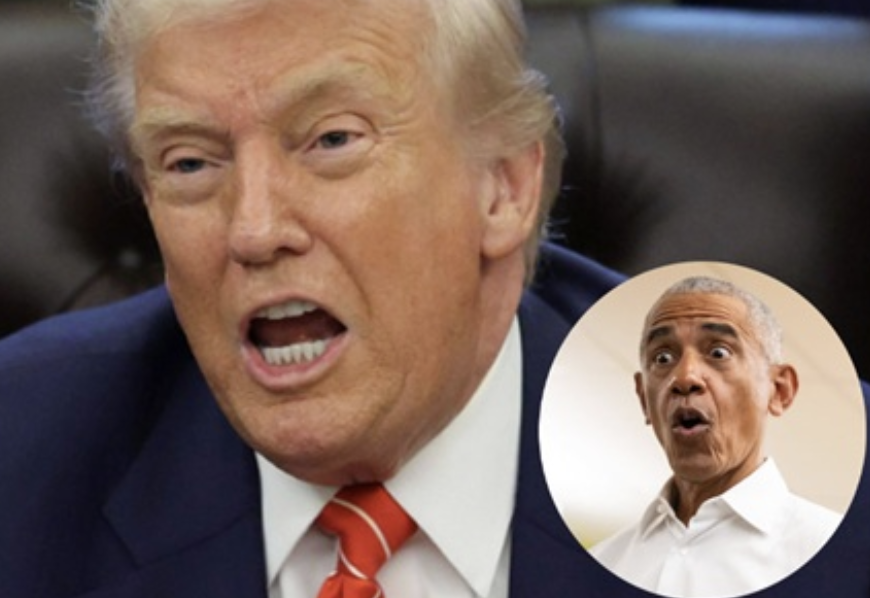
In the quiet hours of the night, when the rest of the world often settles into silence, Donald Trump’s digital megaphone was set to maximum volume. In a rapid-fire sequence of activity that has become a hallmark of his late-night media strategy, the former president unleashed a relentless torrent of reposts on Truth Social, effectively turning his feed into a curated archive of his longest-standing political grievances.
This wasn’t just a casual scroll. According to multiple reports tracking the activity, the flurry of dozens of shares and reshares bypassed the usual campaign filters, leaning heavily into a digital “greatest hits” of controversies rooted in the 2016 election cycle. By amplifying voices from the outer reaches of the platform, Trump breathed fresh life into old battles, signaling that nearly a decade later, the wounds of 2016 remain unhealed.
A Focus on the “Predecessor-in-Chief”
At the heart of this digital blitz was a familiar target: Barack Obama. The content funneled through Trump’s account wasn’t comprised of official statements or vetted legal findings, but rather a collection of sharp, often vitriolic commentary from third-party users. These posts frequently revisited the “Spygate” narrative, alleging that the Obama administration played a direct role in monitoring the 2016 Trump campaign.
While the language in these reposts was notably aggressive—ranging from accusations of official misconduct to explicit calls for legal prosecution—it is essential to distinguish between the former president’s amplification and substantiated fact. These theories have circulated through the halls of conservative media for years; however, they have largely failed to find firm footing in courtrooms or through the rigorous vetting of non-partisan official reviews.
Digging Up the “Russia” Roots
The flurry of activity also served as a deep dive back into the murky waters of the Russia interference investigation. Trump’s timeline became a repository for claims that federal intelligence agencies were weaponized to undermine his candidacy.
“The debate over the origins of the 2016 Russia probe remains one of the most polarized chapters in American history, splitting the country between those who see a necessary counter-intelligence operation and those who see a ‘deep state’ conspiracy.”
While Trump’s supporters view these late-night sessions as a necessary exposure of “political motivation,” critics argue that the reposts selectively ignore the intelligence assessments and bipartisan Senate reports that confirmed foreign interference was, in fact, a reality. By selectively highlighting portions of official documents, the material shared by the former president continues to reshape the narrative for his millions of followers.
The Collateral Damage of Digital Warfare
The “Truth” storm didn’t stop at the 44th president. The digital dragnet also pulled in:
-
Hillary Clinton: Revisiting the perennial controversy of the private email server.
-
Intelligence Officials: Selective re-interpretations of past testimonies and reports.
-
Political Institutions: Broad-brush criticism of the DOJ and FBI.
This method of communication—the repost-as-endorsement—allows a political figure to broadcast extreme rhetoric without technically authoring it. It creates a space where supporters see a fighter “telling it like it is,” while detractors see a dangerous amplification of unverified claims that bypass traditional media fact-checking.
The Human Element: Obama’s Standing Boundary
While the Trump camp has remained silent on the specific fallout of this latest posting session, the activity stands in stark contrast to Barack Obama’s stated philosophy on digital discourse. In previous interviews, Obama has signaled a thick skin toward personal political attacks but has drawn a firm line in the sand regarding his family.
Obama has been vocal about the dangers of manipulated or AI-generated media, expressing a heightened sensitivity toward content involving his wife and daughters—individuals who, as he often notes, did not choose the spotlight. His past remarks serve as a quiet counter-narrative to the current climate, highlighting a growing concern over the loss of boundaries in a digital age where personal attacks are often the currency of engagement.
The Direct-to-Consumer Disconnect
As it stands, we are witnessing a fundamental shift in how political battles are fought. By using Truth Social as a direct pipeline to his base, Donald Trump bypasses the “filters” of traditional journalism, creating a self-sustaining feedback loop of information.
The result is a landscape more polarized than ever. One side of the aisle views this activity as a raw expression of political frustration; the other sees it as a systematic erosion of shared truth. What is undeniable, however, is that as we enter another election cycle, the ghosts of 2016 are not just haunting the periphery—they are being invited back into the center stage, one late-night click at a time.