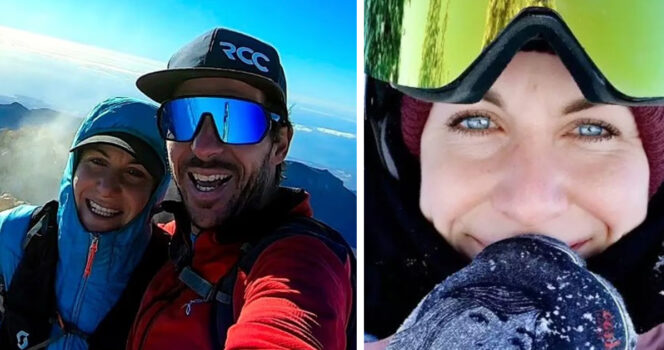
It was a moment of frozen desperation 12,460 feet above the world, where the thin Alpine air turns to ice and the margin for error vanishes. Now, Thomas Plamberger—the man a court deemed criminally responsible for his partner’s death—has revealed the final words spoken by Kerstin Gurtner before she was left to perish on the jagged spine of Austria’s highest peak.
“She told me to go,” Plamberger maintains. It is a haunting defense of a decision that has seen him convicted of gross negligent manslaughter, ending a saga that has captivated and horrified the international mountaineering community since that bitter night in January 2025.
A Fatal Ambition
The Grossglockner is a monarch of stone and ice, a peak that demands respect and claims an average of two lives every year. On January 19, 2025, Plamberger, 39, an experienced mountaineer, led the 33-year-old Gurtner toward the summit. By all accounts, they were close—just 150 feet from the peak’s cross—when the mountain pushed back.
At 9:50 p.m., Gurtner collapsed. The thermometer had plunged to -20°C (-4°F). While Gurtner’s social media portrayed a “winter child” and a “mountain person,” prosecutors later painted a far more vulnerable picture: a woman with negligible experience in the grueling reality of high-altitude alpine tours.

Hours of Silence
What happened between 8:00 p.m. and the early hours of the morning remains the focal point of a chilling legal indictment. According to reports from Heute and the public prosecutor’s office, the couple was stranded for hours before the situation turned terminal. Despite police helicopters patrolling the vicinity at 10:50 p.m., Plamberger allegedly failed to signal for help.
The timeline of his actions remains the most damning evidence against him:
-
1:35 a.m.: Plamberger finally places a call to the Alpine police.
-
Post-Call: He allegedly sets his phone to silent, cutting off further communication.
-
2:05 a.m.: Plamberger begins his descent alone to seek help, leaving Gurtner exposed on the ridge.
Prosecutors argued that Plamberger’s negligence was absolute. He reportedly failed to move Gurtner to a sheltered location or even cover her with a basic emergency blanket before disappearing into the dark. By the time rescue teams braved the gale-force winds the following morning, they found Gurtner dead, a silent figure resting just beneath the summit cross she never reached.
A Mother’s Defiance
Despite the February 2026 conviction, an unexpected voice has risen in Plamberger’s defense: the victim’s own mother. In a display of grief filtered through fierce loyalty, she has publicly rejected the court’s findings, insisting that the night climb was her daughter’s choice.
“Kerstin was also out in the mountains at night because she had to work during the day,” she stated. “She loved mountain hikes at sunrise and sunset. The two of them were equipped for the night.”
For Gurtner’s mother, the blame lies with the mountain, not the man. “If Kerstin didn’t agree, they wouldn’t have gone on a mountain tour. Therefore, he doesn’t deserve to be held responsible as the guide.”
Yet, the law saw it differently. For the court, the “last words” of a dying woman did not absolve an expert climber of his duty to protect a novice in the face of certain death. Plamberger walked down the mountain; Gurtner remained behind, a “winter child” lost to the very elements she claimed to love.