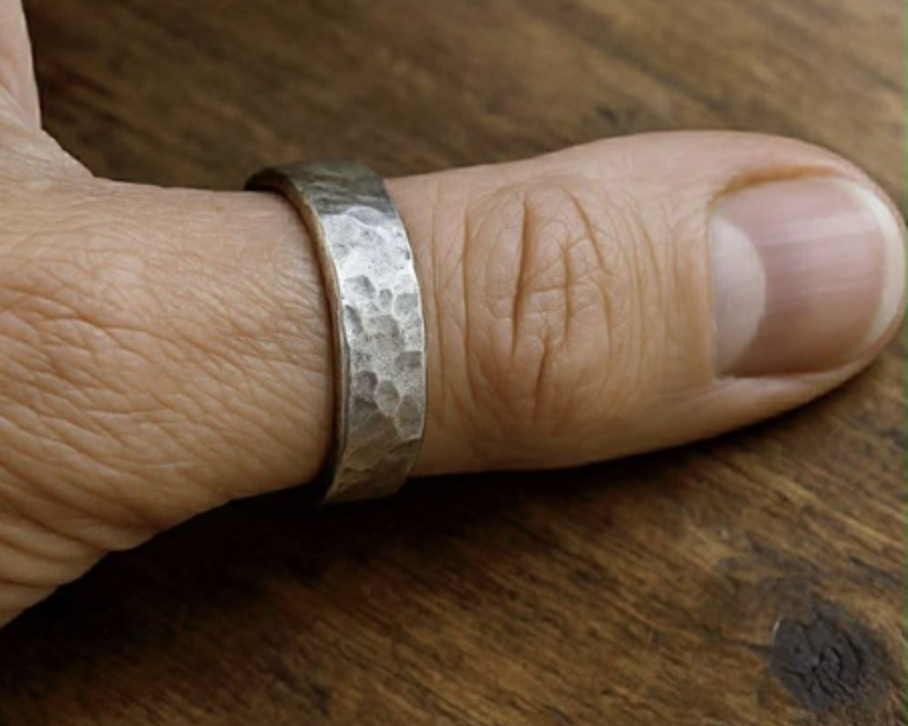
For the casual observer, a ring is a mere punctuation mark in the language of personal style—a glint of gold or silver designed to catch the light and complement an outfit. We often categorize them as fashion-forward baibles or sentimental keepsakes, rarely looking for a narrative beneath the surface. Yet, move that band to the thumb, and the conversation shifts. The symbolism becomes layered, complex, and undeniably more provocative. Unlike its counterparts on the four fingers, a thumb ring demands a second look; it sits in a position of visual prominence, a lonely sentinel on the hand that naturally sparks curiosity and invites interpretation.
The Psychology of the Standout
This heightened visibility is precisely why various cultures and modern style subcultures have woven a tapestry of meaning around it. In the lexicon of contemporary fashion, the most pervasive theme is that of individuality and independence. Choosing to adorn the thumb suggests a wearer who is self-assured and comfortable navigating outside the lanes of traditional norms. From a psychological standpoint, the thumb is viewed as the “anchor” of the hand—strong, dominant, and essential. By accessorizing this specific digit, the wearer often broadcasts a subtext of boldness and personal power.
While these theories lack the rigidity of scientific law, they have become the “common law” of modern style forums. For women, in particular, the thumb ring has evolved into a symbol of empowerment. In the landscape of the 1990s and early 2000s, it surged in popularity as a hallmark of alternative movements. Within these circles, it functioned as a quiet handshake—a subtle indicator of identity and a commitment to non-conformity.
Coded Histories and Modern Nuance
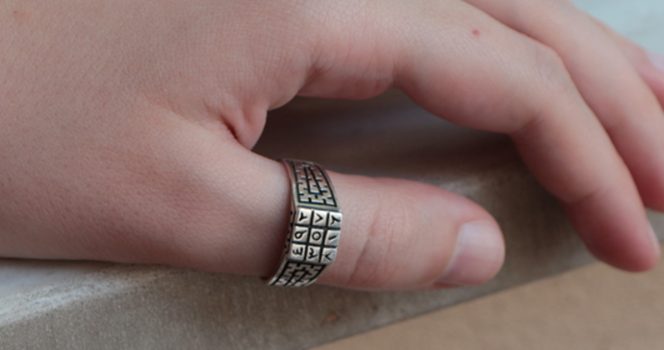
In LGBTQ+ history, the thumb ring has occasionally occupied a space as a “coded” signal of recognition. Veterans of earlier generations recall a time when jewelry choices were far from accidental, serving as a silent vernacular for community belonging. However, a veteran reporter knows that context is everything: these meanings were never monolithic. They shifted across borders and decades, and today, they have largely been absorbed into the broader world of aesthetic preference. In the modern era, a thumb ring is more likely to be a fashion choice than a secret signal.
Major jewelry houses and style commentators now frame these pieces as vessels of personality. Experts argue that because the thumb is physically set apart from the rest of the hand, it is the natural stage for statement jewelry. This physical isolation reinforces its connection to the “lone wolf” spirit—a desire to stand out rather than blend in.
“The thumb is the only finger that doesn’t follow the pack. It makes sense that the jewelry we put on it doesn’t either.”
Rumors, Status, and the Archer’s Legacy
The digital age has birthed its own set of informal “rules.” Certain style blogs and online communities suggest that a thumb ring’s placement—left hand versus right—might signal relationship status or emotional availability. While these theories make for popular social media fodder, they aren’t rooted in any formal cultural system. For the vast majority, the choice remains purely aesthetic.
Historically, however, the thumb ring was far more than a decorative whim. In the halls of Ancient Rome, rings were rigid markers of social hierarchy and wealth. Further east, in various Asian cultures, thumb rings carved from jade or forged from heavy metal were the prestigious gear of the elite. Here, form met function: these rings were often designed for archers. A heavy thumb ring provided a practical grip and protection when drawing a bowstring, serving as both a tool of war and a badge of prowess. As the bow gave way to modern technology, the ring’s utilitarian purpose faded, leaving behind a residual aura of strength and authority that still colors our perception today.
The Creative Frontier
Today, the thumb ring finds its most natural home among those who identify with non-traditional or creative lifestyles. You’ll see them on the hands of musicians, architects, and digital designers—people whose lives are built on original expression. In these professional and social spheres, the ring isn’t a riddle to be solved; it’s a component of a visual identity that values the unconventional.
For men, the accessory often leans into a sense of charisma and mystery. Because it remains a less common choice in traditional menswear, it carries a certain “wildcard” energy. It suggests a man who pays attention to detail but isn’t afraid to disrupt the standard silhouette of a suit or casual wear.
A Modern Conclusion: The Power of Interpretation
Social media has democratized the “meaning” of jewelry. On any given forum, you will find a dozen different reasons for wearing a thumb ring, ranging from “it’s a sign of a free spirit” to “I just liked the way it looked in the shop window.” This fragmentation is exactly how modern symbolism works; it is no longer dictated by ancient decrees, but by personal narrative.
Ultimately, the weight of a thumb ring is determined by the person behind it. It can be a totem of independence, a nod to a creative muse, or simply a beautiful object. But because it sits on a finger that naturally stands alone, it will always be an invitation to look closer. It remains a small but potent declaration of individual style—an accessory that, by its very placement, refuses to be ignored.