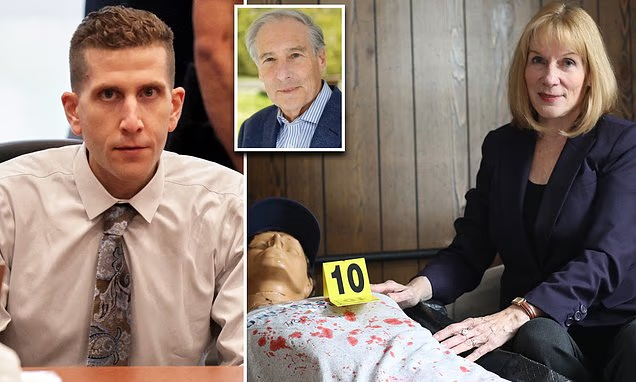
More than two years before four University of Idaho students were brutally stabbed to death in their off-campus home, their accused killer, Bryan Kohberger, had already stepped into a scene of simulated carnage.
But that time, it was part of his college coursework.
In a dimly lit, makeshift living room inside an old stone building on the corner of Taylor Drive in Central Valley, Pennsylvania, Kohberger stood amid blood-spattered walls and lifeless bodies—mannequins doused in red paint—carefully staged to mimic the aftermath of a multiple homicide.
The macabre scene wasn’t real, but for Kohberger, then an undergraduate at DeSales University, it was more than an academic exercise. It was a glimpse into the psychology of violent crime.
The scene was part of “Psychological Sleuthing,” a course taught by renowned forensic psychologist Dr. Katherine Ramsland, whose work delves deep into the minds of serial killers. Kohberger was one of her students, deeply immersed in the study of crime, forensics, and human behavior.
Unlike the chilling role he would later play at 1122 King Road in Moscow, Idaho—where four students were found murdered in November 2022—Kohberger was then just an eager learner, absorbing every detail of a carefully orchestrated mock crime scene designed to sharpen his analytical skills.
Now, in retrospect, that eerie classroom moment at DeSales offers a haunting foreshadowing of the real-life horror that would follow.