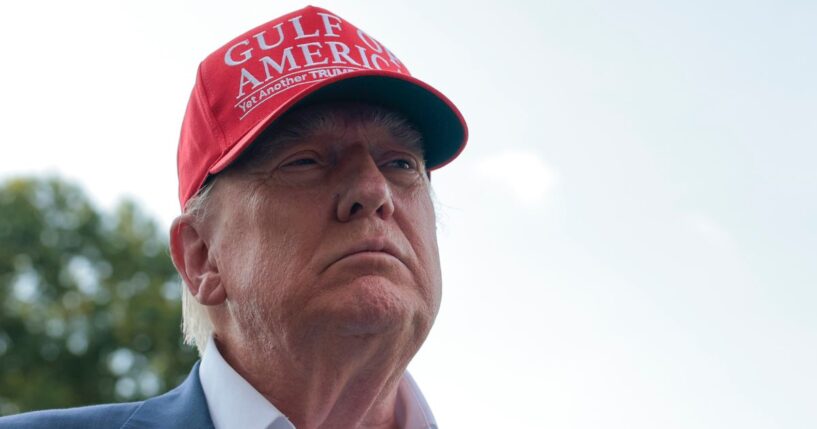
President Donald Trump announced Wednesday on Truth Social that he has secured a new trade agreement with Vietnam—one he claims will greatly benefit the United States while striking a blow to China’s ongoing attempts to exploit international trade channels. The deal, according to Trump, includes steep tariffs on Vietnamese exports to the U.S. and, in return, gives American businesses unprecedented access to Vietnamese markets.
“It is my Great Honor to announce that I have just made a Trade Deal with the Socialist Republic of Vietnam after speaking with To Lam, the Highly Respected General Secretary of the Communist Party of Vietnam,” Trump wrote. “It will be a Great Deal of Cooperation between our two Countries. The Terms are that Vietnam will pay the United States a 20% Tariff on any and all goods sent into our Territory, and a 40% Tariff on any Transshipping.”
He went on to emphasize the reciprocal nature of the deal: “Vietnam will do something that they have never done before, give the United States of America TOTAL ACCESS to their Markets for Trade. In other words, they will ‘OPEN THEIR MARKET TO THE UNITED STATES,’ meaning that, we will be able to sell our product into Vietnam at ZERO Tariff.”
Trump specifically mentioned that American-made SUVs—or “Large Engine Vehicles,” as he called them—could find a strong market in Vietnam. He described his dealings with General Secretary To Lam as “an absolute pleasure.”
While beneficial to American trade interests, this agreement could also disrupt China’s attempts to bypass tariffs through transshipping—relabeling and rerouting products through Vietnam to avoid U.S. penalties. This tactic, frequently used to skirt American tariffs, is addressed directly in the deal with the imposition of a 40% tariff on transshipped goods.
CNBC previously reported on transshipping as a method to dodge trade restrictions, noting China’s use of Vietnam as a hub for such operations. The S&P 500 rose slightly after news of the deal broke.
Reuters noted that Vietnam’s exports to the United States accounted for 30% of the country’s GDP last year, highlighting the importance of the American market for Hanoi. Faced with economic vulnerability, Vietnam had little choice but to come to the table.
Trump’s announcement reflects his longstanding trade strategy: using economic leverage to realign global trade practices in favor of the United States, with a sharp focus on countering China’s behavior on the world stage.
Beijing has for years engaged in what critics describe as predatory behavior—stealing intellectual property, purchasing U.S. farmland, pushing illicit fentanyl into the country, and undercutting American industries with subsidized goods. Beyond trade, China has sought to assert influence through global institutions, infiltrating academic and technological sectors, and allegedly spying via advanced surveillance tools.
Trump has insisted that the U.S. must always negotiate from a position of strength and reject the path of globalism that he argues led to economic decline, rising inflation, and weakened national security.
He also recently announced that a new trade deal with China is underway, though still being finalized. In Trump’s view, the United States remains the world’s largest economy and military power—and it must act like it.
His message is clear: When America projects strength, the world takes notice. Since the political shift last November, Trump argues, the country has seen peace agreements, economic rebounds, falling prices, and a revival of international respect.
For the former president, the deal with Vietnam is just the latest example of what he calls a return to “fair trade” and American leadership—without apology.