There’s an old adage in Vatican circles: “He who enters the conclave as pope leaves it as a cardinal.” It’s a warning that the presumed favorites rarely walk away with the papal crown—and history offers plenty of proof. At the 2013 conclave, for instance, many Italian bishops were so sure Cardinal Angelo Scola of Milan would be elected that they preemptively celebrated his “victory.” But when the white smoke rose, it was Argentine Cardinal Jorge Bergoglio—now Pope Francis—who emerged as the surprise successor.
Now, as speculation grows over who might succeed the aging pontiff, all eyes turn once more to the Sistine Chapel—and the high-stakes battle for the future of the Catholic Church.
A Reformed Conclave
What makes this upcoming conclave particularly unpredictable is Pope Francis’ own impact on the electoral body. Throughout his papacy, Francis has reshaped the College of Cardinals, prioritizing diversity over tradition. He has broken with the custom of automatically elevating bishops from powerful European dioceses and instead handed red hats to church leaders from places like Papua New Guinea, Haiti, and Tonga—regions that had never before had cardinals.
This new, globalized College of Cardinals is less rooted in Vatican politics and more reflective of the worldwide church. That could make alliances harder to predict and traditional power blocs less effective.
The Search for a Global Leader
As cardinals weigh their options, they’ll be searching for someone with the stature to lead a 1.3 billion-member church—and with the moral credibility to address urgent global issues. A key question will be whether to continue the reformist path set by Pope Francis or to pivot in a new direction.
Many also believe the church’s future lies in the Global South and East, prompting speculation that the next pope could be from Asia or Latin America. Age will be another factor: both of the last popes were in their 70s when elected, likely a move to avoid another lengthy pontificate.
The Contenders to Watch
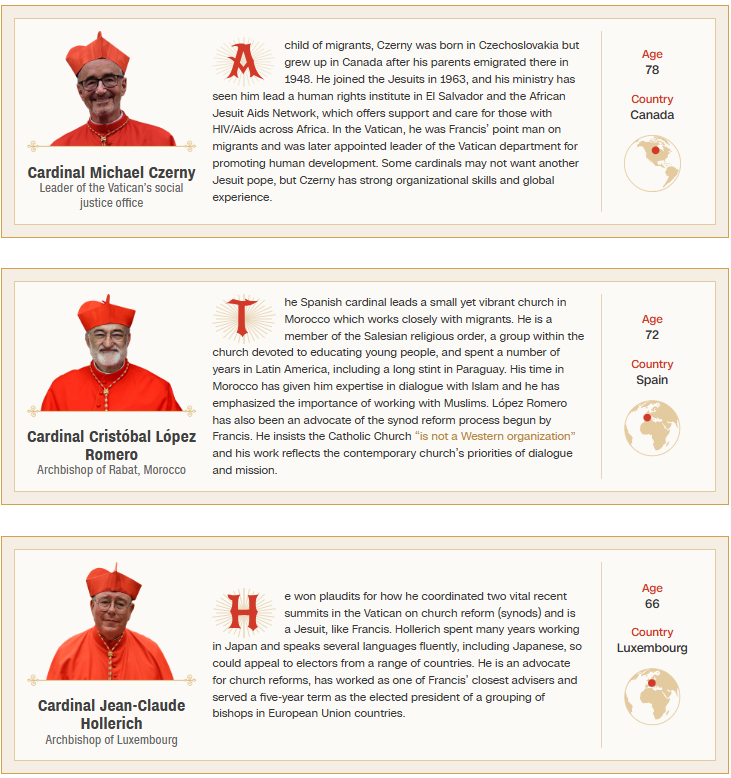
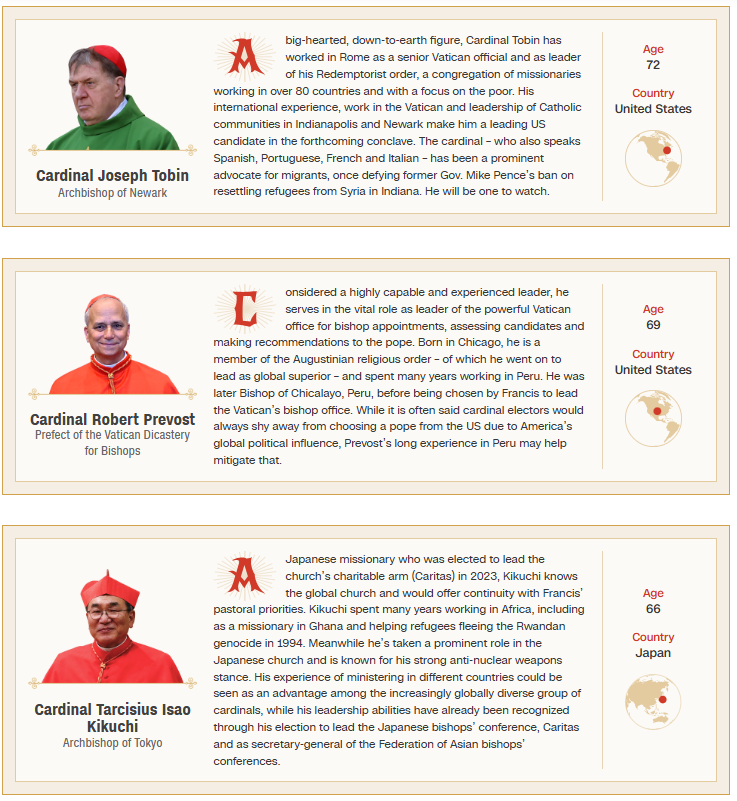
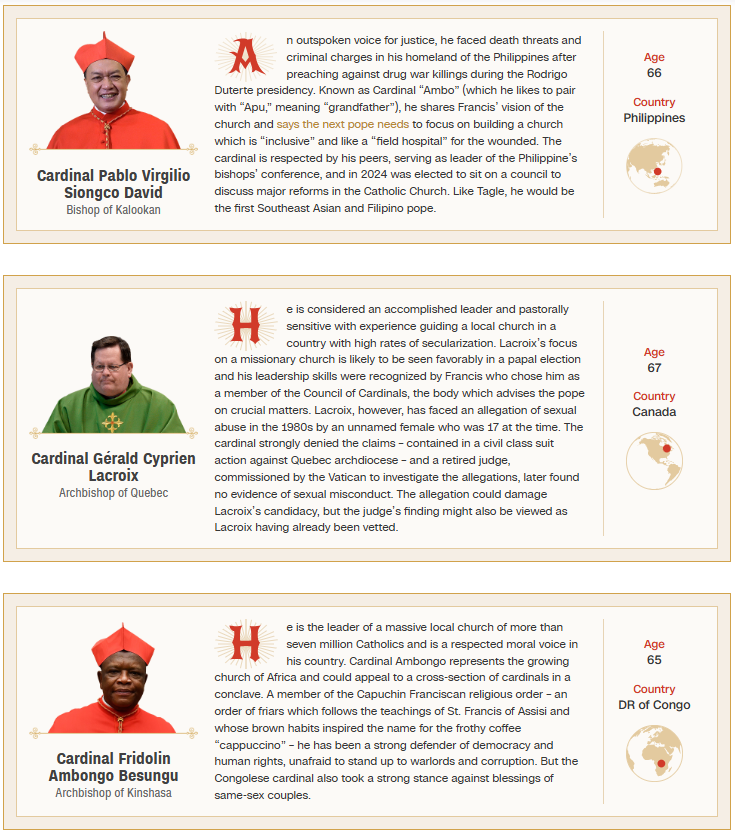
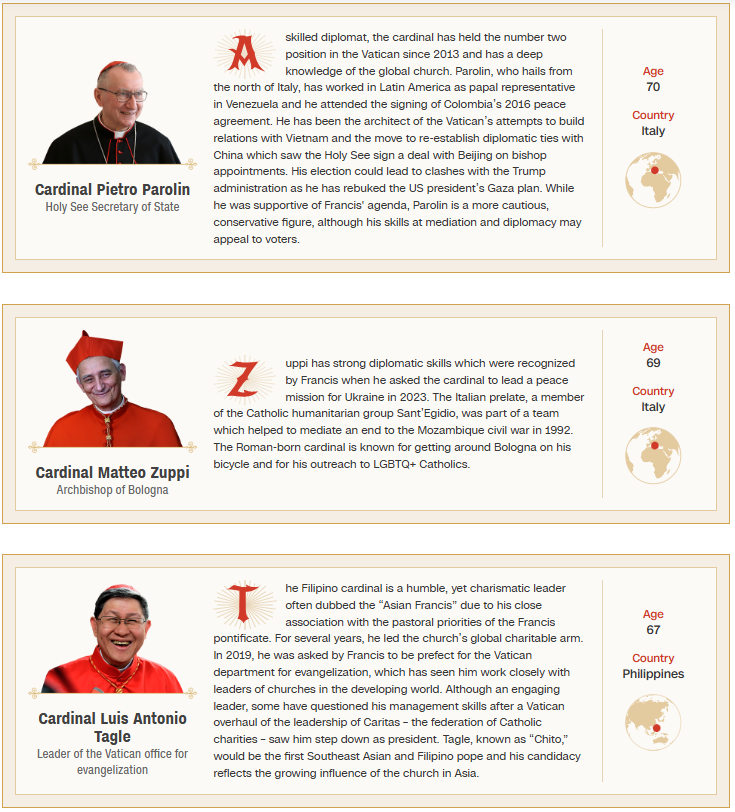
So who are the “papabili” — the men considered “pope-able”?
Cardinal Mario Grech, 68, from Malta, currently leads the Vatican’s synod office and has been a key figure in Francis’ emphasis on synodality—greater consultation and listening within the Church.
Cardinal Stephen Chow, 65, Bishop of Hong Kong, has impressed observers with his delicate diplomacy and pastoral outreach, particularly in navigating the complex political landscape of China.
Cardinal Pierbattista Pizzaballa, 60, the Latin Patriarch of Jerusalem, won praise for his leadership during the Israel-Hamas conflict, making him a strong candidate from a highly sensitive region.
Cardinal Jaime Spengler, 64, from Brazil, is another rising star. As leader of both the Brazilian bishops’ conference and the Latin American Episcopal Conference, his credentials in the largest Catholic region of the world give him weight.
A Defining Moment
With the Church at a crossroads, this conclave could be one of the most consequential in modern times. The cardinals must decide: continue the course charted by Francis or take a new direction? Elect a seasoned Vatican insider—or an outsider who reflects the church’s global reach?
One thing is certain: the outcome won’t be easy to predict. And as the saying goes, the one who seems destined to wear the white cassock might just walk away in red.