The collective roar of a live studio audience used to be late-night television’s ultimate magic trick. It was a sonic wave of laughter and applause that filled the room, enveloping the viewer at home long before they even had time to process what, exactly, they were laughing at. For decades, this familiar rhythm created an atmosphere that felt entirely harmless—a comforting, predictable ritual to close out the day.
Yet, looking back at those exact same broadcasts today, the laugh track sounds different. There is a strange, underlying dissonance, as if something beneath the brightly lit surface was always slightly misaligned. What we once accepted as effortless, breezy entertainment begins to look more like a high-wire performance, a carefully constructed arena where timing, institutional power, and public perception dictated every single frame.
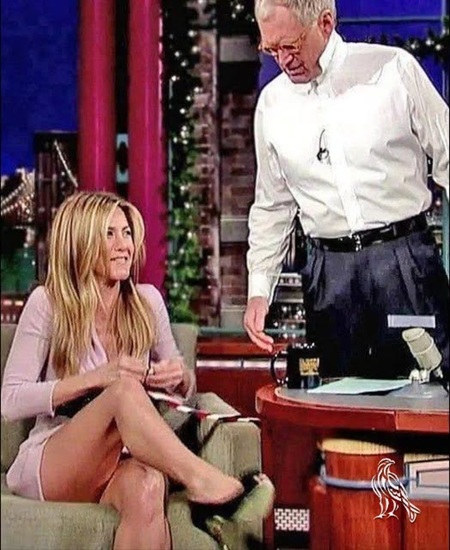
In hindsight, diving into the digital archives of past talk-show formats—particularly interviews featuring public figures like Jennifer Aniston—reveals just how volatile context can be when subjected to the passage of time. For years, the friction between a powerful host and a celebrity guest was packaged as natural chemistry, a playful sparring match for the cameras. Today’s media-literate public, however, brings a far more critical lens to the screen. What once passed as lighthearted banter is now routinely deconstructed for its tone, tense body language, and the subtle, lopsided power imbalances that define high-pressure media environments. This isn’t about rewriting history; it’s about reshaping how we understand it.
During its golden, most influential era, television thrived on the tyranny of the immediate. Reflection was a liability; speed was the currency. Hosts were handsomely rewarded for their razor-sharp wit, guests for their unwavering composure, and audiences for their Pavlovian, real-time reactions. In such a high-velocity environment, a guest’s momentary discomfort could easily be drowned out by a well-timed cue for applause, and a flash of hesitation could be seamlessly edited into an expression of confidence. The very architecture of the late-night format left no room for a pause, let alone a mid-interview reinterpretation. It is precisely why so many of these archived encounters feel distinct, even jarring, when viewed through a contemporary lens.
As our broader media culture matured, so too did our collective understanding of how the sausage is made. The rise of social media platforms effectively decentralized the editing room, allowing viewers to pause, rewind, and re-examine past cultural moments frame by frame. Micro-expressions and fleeting, defensive reactions that once evaporated into the ether of live broadcasting are now isolated, magnified, and looped. This technological shift didn’t alter what physically happened on those stages, but it radically transformed what we notice. Small, fleeting details that were once overlooked as background noise have become the main event, fueling urgent conversations about consent, professional boundaries, and interpersonal tone in entertainment spaces.
Of course, audience perception is never monolithic, and it plays a vital role in how these archival narratives are rewritten. The exact same clip that one viewer interprets as harmless, nostalgic playfulness can make another deeply uncomfortable, depending entirely on their personal context and sensitivities. Collective societal standards are fluid, constantly shifting beneath our feet. Humor that was once widely accepted, even celebrated, can later be exposed as punchlines made at someone else’s expense under updated cultural expectations. This evolution isn’t isolated to a single talk-show host or a specific celebrity; it is a symptom of a massive, industry-wide transformation in how media is consumed and judged.
The emotional reckoning that comes with rewatching these clips is complicated. For many, it triggers a bittersweet cocktail of nostalgia laced with a sudden, sharp unease. For others, it feels like a sudden awakening to toxic dynamics they had previously ignored or normalized. That very tension—the friction between fond memory and modern reinterpretation—is what gives these archival clips such a lasting hold on the cultural imagination. The discomfort doesn’t just stem from what was explicitly said or done on stage; it comes from the realization of how we, the audience, actively participated in creating that atmosphere through our own laughter, our own applause, and our own complicit silence.
When you strip away the nostalgia of older television culture, you see how effectively entertainment can blur the lines between performance and reality. The system ran on a specific fuel: hosts relied on their undeniable charm, guests relied on their media training to maintain composure, and producers relied on the studio audience to sustain an artificial momentum. Inside that fast-moving machine, subtle discomfort was invisible by design because the format demanded constant forward motion. It is only now, when the footage is slowed down and stripped of its glitter, that the systemic patterns become undeniable.
To analyze these moments with a modern eye is not to suggest that every past interaction was inherently toxic, nor does it require a singular, dogmatic interpretation of pop-culture history. Rather, it underscores the reality that interpretation is a living, breathing thing that evolves alongside human awareness. What we once consumed passively, we now actively question. That shift is a direct reflection of broader, healthier changes in societal expectations regarding respect, visibility, and emotional intelligence in the public square.
Ultimately, looking back at these broadcasts is less about retroactively assigning blame or launching cancellation campaigns, and more about charting our own evolution. Media never exists in a vacuum; it acts as a mirror to the values of its era while simultaneously shaping them. For modern viewers, returning to these vintage clips is an invitation to reflect not just on the images projected onto the screen, but on how easily collective perception can normalize unhealthy dynamics when no one thinks to question them.
The most enduring takeaway from the late-night archive isn’t a single controversial interview or a specific viral gaffe. It is the sobering realization that context is never fixed. What once felt like harmless escapism can later mature into a profound point of reflection; what once provoked an easy laugh can eventually demand much deeper, more uncomfortable questions. In that shift, audiences are left with a powerful reminder: attention is never neutral, and it carries a distinct responsibility. Because what we choose to applaud on the screen today inevitably dictates what we tolerate on the streets tomorrow.