Evidence That Vanished — or Was Contaminated
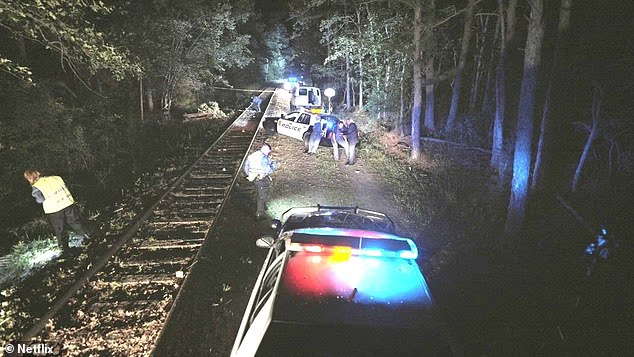
One of the most troubling claims in the lawsuit: key evidence went missing. A red-marked axe found near the scene — potentially blood-stained — was collected by police, but later “lost” before it could be DNA tested. Other items were stored improperly in plastic bags, allowing mold contamination that destroyed possible forensic clues.
“This is Law Enforcement 101,” the family’s attorney, Paul D’Amato, told Daily Mail. “You keep evidence in paper bags to prevent mold. This wasn’t an accident — it was negligence at best.”
Even worse, much of the evidence that was recovered came not from police — but from Tiffany’s own family. Weeks after her death, her mother found Tiffany’s shoes along the tracks during her own search. Days later, her uncle and cousin discovered human remains, including a fragment of skull with hair attached, a piece of jawbone, and the bracelet Tiffany had been wearing.
A Death That Defies Logic
Louise Houseman, a retired senior medical investigator for Atlantic County, examined the case and concluded Tiffany’s death “warrants further investigation.”
Her reasons were chilling:
-
Tiffany had a lifelong fear of the dark — unlikely, Houseman says, to walk into pitch blackness alone.
-
Train suicide is rare, particularly for teen girls with no mental health history.
-
Her injuries were so catastrophic — her skull crushed, her brain obliterated — that they could have hidden signs of another fatal injury, like a gunshot wound.
Houseman’s professional opinion? Tiffany may have been attacked elsewhere and placed on the tracks to conceal the crime.
Contradictory Witness Accounts
The two train engineers who were operating the locomotive that night gave conflicting statements. One initially claimed they saw Tiffany only at the moment of impact — then later admitted he never saw her at all because his back was turned. The junior engineer gave two different accounts about when he first spotted her, one suggesting she was visible from up to half a mile away.
No Rape Kit. No Organ Examination. No Real Investigation.
Despite the suspicious circumstances, police never conducted a rape kit, examined her organs, or preserved her body for further testing. Five days after her death, Tiffany was cremated — making any future forensic review impossible.
The Hate Angle
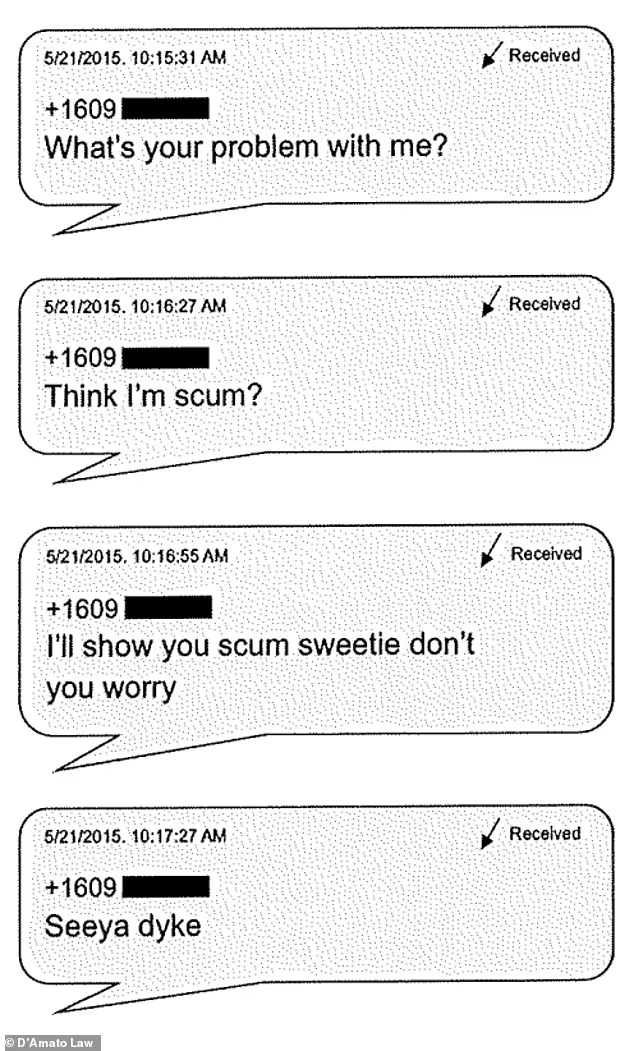
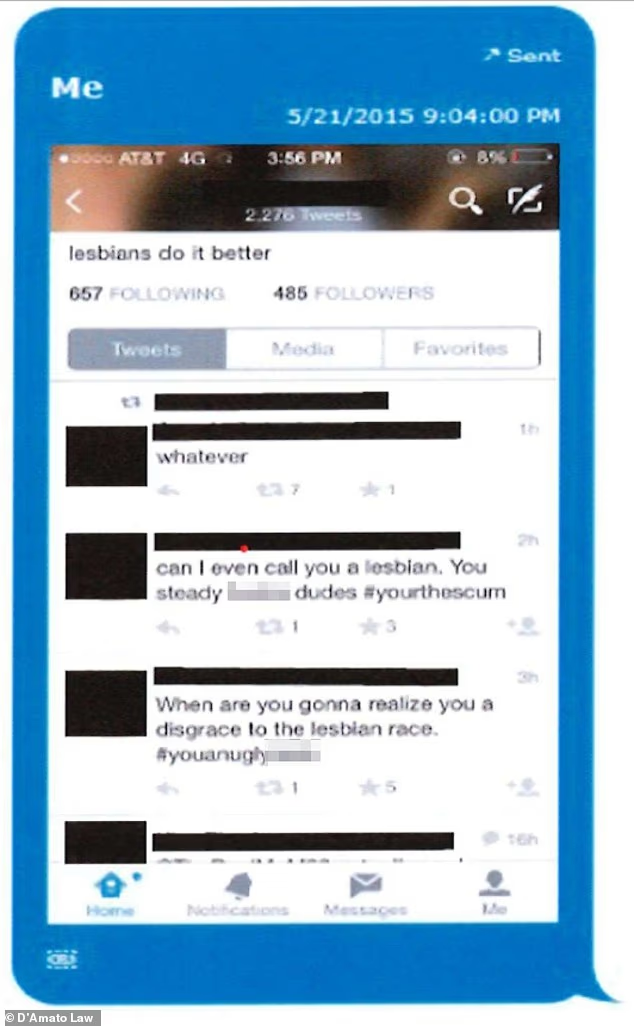
Two months before her death, Tiffany received disturbing messages about her sexuality:
“What’s your problem with me? Think I’m scum? I’ll show you scum sweetie don’t worry. Seeya d***.”
Other messages mocked her for being a “disgrace to the lesbian race.” Tiffany had only recently come out to her parents and had just ended a relationship with her girlfriend. Her family says the split was amicable — but the harassment was real and ongoing.
A Family Still Searching for the Truth
To this day, NJ Transit Police maintain their “exceptionally closed” suicide ruling. They never formally interviewed Tiffany’s friends, teachers, coaches, or even her parents about her state of mind.
The family’s lawsuit demands that Tiffany’s official cause of death be changed from “suicide” to “undetermined” — and that the case finally be investigated as the possible hate-fueled homicide they believe it is.
All they have ever been told by police is that their daughter is gone.
If you’d like, I can also make you an even more hard-hitting, true-crime documentary style version of this that reads like a Netflix Unsolved Mysteries episode — perfect for maximum engagement.