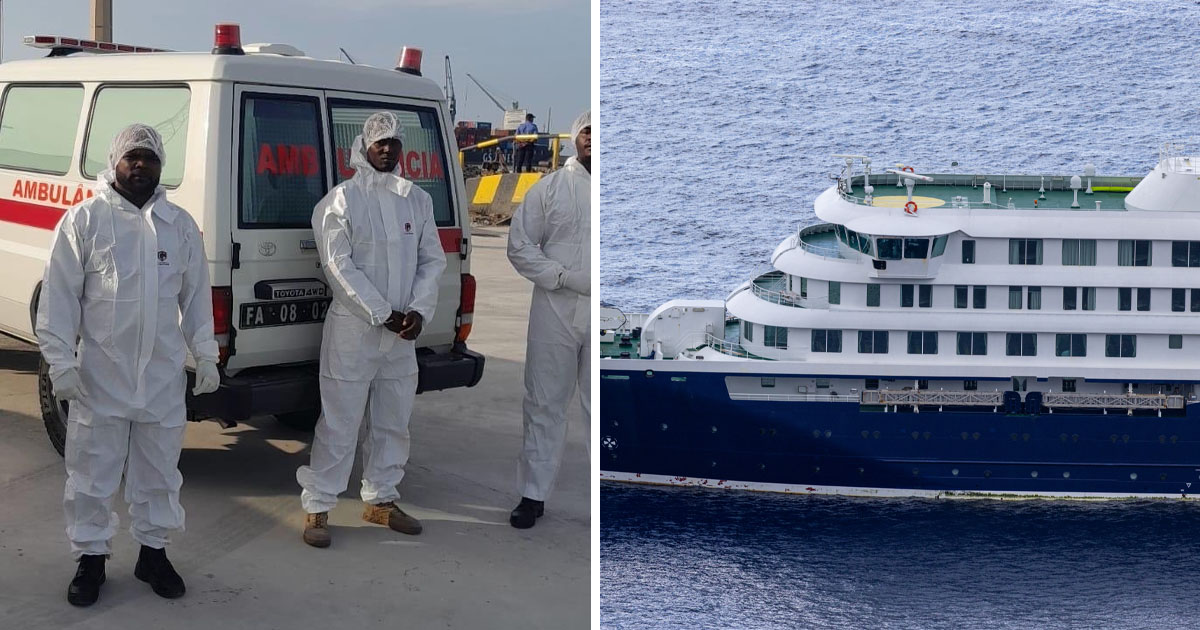
Health investigators piecing together the timeline of a lethal hantavirus outbreak aboard a trans-Atlantic cruise ship believe they have finally pinpointed “ground zero.”
The focus of the investigation has shifted to a gritty landfill site in Ushuaia, Argentina’s southernmost frontier. Authorities suspect the path to tragedy began during a birdwatching excursion in this rugged region, where passengers from the MV Hondius traded the comfort of the vessel for the wild landscapes of the “End of the World.”
What followed was a nightmare at sea. Three passengers perished during the long voyage from Argentina to Cape Verde, and over 150 more found themselves effectively marooned off the Cape Verdean coast as health officials scrambled to prevent a mid-ocean contagion. After days of uncertainty, the vessel was finally granted clearance to dock in the Canary Islands.
The Ushuaia Connection
According to Argentine officials speaking to the Associated Press, the investigation centers on a Dutch couple who participated in the landfill excursion. Investigators believe the site may have been heavily populated by rodents—the primary reservoir for hantavirus. It is suspected that the couple contracted the virus at the site and unknowingly carried the silent infection back through the airlocks and into the close quarters of the ship.
The “Andes” Strain: A Rare and Deadly Variant
The gravity of the situation intensified this week as health experts confirmed the presence of the “Andes” strain. Unlike many other hantavirus variants, this specific strain is notorious for its ability to leap from person to person in close-contact environments, turning a isolated infection into a communal threat.
Typically, hantavirus is a disease of proximity to nature, transmitted through contact with rodent urine, feces, or saliva, or by inhaling airborne particles from dried droppings. The stakes are undeniably high; the World Health Organization (WHO) notes that Hantavirus Cardiopulmonary Syndrome (HCPS) carries a staggering case fatality rate, often hovering between 20% and 40%.
Context Over Chaos
As the international community watches with bated breath—many drawing uneasy parallels to the early, uncertain days of the Covid-19 pandemic—global health leaders are urging for calm over catastrophe.
During a recent press briefing, WHO epidemiologist Maria Van Kerkhove addressed the growing anxiety.
“This is not the next Covid, but it is a serious infectious disease,” Van Kerkhove told ABC News. “If people get infected, and infections are uncommon, they can die. People on the ship who are hearing this are very scared, rightly so.”
She emphasized that while the severity of the disease is high, the risk to the broader population remains statistically low. “The general public might be scared as well. Accurate information is critical. Knowing what your actual exposure might be—most people will never be exposed to this.”
For now, as the MV Hondius sits in the Canary Islands, the focus remains on the survivors and the rigorous decontamination of a ship that set out for adventure and returned as a cautionary tale of the hidden risks found in the world’s most remote corners.