In the aftermath of Bryan Kohberger’s chilling admission to the quadruple murders that rocked the University of Idaho community, one haunting question continues to grip the nation: What truly drove him to carry out such a brutal, calculated attack?
While investigators have long speculated about possible motives—ranging from incel ideology to a desire for notoriety—a provocative new theory has emerged from one of the country’s leading forensic psychiatrists. This theory, grounded in decades of clinical experience, points to a psychological trigger that may have been hiding in plain sight all along.
Dr. Carole Lieberman, a renowned forensic psychiatrist with over twenty years of experience analyzing the minds of criminals, has put forth a compelling hypothesis: Kohberger may have been enacting revenge not against his specific victims, but against what they symbolized to him—a painful reminder of rejection and social humiliation that had festered inside him for years.
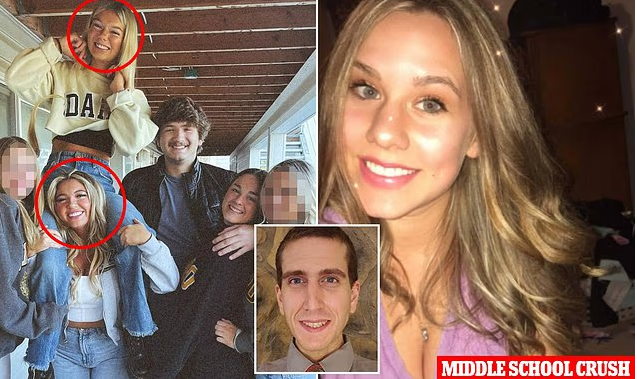
According to Dr. Lieberman, there’s a striking physical resemblance between two of the victims—21-year-olds Madison Mogen and Kaylee Goncalves—and a blonde cheerleader from Kohberger’s past who rejected him during his vulnerable adolescent years. She believes this seemingly minor detail could hold the key to understanding the psychological underpinnings of the massacre.
“It is especially significant that Maddie and Kaylee look like the blonde cheerleader who rejected him in middle school,” Lieberman told the Daily Mail. “This resemblance likely reignited unresolved feelings of inadequacy, shame, and rage that had been simmering since adolescence.”
Lieberman theorizes that Kohberger never truly processed the emotional wounds inflicted by this early rejection. Instead, he internalized the experience, allowing it to fester and warp his perception of women, particularly those who fit a certain appearance and social archetype. Over time, this psychological injury may have evolved into a dangerous fixation—a pattern often seen in individuals who struggle with chronic rejection and develop complex resentments tied to identity, status, and perceived entitlement.
“This wasn’t just about these four victims,” Lieberman emphasized. “It was about years of feeling invisible, powerless, and unwanted. When he saw Maddie and Kaylee, something snapped. They embodied everything he felt excluded from—youthful beauty, popularity, social acceptance.”
What makes this theory especially compelling is that it doesn’t rely on far-fetched conspiracies or unsupported psychological diagnoses. Rather, it draws upon well-documented patterns of behavior in similar criminal profiles—cases where the attacker’s victims were chosen not for who they were, but for what they represented.
The notion of displaced aggression—redirecting anger meant for one person or group onto an unrelated target—is a well-known phenomenon in forensic psychology. Kohberger, who has been described as socially awkward and reportedly struggled to connect with peers throughout his life, may have harbored a long-standing resentment toward a type of person he associated with his most painful memories.
Dr. Lieberman’s theory does not excuse Kohberger’s actions, nor does it attempt to simplify the complexity of his psyche. But it does offer a chilling and plausible lens through which to examine what might have driven an otherwise intelligent criminology Ph.D. student to carry out such a heinous act.
As the legal proceedings move forward and more evidence emerges, investigators and experts alike may revisit this thread—not as a definitive answer, but as a crucial piece in the larger puzzle of motive, identity, and revenge. For now, the question of “why” may not be fully resolved. But Lieberman’s insight adds new weight to the idea that, for Bryan Kohberger, the past was never really behind him—it may have been guiding his every move.