They are the silent, ubiquitous lifelines of the digital age. Tucked into baseboards, tangled in backpacks, and plugged into dashboard consoles, chargers have quietly evolved from occasional accessories into permanent fixtures of modern existence. We rely on them to sustain everything from the smartphones that anchor our social lives to the laptops that drive our careers, the earbuds providing our daily soundtracks, and the wearables tracking our every heartbeat.
What used to be a conscious chore has become an unthinking, near-constant reflex. We plug in at home, top off at the office, and juice up on the commute. Yet, beneath the seamless monotony of this daily ritual lies a stark disconnect: our collective familiarity with charging has bred a dangerous complacency. The simple act of connecting a device to a wall socket initiates a complex, high-energy electrical process—one where seemingly minor, everyday habits can quietly escalate into catastrophic failures.
The True Cost of Cheap Power
The frontline of this hidden hazard is the proliferation of low-quality and counterfeit charging blocks. To the untrained eye, a $5 knockoff purchased at a gas station or an unverified online marketplace looks identical to the factory-certified model that came in the box. But beneath the molded plastic shell lies a world of difference.
The Anatomy of a Genuine Charger: Certified power adapters are engineered with sophisticated internal architecture. They act as vigilant gatekeepers, constantly regulating voltage, modulating current, and monitoring thermal levels to prevent a runaway thermal event.
Counterfeit alternatives strip away these vital safety systems to cut costs. Deprived of adequate circuit protection, these substandard units can deliver erratic, unstable power. Over time, this erratic current degrades expensive lithium-ion batteries, causing them to degrade prematurely, swell like pillows, or, in worst-case scenarios, experience a catastrophic thermal runaway that sparks a structure fire. Saving a few dollars on a charger is, quite literally, playing with fire.
The Vulnerability of the Cord
Even the most premium, certified charging brick is only as safe as the conduit delivering its power. Cables bear the brunt of our daily physical abuse—bent at sharp angles, stepped on, tugged from walls, and shoved into pockets.
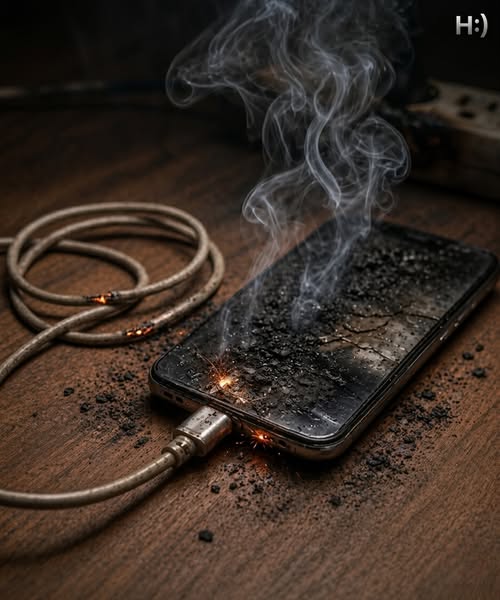
Yet, many of us continue to use cables long after they have passed their expiration date. A frayed sleeve, a cracked piece of rubber insulation, or a loose, wobbly connector might seem like a minor cosmetic nuisance if the device still manages to take a charge. In reality, these compromised spots are a recipe for disaster. Exposed or broken internal copper strands can easily touch, creating an electrical short that can throw off sparks, fry your device’s delicate logic board, or ignite nearby fabrics. Treating cables as permanent hardware rather than consumable items is a gamble not worth taking; regular inspection and swift replacement are non-negotiable for a safe home.
The Psychology of Habit: Where We Charge Matters
Hardware is only half the equation; human behavior dictates the rest. Our routines often create the perfect storm for battery strain. Think of the standard nighttime ritual: plugging a phone in right next to the pillow, allowing it to charge for eight hours straight while buried under heavy, insulating blankets. Or consider the habit of playing graphics-heavy mobile games or streaming high-definition video while chained to the wall.
These actions trap the one enemy lithium-ion batteries fear most: heat. Charging inherently generates thermal energy. When a device is placed on a soft, unventilated surface like a bed or a couch, that heat has nowhere to escape. Over time, this chronic overheating bakes the battery from the inside out, drastically reducing its lifespan and elevating the risk of expansion or combustion. The remedy is simple but requires mindfulness: charge your devices on flat, hard, well-ventilated surfaces, and give them a break from heavy usage while they are fueling up.
The Threshold: Respecting the Wall Socket
The final link in this electrical chain is the infrastructure itself—the wall outlet. In an era of device proliferation, the temptation to daisy-chain power strips or overload a single socket with a chaotic web of multi-port adapters is higher than ever.
This creates a localized strain on your home’s electrical wiring. Your home will usually warn you when a threshold is being crossed, but you have to know what to look for. Wall plates that feel warm to the touch, plugs that sit loosely in the socket, or lights that flicker when a device is connected are not quirks; they are urgent warning signs of a potential fire hazard. Utilizing high-quality, certified surge protectors and maintaining your home’s electrical fixtures are essential lines of defense.
A Call for Digital Hygiene
In the grand scheme of modern life, charger safety rarely makes the headlines until it is too late. It is an issue that ultimately hinges on personal awareness and the cultivation of disciplined daily habits.
Mitigating these risks doesn’t require a lifestyle overhaul. It demands a commitment to digital hygiene: investing exclusively in reputable, certified equipment, ruthlessly discarding damaged components, and treating the power grid with the respect it commands. The small, conscious choices we make every day do more than just extend the life of our favorite gadgets—they safeguard our homes, our property, and our lives.